
Livraison le jour même ou le lendemain

Qualité garantie

Débloquez vos offres de bienvenue: Livraison GRATUITE | Jusqu'à -80 % | 30 jours d'essai gratuits à JoyPlus
Téléchargez l'application
It's a classic scenario?: you turn the ignition key and… nothing. A frustrating silence, the tell-tale sign of a dead battery. Or worse, that tire pressure warning light comes on in the middle of the highway, miles from the nearest service station. Familiar to many drivers, these situations can quickly turn a routine trip or a holiday departure into a major headache.
The jump starter with an air compressor is the ultimate all-in-one solution for handling these unexpected events. This versatile device not only allows you to restart your vehicle completely on your own but also to reinflate your tires, wherever you are. With a dizzying array of options on the market, it can be tough to know where to start. This guide is here to shed light on the essential selection criteria and present our top picks, helping you find the perfect equipment for your needs and your car.
Before you head to the checkout, it's crucial to understand the key technical specifications that will make all the difference when you really need them.
This is the number one criterion. Expressed in amps (A), it comes in two values that should not be confused?:
Making the right choice depends on your vehicle's engine. A small petrol engine won't have the same requirements as a large diesel one. A powerful jump starter for both petrol and diesel cars (over 1500?A peak) will offer greater versatility, especially for SUVs, utility vehicles, or in very cold weather when batteries are most vulnerable.
The built-in compressor is the extra touch that turns this booster into a true Swiss Army knife. Check its maximum pressure, expressed in PSI (Pounds per Square Inch) or bars. A model that reaches 150?PSI is the standard today and is more than sufficient for all car tires. Features that make a difference include?:
A good portable car starter is much more than a simple breakdown tool?; it's a true driver's survival kit.
We have selected several models that stand out for their performance and versatility, catering to different user profiles.
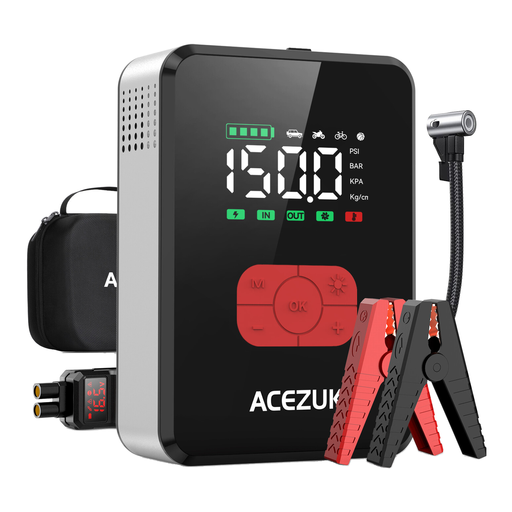
Its standout feature?: its colossal peak power of 7000?A allows it to start almost any 12V vehicle, including very large diesel engines (up to 12L), even if the battery is completely dead.
Pros:
Who is it for?? Owners of large vehicles (SUVs, utility vehicles, RVs) or those living in regions with harsh winters who want uncompromising starting power.
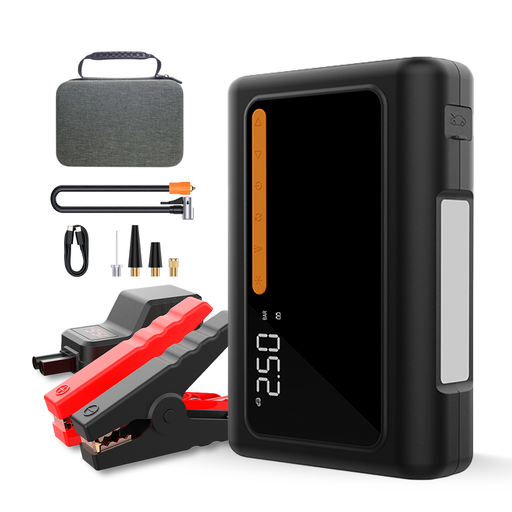
Its standout feature?: it incorporates sodium-ion battery technology. According to its manufacturer (Shenzhen Qimei New Energy Technology), this technology gives it an extreme operating temperature range (from -40?°C to 80?°C), a record-breaking lifespan (over 6000 cycles), and foolproof safety (no risk of fire, even if punctured).
Pros:
Who is it for?? The driver seeking a durable, maintenance-free, and ultra-safe solution capable of withstanding the most extreme climates, from polar cold to summer heatwaves.
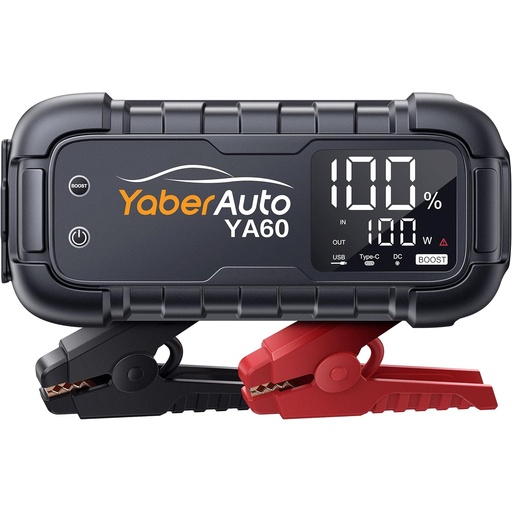
Its standout feature?: this model combines phenomenal peak power (8000?A) with ultra-fast 65?W two-way charging. The result?: it recharges from 0 to 100% in about 1.5 hours. Note: this model does not have a built-in compressor, but its 150?W DC output can power an external one.
Pros:
Who is it for?? For the most demanding users who want maximum starting power and prioritize charging speed, both for their 12V booster and their other devices.
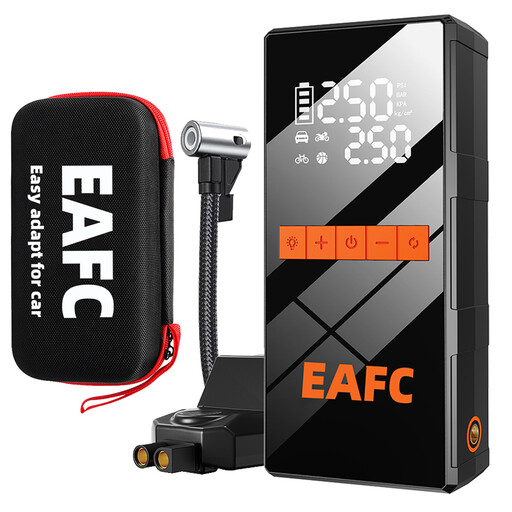
Its standout feature?: it's the compact and affordable 4-in-1 solution that gets the job done perfectly for most passenger cars.
Pros:
Who is it for?? The driver of a compact car or a standard sedan who is looking for a complete, simple, and budget-friendly emergency start kit for daily commutes and holiday trips alike.
Our selection covers a wide range of needs, but every driver is unique. To explore other models, compare different power ratings, or find complementary accessories, take a look at our full catalogue.
? Discover our complete range of battery kits
1. How often should you recharge a jump starter? Ideally, you should fully recharge it after each use. If you don't use it, most manufacturers recommend a maintenance charge every 3 to 6 months to preserve the battery's lifespan and ensure it's ready to go when you need it most.
2. Can you leave the jump starter in your car permanently? It depends on the model and its battery technology. Devices like the GOKKCL GK01, with its sodium-ion battery, are specifically designed to withstand extreme temperatures (from -40?°C to 80?°C). For standard lithium-polymer battery models, it's best to avoid prolonged exposure to intense heat (e.g., in direct sunlight during summer) or freezing temperatures. In all cases, consult the manufacturer's recommendations.
3. Is there a risk of damaging my car's electronics when using a jump starter? No, there is no risk as long as you use a model equipped with smart jumper clamps. These integrate multiple protections against short circuits, over-voltages, and, most importantly, reverse polarity (the classic mistake of connecting red to black and vice versa). These safety features prevent damage to the vehicle's battery, the booster itself, and all the car's electronic components.