
Livraison le jour même ou le lendemain

Qualité garantie

Débloquez vos offres de bienvenue: Livraison GRATUITE | Jusqu'à -80 % | 30 jours d'essai gratuits à JoyPlus
Téléchargez l'application
Embracing fresh fruit and vegetable juices? A brilliant move! Except, all too often, that initial enthusiasm deflates like a soufflé. The brand-new juicer, bought on a whim, ends up gathering dust in the back of a cupboard. The reason? A poor choice, often guided by clever marketing and common misconceptions.
To prevent your investment from turning into an expensive paperweight, you need to avoid the most common pitfalls. Understanding what truly sets different models apart will keep you from ending up with an appliance that fits neither your desires nor your lifestyle.
The market is overflowing with tempting promises, but not all are created equal. Here are the three classic mistakes that turn a good investment into a regret.
The Cleaning Nightmare: This is public enemy number one. An appliance with a myriad of complex parts, impossible-to-reach corners, and a filter that fights you every step of the way turns preparing a simple juice into a chore. Let's be clear: if cleaning takes longer than drinking, your machine is doomed to the cupboard. An easy-to-clean juicer isn't a luxury; it's a prerequisite for long-term use.
The Myth of Power at All Costs: We tend to believe that more watts mean a more powerful machine. This is partly true for a centrifugal juicer, where speed is the main selling point. But for a cold press juicer, the opposite is true: a slow rotation is a hallmark of quality. Excessive speed generates heat and oxidation, destroying some of the precious nutrients and enzymes in your produce along the way.
The Mismatched Machine: Buying a simple electric citrus press while dreaming of carrot or kale juice is the classic rookie mistake. Every machine has its specialty. Wanting a "do-it-all" appliance without defining your priorities (green juices, citrus juices, hard fruit juices?) is a direct path to disappointment and mediocre performance on all fronts.
You don't need an engineering degree to make the right choice. Just focus on these few points that will have a direct impact on your daily use.
This is the fundamental choice. It all depends on your priority: speed of execution or the nutritional quality of the juice.
The Centrifugal Juicer: It uses centrifugal force to separate the juice from the pulp. A metal grater spins at a very high speed (several thousand RPM) to pulverize the food.
The Cold Press Juicer (or Masticating Juicer): It works like a press. One or more augers slowly crush the food (between 40 and 110 RPM) to gently extract the juice.
A good juicer should be easy to assemble and disassemble, almost with your eyes closed. Check these points before you pull out your credit card:
A wide feed chute (75 mm or more) is a huge convenience. It allows you to drop in whole or large pieces of fruit (apples, peeled oranges...) without spending ten minutes at the cutting board. This is a considerable time-saver in your daily routine.
Rather than a random list, we've selected appliances that meet specific needs, keeping in mind the criteria and pitfalls we've just discussed.
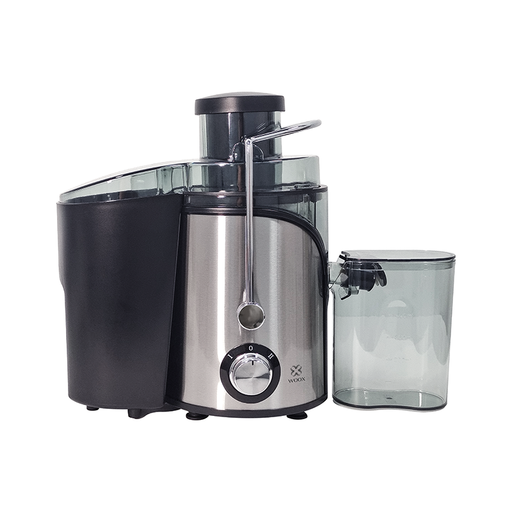
Why it's a match: For those who want fresh juice, made quick and easy. This centrifugal juicer is perfect for preparing a shot of vitamins in record time before heading to work. Its 600W motor ensures fast and efficient extraction.
Its wide 7.6 cm (3-inch) chute minimizes the chore of chopping, and its stainless steel design is built for quick cleaning. Two major barriers to daily use are thus removed.
Speed and a wide chute: the winning combo for rushed mornings. Guaranteed BPA-free materials.
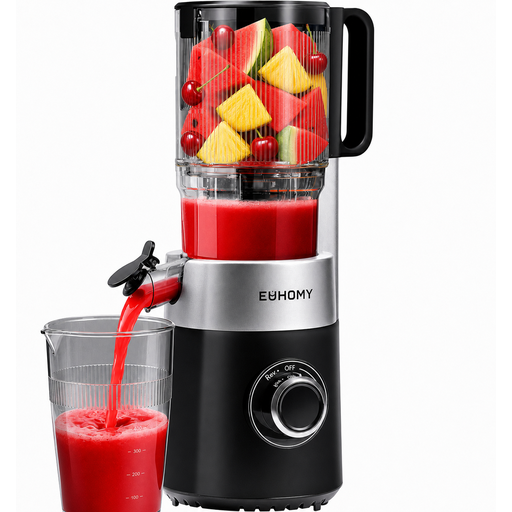
Why it's a match: This is the appliance for purists seeking impeccable juice quality. Its slow, quiet motor prevents oxidation and preserves nutrients, while its giant 135 mm chute lets you make juice for the whole family without even picking up a knife.
It debunks the myth of power with its 220W slow-rotation motor, entirely dedicated to preserving nutrients. The brand claims a 99% yield, ensuring you extract every last drop of juice and minimize waste.
Nutritional quality thanks to cold pressing, an XXL 135 mm chute, and a quiet motor. Assembly and cleaning are designed to be simple.
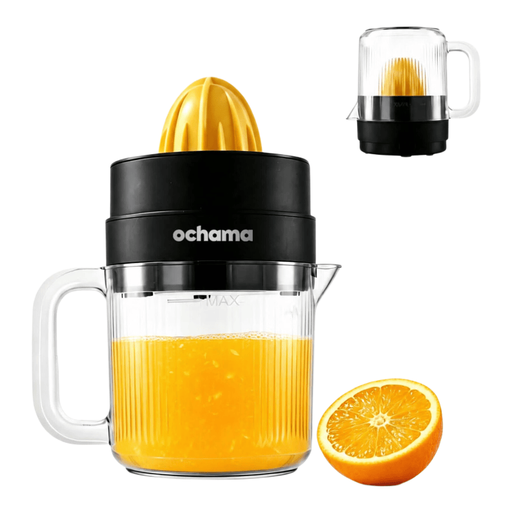
Why it's a match: If "fresh juice" means orange, lemon, or grapefruit to you, this specialized citrus press is the logical choice. It's simple, effective, and completely safe for family use.
It avoids being a mismatch by focusing on a single mission, but it performs it perfectly. No need for an overly complex machine if only citrus fruits catch your eye. Its bladeless design makes it particularly safe.
Dedicated to citrus, bladeless design for maximum safety, and disarmingly simple to use and clean.
Explore our full selection of appliances that meet our selection criteria and current safety standards.
A cold press juicer almost always has a better yield. In practical terms, it produces more juice and a drier pulp from the same amount of fruits or vegetables. The difference is most noticeable with leafy greens (spinach, kale) and herbs, which are the Achilles' heel of most centrifugal juicers.
It all depends on the model! Manufacturers have made huge progress on this front. Opt for appliances with fewer parts, dishwasher-safe components, and a good cleaning brush included. The secret: a quick rinse right after use (which is often enough) prevents the pulp from drying and turning cleaning into a nightmare.
Almost anything goes, but there are a few exceptions. Fruits that are too soft or have no juice (like bananas and avocados) won't yield anything. Also, remember to remove large pits (peaches, apricots) and thick, inedible skins (pineapple, mango). When in doubt, the user manual is your best friend.