
Livraison le jour même ou le lendemain

Qualité garantie

Débloquez vos offres de bienvenue: Livraison GRATUITE | Jusqu'à -80 % | 30 jours d'essai gratuits à JoyPlus
Téléchargez l'application
Making your own fresh juice is an excellent way to add more fruits and vegetables to your diet. But be warned: the juicer market is a jungle of often-misleading marketing promises. The wrong appliance almost always ends up collecting dust in a cupboard, a victim of tedious cleaning or daunting prep work.
Before you pull out your credit card, it's best to know the most common pitfalls so you can find the appliance that will truly fit into your daily routine. Here are the key things to watch out for.
To make the right choice, focus on the features that truly matter for daily use?: juice quality and ease of use.
There are two main technologies on the market?: the centrifugal juicer and the cold press juicer.
The width of the chute (or feed tube) where you insert the produce is a critical convenience factor. A wide-chute juicer (over 75?mm in diameter) lets you drop in whole fruits like apples or peeled oranges, which significantly reduces prep time. This is the secret to staying consistent in the long run.
A truly easy-to-clean appliance can be identified by several concrete signs?:
There's a right juicer for every type of user. Here is our selection for different profiles, based on our criteria for performance and ease of use.
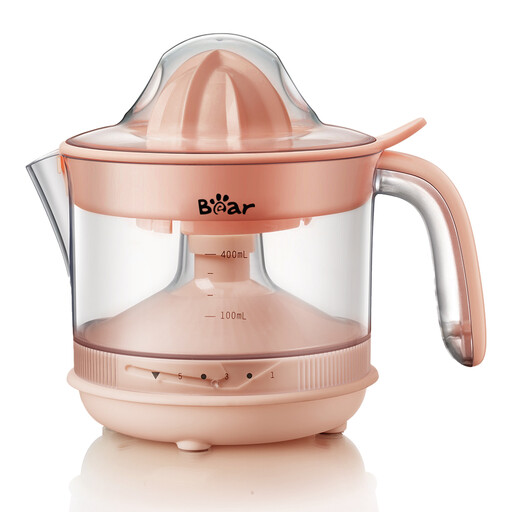
Why this model? For those who primarily want fresh orange, lemon, or grapefruit juice without the bulk of a multi-function appliance. Simple, direct, and incredibly effective for this specific task.
It doesn't try to do everything, and that's its strength. With few parts, intuitive assembly, and a quick cleanup, it bypasses the daunting complexity of multi-function models.
Blade-free design for safe use and 5 adjustable speeds to control the amount of pulp to your liking.
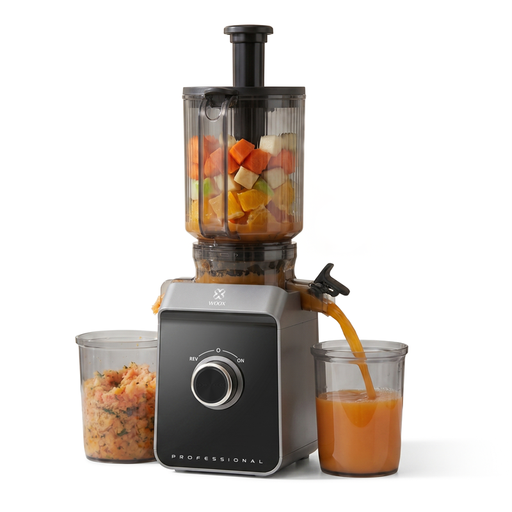
Why this model? Perfect for those who love to experiment with all kinds of fruits and vegetables. Its design tackles the biggest chore of all : cleaning the filter.
It sidesteps the "difficult to clean" trap thanks to its design, which eliminates the notorious fine-mesh metal filter. The parts rinse off much more easily, making daily use far less of a hassle.
Slow-rotating motor (cold press) to preserve nutrients and an extra-wide 130 mm chute for dropping in whole fruits. A very welcome time-saver.
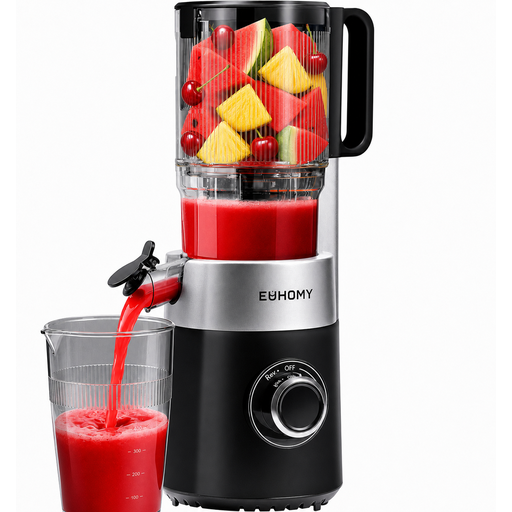
Why this model? Built for performance and large batches. Its XXL chute and excellent yield make it the perfect ally for families and those who prep their juice for the week ahead.
It demolishes the tedious prep work barrier with its XXL 135 mm feed chute. No more chopping chores : making juicing a much easier habit to form.
Maximum juice yield (claimed at 99% by the brand) thanks to a dual spiral auger, and a quiet motor so you won't disturb anyone, even in the morning.
We've curated a complete, up-to-date selection of appliances that meet our demanding selection criteria and current safety standards.
The fundamental difference is the technology. A centrifugal juicer grates produce at very high speeds, which generates heat and oxidizes the juice. An extractor, or cold press juicer, slowly crushes them to extract the juice, thereby better preserving nutrients, colour, and taste. The juice yield is also often higher with an extractor.
It all depends on the model! Older-generation or entry-level appliances are often a real chore to clean. Fortunately, recent models are designed to be easy to clean, with fewer parts, non-stick materials, specialised brushes, and designs without complex filters. This is a crucial point to verify before you make a purchase.
The vast majority of juicers accept a wide variety of produce?: hard fruits (apples, pears), root vegetables (carrots, beets), peeled citrus, and leafy greens (spinach, kale). However, it's recommended to remove large pits (from peaches, apricots) and to pre-cut very fibrous vegetables like celery to avoid jamming the auger. When in doubt, always consult the manufacturer's manual.