
Livraison le jour même ou le lendemain

Qualité garantie

Débloquez vos offres de bienvenue: Livraison GRATUITE | Jusqu'à -80 % | 30 jours d'essai gratuits à JoyPlus
Téléchargez l'application
By the Joybuy Editorial Team, July 14, 2026
So, you’re finally holding your new iPhone 16. After the initial moments of awe, one instinct kicks in?: protecting its precious screen. An unfortunate drop or a simple scrape from keys in your pocket can quickly turn this dream into a nightmare, complete with a hefty repair bill.
But with the overwhelming number of screen protectors on the market, how do you choose the right one?? This guide is here to help you make sense of it all. We’ve broken down the key features and selected the best options to protect your iPhone 16, 16 Pro, or 16 Pro Max without compromising on aesthetics or user experience.
To avoid falling for marketing gimmicks, let's focus on the three technical criteria that truly matter.
The 9H hardness rating is ubiquitous, and for good reason. Contrary to popular belief, this isn't a measure of impact strength but of scratch resistance, based on the Mohs scale of hardness. In practical terms, a 9H anti-scratch tempered glass will withstand daily wear and tear, such as contact with keys or coins in your pocket. This is the number one criterion for ensuring the longevity of your screen protector and, by extension, your phone's display.
What’s the biggest fear when installing a screen protector?? Those frustrating air bubbles and dust specks that ruin the final look. A botched application is not only unsightly; it can also impair the touchscreen's responsiveness. Fortunately, manufacturers are innovating with clever solutions, now offering easy-install kits?: alignment frames, automatic applicators, and even "dust-free chambers" that make the process virtually foolproof. These kits ensure millimeter-perfect alignment and a bubble-free application, even for those of us who are all thumbs.
A great screen protector should be completely unnoticeable. Prioritise high-transparency tempered glass (often marketed as "HD") to preserve the stunning display quality of the Super Retina XDR screen. The thinness of the glass is also crucial for maintaining flawless touch responsiveness, whether you're scrolling through social media or landing headshots in your favourite game. Finally, a quality oleophobic coating is the finishing touch that makes all the difference, keeping annoying fingerprints at bay.
With these criteria in mind, here are three models that stood out for their excellent design and simple installation.
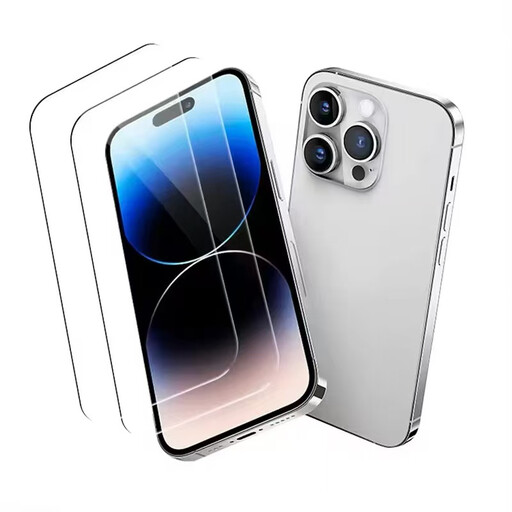
Key Feature?: Without a doubt, its ingenious installation system. The kit includes a chamber that removes dust and ensures perfect alignment. The result?: an ultra-simple and quick installation that anyone can master.
Pros?:
Who is it for?? For iPhone 16 Pro owners who want premium protection without the installation hassle.
Key Feature?: Designed for the standard iPhone 16, this model also features a simplified installation thanks to its applicator. It is made from high-alumina glass, renowned for its clarity and durability.
Pros?:
Who is it for?? For iPhone 16 users looking for an effective screen protector that is just as easy to install.
Key Feature?: Specially designed for the large screen of the iPhone 16 Pro Max, this tempered glass provides edge-to-edge coverage and features the same assisted installation system as the other models in the lineup.
Pros?:
Who is it for?? For iPhone 16 Pro Max owners who refuse to compromise on protecting their large screen and demand a perfect installation.
Your iPhone is now equipped to handle everyday life. While you're here, why not explore our other current selections, like our essential fashion picks for the season??
Discover our selection of basic tops
A film protector, typically made of flexible plastic (TPU or PET), is a basic solution that primarily protects against minor scratches but offers very little protection from impacts. Tempered glass, on the other hand, is a thin sheet of hardened glass. It is far more scratch-resistant (the renowned 9H rating) and, most importantly, is designed to absorb the energy from an impact. It will shatter in place of your screen, saving you from an expensive repair.
No, not if you choose a high-quality model. A good tempered glass protector, with an optimised thickness (usually between 0.2 and 0.33?mm), is engineered to be completely transparent to the touch system. The screen's responsiveness, including Haptic Touch, remains perfect. Only low-quality or excessively thick models might slightly affect sensitivity.
Absolutely not. It's crucial to distinguish between two things?: scratch resistance (where 9H excels) and impact resistance. A 9H tempered glass protector is extremely difficult to scratch, but it is still glass and will shatter upon a significant drop or impact. In fact, that is its purpose?: to sacrifice itself to save your iPhone's screen, which is far more expensive to replace.