
Livraison le jour même ou le lendemain

Qualité garantie

Débloquez vos offres de bienvenue: Livraison GRATUITE | Jusqu'à -80 % | 30 jours d'essai gratuits à JoyPlus
Téléchargez l'application
The promise of a hot air brush? A flawless, salon-quality blowout without leaving your bathroom. This 2-in-1 tool, which dries and styles in a single step, has revolutionised the hair routines of countless users. Yet, faced with an overwhelming number of options, it's hard to know where to start. The risk? Falling into a classic trap and ending up with a disappointing device.
As a Product Expert for Joybuy, my mission is to help you see things more clearly. Let's cut through the marketing jargon and focus on what truly matters. Before you make your choice, here are the three most common pitfalls to avoid:
For a successful, long-lasting blowout, you can't overlook certain technical details. Here are the features you should never neglect.
As we've said, raw power (in watts) isn't everything. A good device must, above all, offer a powerful and consistent airflow. Models equipped with digital or brushless motors, although more expensive, are a guarantee of performance and longevity. For most hair types, a power rating between 800 and 1200?W is the ideal compromise for efficient drying without the risk of overheating.
The material in direct contact with your hair is crucial for preserving its health.
A good styler must also be practical for daily use.
Because every head of hair is unique, we have selected models that meet specific needs, all tested and approved based on our performance and reliability criteria.
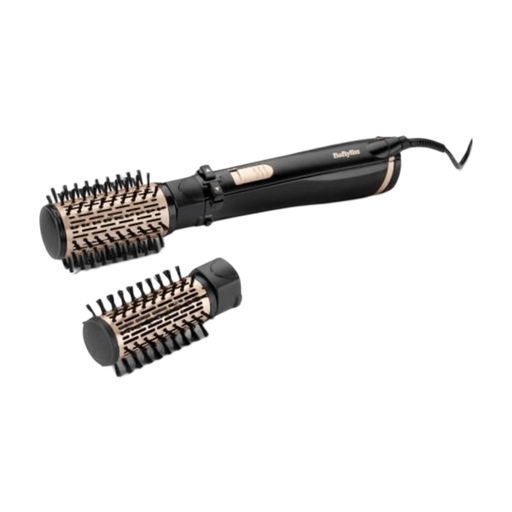
Profile: For those who want to replicate a stylist's technique for a soft, voluminous blowout every day. The rotating brush does all the work, wrapping the hair section to dry and shape it in a single pass.
This model focuses on one function, but it masters it to perfection. No excessive versatility, just two genuinely useful brush diameters (50mm and 42mm) to adapt to different lengths and create volume or soft waves.
Its 1000 W power is perfectly optimised. The ceramic coating and ionic technology are brand classics that guarantee a shiny, frizz-free result.
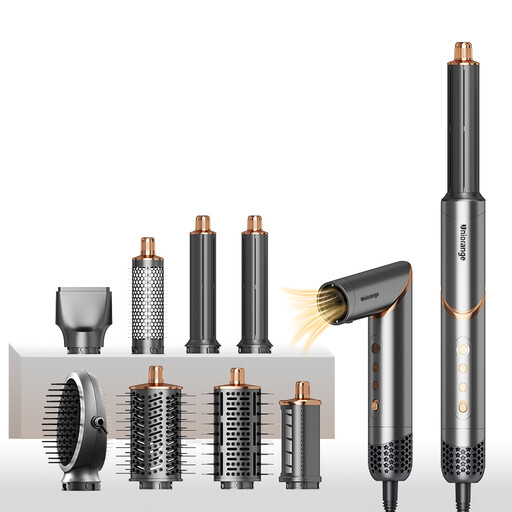
Profile: For those who love to change their hairstyle on a whim and want a single tool to do it all: dry, straighten, curl, wave, and add volume. An excellent alternative for exploring a multitude of styles without collecting multiple devices.
Unlike low-end gadgets, this one features a powerful 110,000 RPM brushless motor and 1400 W of power for truly high-performance airflow. Its 8 accessories, including the auto-wrap curlers, are well-designed and functional.
The auto-wrap curling technology (Coanda effect) automatically wraps the hair section for effortless curls. The very high concentration of negative ions (a claimed 200 million) promises maximum anti-frizz action and shine.
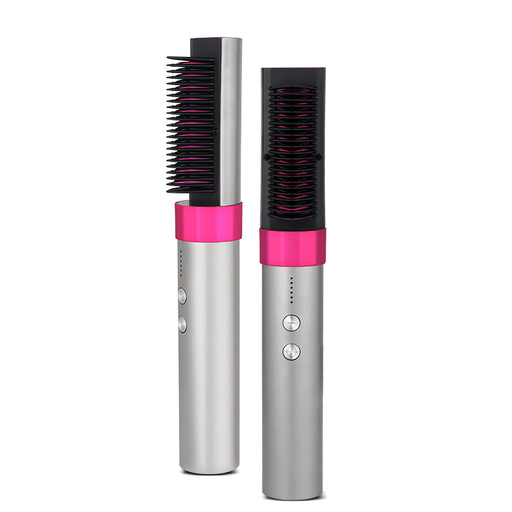
Profile: For those who primarily want quick straightening on dry hair and the freedom of a cordless device. Note: this is not a hot air brush, but a heated straightening brush, perfect for touch-ups during the day or for express styling in the morning.
This model doesn't promise the world: its mission is clear—to straighten. The PTC heating technology ensures a rapid and stable temperature rise, and the anti-scald structure of its bristles makes it very safe and easy to handle, even for beginners.
Its key advantage: being 100% cordless. Its 3000 mAh battery offers about 30 minutes of runtime. Its 6 temperature levels (from 130 to 200 °C) allow it to adapt to all hair types, from the finest to the thickest.
Discover our full selection of products that meet our quality criteria and European safety standards.
For fine to normal hair, 800 to 1000?W is sufficient. For thick, long, or hard-to-tame hair, aim for a model with 1200?W or more (with a good motor!) to save precious time. But keep in mind that the motor design and airflow quality always take precedence over the wattage number.
Ideally, no. It is highly recommended to towel-dry your hair until it is just damp (about 80% dry). Using a hot air brush on soaking wet hair is counterproductive: styling will take longer, and prolonged exposure to heat may damage it. Only the most powerful stylers can handle it, but removing excess water first is always the best practice.