
Livraison le jour même ou le lendemain

Qualité garantie

Débloquez vos offres de bienvenue: Livraison GRATUITE | Jusqu'à -80 % | 30 jours d'essai gratuits à JoyPlus
Téléchargez l'application
So you've just purchased an electric or plug-in hybrid vehicle, and home charging has become a top priority. Between the different power levels, connection types, and features, choosing an electric car charging station can quickly become a daunting task. Should you opt for a fixed wallbox or a portable charger? A single-phase or three-phase installation?
Our team of experts has created this guide to help you see things more clearly. Our goal: to demystify the available options and guide you toward the home charging solution that best fits your usage, your vehicle, and your electrical setup.
To make the right choice, three main criteria should be considered before browsing our selection.
The charging speed depends directly on the station's power, but also on your electrical installation.
Our advice: Before making any purchase, check your electrical panel or consult an electrician to determine the type of current available in your home.
Your lifestyle is also a determining factor in choosing a charger.
A smart charging station offers significant advantages in terms of management and savings. Via a smartphone app, you can:
Most modern chargers use a standard Type 2 charger connector (or EVSE Type 2), ensuring compatibility with almost all electric vehicles sold in Europe.
Here is a selection of products aimed at different user profiles, whether you're looking for pure performance, versatility, or the best all-around balance for daily use.
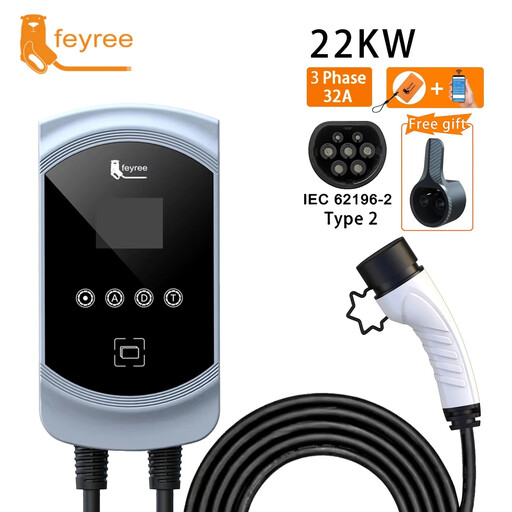
Why it stands out: This station is designed for those with a three-phase installation who want to leverage their vehicle's maximum charging capacity. Its smart chip and connectivity via the Tuya Smart app make it a particularly comprehensive smart charging station.
Key features:
Who is it for? Owners of EVs compatible with 22?kW charging who have a three-phase power supply. It's the ideal choice to minimize vehicle downtime.
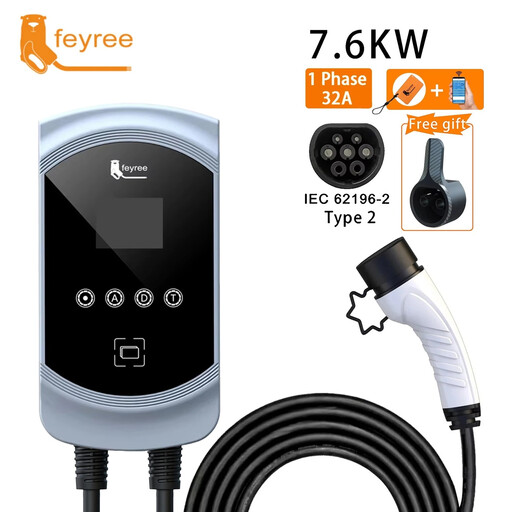
Why it stands out: This 7?kW wallbox (7.6?kW max) is the perfect solution for the vast majority of homes with single-phase power. It incorporates all the smart features of its bigger sibling (the 22?kW model) in a format suited for a standard domestic installation.
Key features:
Who is it for? Almost all users of electric or plug-in hybrid vehicles living in a detached house with a single-phase installation. It's the sensible choice for reliable and optimized home charging.
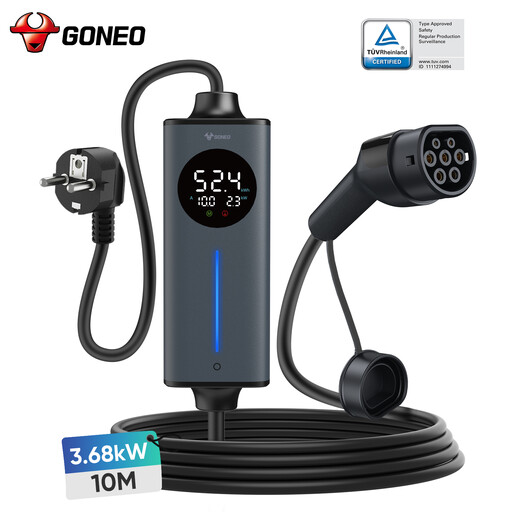
Why it stands out: This portable EV charger is the very definition of versatility. It plugs into a simple Schuko domestic socket and requires no special installation. Its timer function is a major asset for taking advantage of reduced electricity rates without needing a smart charger.
Key features:
Who is it for? Drivers who can't install a wallbox (renters), those who travel often, or as a reliable backup solution to keep in the trunk. It's also an economical option for owners of plug-in hybrids, whose smaller batteries don't justify the installation of a powerful wallbox.
Our selection covers the most common needs, but every situation is unique. If you want to explore other models, power levels, or features, feel free to browse our full range of chargers with a Type 2 Plug. There you will find a much wider selection of solutions to equip your home.
For a single-phase installation, a 7.4?kW station is the most common choice and is more than sufficient to charge most vehicles overnight. If you have a three-phase installation and your vehicle is compatible, an 11?kW or 22?kW station will offer much faster charging.
Yes. In many regions, a "right to charge" policy allows any resident of a shared property (owner or tenant) to install a charging solution in their parking space at their own expense. The process typically involves formally notifying the property management or homeowners' association before starting the work. A smart charger with individual metering is often the most suitable solution in this context.
For a fully electric vehicle with a large battery, a portable charger (typically between 2.3?kW and 3.7?kW) may take more than 24 hours for a full charge. It is therefore better suited as a backup or travel solution. However, for a plug-in hybrid vehicle (PHEV) or for moderate daily use (less than 50 km per day), it can be perfectly adequate.