What sets these machines apart?
First decide whether you want individual espressos, pre-portioned coffee or a pot of filter coffee. Then compare the space required, the steps involved and the maintenance needed for the model you’re considering.
| Criteria |
What to check |
Who it suits |
| Choice of beans |
Check the bean-to-cup machine’s grind and drink settings, as well as the types of beans it accepts. |
I want to try different beans while making espresso regularly. Around 31% of consumers would put this freedom of choice first. |
| Speed and size |
Check the machine’s dimensions, allowing room to open the reservoir, and then check which capsule format it accepts. |
When space is limited, I prefer pre-portioned coffee with minimal effort. This convenience would be the top priority for around 25% of consumers. |
| Making several cups |
For a filter coffee maker, compare the usable capacity of the carafe and how easy it is to clean. A model with a grinder is still a filter coffee maker. |
I serve several people in one go rather than making espresso one cup at a time. Around 19% of consumers would prioritise serving coffee from a carafe. |
| Manual preparation |
For a portafilter machine, check which accessories are included and whether you’ll need a separate grinder. |
I want to measure and tamp the coffee myself, even if it takes practice. Around 13% of consumers would put manual control first. |
| Milk-based drinks and maintenance |
Check how to clean the milk system and brew group. If noise matters to you, look for a measurement that applies to the specific model. |
I want to enjoy a variety of drinks without taking on cleaning tasks that disrupt my routine. Around 12% of consumers would put this combination of needs first. |
Bean-to-cup machines and related models on Joybuy
These models are worth considering if you want a machine with a grinder for making coffee from beans at home. The Ninja Luxe Café Mini also combines espresso and filter coffee options. For each model, compare the advertised features with the drinks you usually make and the level of maintenance you’re happy to take on.
 Image unavailable
De’Longhi Magnifica Start ECAM220.21.WW, white
Worth considering if you regularly make espresso from beans and prefer an automatic machine. If you enjoy milk-based drinks, check what’s involved in using the steam wand and cleaning this model.
View on Joybuy
 Image unavailable
De’Longhi Magnifica S ECAM22.140.B, black
An option for anyone who wants to make espresso with an integrated grinder. If milk-based drinks are important to you, check how to use the steam wand and what maintenance the manual recommends.
View on Joybuy
 Image unavailable
HiBREW H16, automatic espresso machine with grinder
Worth a look if you want to make different coffees from beans: the product name lists six drinks and a milk system. Before choosing this model, check the manual for instructions on using and cleaning the milk system.
View on Joybuy
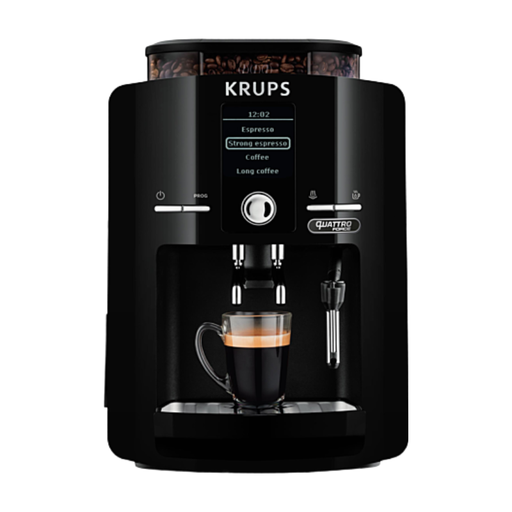 Image unavailable
Krups EA82F0, automatic machine, 1.7 L, 1450 W, black
Worth considering if you want to make coffee from beans with an automatic machine. The product name lists a 1.7 L reservoir and 1450 W power. Check the manual for details of this model’s grinder settings and maintenance requirements.
View on Joybuy
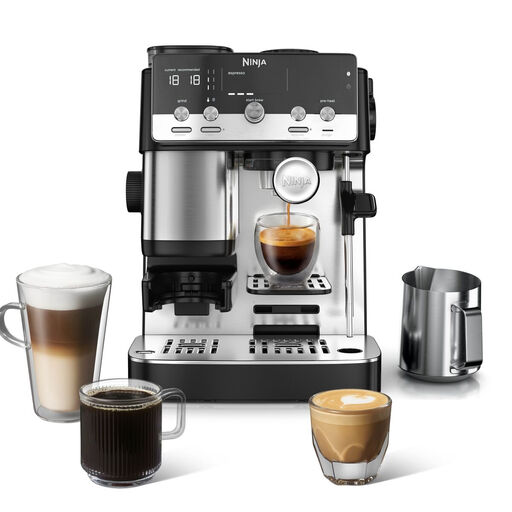 Image unavailable
Ninja Luxe Café Mini ES301EU, espresso and filter coffee machine with grinder
Worth considering if you want to switch between espresso and filter coffee while using beans. The information about the milk frother is contradictory, so confirm how it works on the ES301EU model before choosing it for milk-based drinks.
View on Joybuy
Frequently asked questions
How often should you descale a bean-to-cup machine?
Follow your model’s alerts and manual rather than sticking to a schedule that’s the same for every machine. Philips says its machines alert you when it’s time to descale; water hardness, how often you use the machine and whether you use a filter also matter. Use the products and follow the procedure recommended by the manufacturer: JURA warns that unsuitable products may damage its machines.
Can you always remove the brew group from a bean-to-cup machine?
No. Don’t assume it’s removable just because the machine has a grinder. Check the manual for the exact model to find out whether the brew group can be removed and rinsed, or whether the machine uses a different cleaning procedure. De’Longhi describes rinsing a removable brew unit on the models that have one.
Where can you dispose of coffee capsules in France?
For aluminium or plastic capsules, ADEME recommends putting them in the recycling bin, bag or container for packaging. For capsules made from other materials, check the recycling instructions for that material and what collection options are available near you.
Are spare parts for a coffee machine always available?
No. Ask for availability information for the specific model before you buy. The DGCCRF explains that the requirement to make spare parts available only applies to certain product categories. An offer of parts for a range doesn’t guarantee that every component for a particular model is available.
Does the legal guarantee of conformity cover a second-hand coffee machine bought from a professional seller?
Yes. In France, it also applies to second-hand and refurbished goods sold by a professional to a consumer, as the Ministry of the Economy points out. It covers defects in conformity that existed when the goods were delivered. Keep a copy of the product description, the machine’s model number and your proof of purchase.


