
Livraison le jour même ou le lendemain

Qualité garantie

Débloquez vos offres de bienvenue: Livraison GRATUITE | Jusqu'à -80 % | 30 jours d'essai gratuits à JoyPlus
Téléchargez l'application
Driving at night or in bad weather with yellowish halogen lighting is an experience all too familiar to many drivers?: reduced visibility, blurry road signs, and premature eye strain. To fix this, switching to an H7 LED bulb is the most effective solution to upgrade your headlights and regain true driving comfort.
The only catch?: the market is flooded with models that have often obscure technical specifications. Between lumens, kelvins, CANbus compatibility, and promises of "easy" installation, it's hard to sort through the options. This guide is here to break down the key points and help you choose the H7 LED kit perfectly suited to your vehicle and needs, without getting lost in marketing jargon.
Before diving into our selection, let's review the essential criteria for a successful purchase.
This is the number one criterion. Compatibility needs to be checked on two levels?:
The quality of an H7 LED headlight isn't just a race for the highest numbers.
An LED's longevity is directly linked to its ability to dissipate heat. If it overheats, both its performance and lifespan will drop drastically. The most effective systems combine a body made of aviation-grade aluminium and an active fan. Good cooling ensures consistent brightness and a lifespan measured in tens of thousands of hours.
Finally, a crucial point before you confirm your purchase?: check the current regulations. The use of aftermarket LED kits on public roads is not always permitted. Make sure to choose a road-legal H7 LED bulb if you don't want to be restricted to track use only.
We have selected three models that stand out for their design, performance, and user feedback.
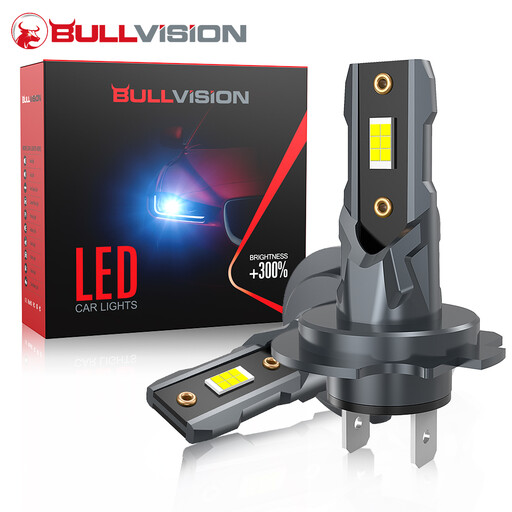
Bullvision H7 LED Bulbs, 6000K
Why this model stands out?? It's all about balance. Its 1:1 design, identical to a halogen bulb, makes it an ultra-simple solution to install. The focus is on a precise light beam that improves visibility without dark spots or glare for others.
Key features?:
Who is it for?? For drivers who want a simple and effective first upgrade from their halogens, prioritising ease of installation and a clean light output. Manufacturer's note: an additional CANbus decoder may be required for some vehicles (Volkswagen, Mercedes-Benz, BMW).
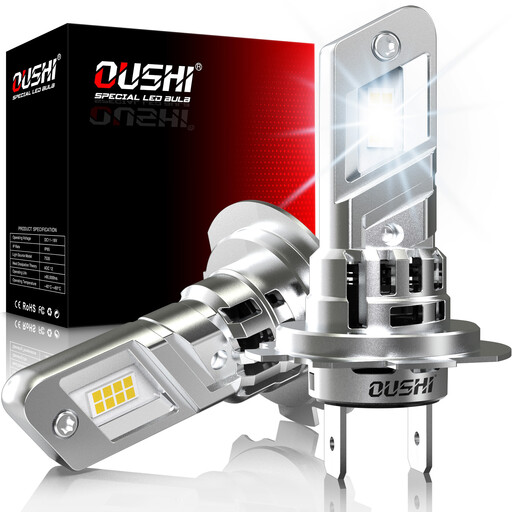
OUSHI H7 LED Headlight Bulbs, 6500K
Why this model stands out?? This kit focuses on light output and maximum electronic compatibility. It integrates a latest-generation CANbus system, designed to work flawlessly on 98% of vehicles, including European models known for being more sensitive to OBD errors.
Key features?:
Who is it for?? For owners of recent or European vehicles who want a spectacular increase in brightness while avoiding electronic headaches.
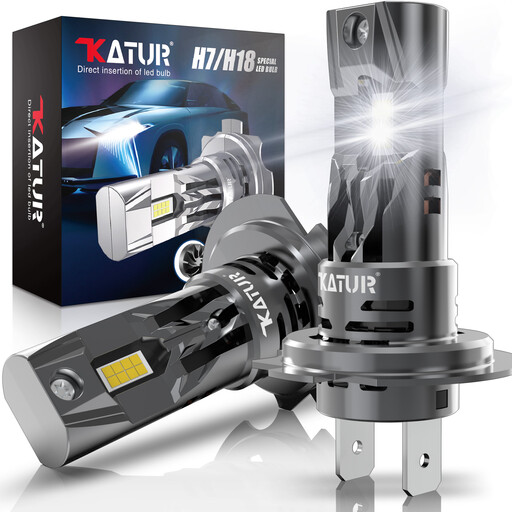
KATUR H7 LED Headlight Bulbs, 100W
Why this model stands out?? This is where we enter the high-performance category, with a power of 100W per pair and an external driver. This separate architecture ensures better heat and power management, guaranteeing stable performance and increased longevity.
Key features?:
Who is it for?? For enthusiasts looking for maximum light output who aren't afraid to install a kit with an external driver, which is a bit bulkier but more thermally efficient.
Our selection highlights popular choices, but every vehicle and driver has specific needs. If you can't find what you're looking for or want to explore other models, browse our complete catalogue.
? Discover Our Full Range of LED Headlight Bulbs
1. Is it difficult to install an H7 LED kit?? Most recent kits are designed to be plug-and-play. If you choose a 1:1 format model, the installation is as simple as changing a standard halogen bulb and only takes a few minutes. On some vehicles, however, access to the headlight housing may be tighter and require a bit of patience.
2. Will my on-board computer show an error?? This is the main risk on multiplexed vehicles (with a CANbus system). To avoid it, you must choose bulbs labelled "CANbus Ready" or "OBD Error-Free." On the most sensitive models (often German brands), an external CANbus decoder, sold separately, may be necessary.
3. What's the difference between lumens and kelvins?? It's very simple?: lumens (lm) measure the amount of light (luminous power), while kelvins (K) define its colour. The more lumens, the brighter the light. A low temperature (around 3000?K) produces a warm, yellow light. A high temperature (6500?K) produces a cool, pure white light. For modern automotive lighting, the 6000-6500?K range is the de facto standard for its intense white appearance.