
Livraison le jour même ou le lendemain

Qualité garantie

Débloquez vos offres de bienvenue: Livraison GRATUITE | Jusqu'à -80 % | 30 jours d'essai gratuits à JoyPlus
Téléchargez l'application
Replacing your old halogen bulbs with a powerful H7 LED kit is arguably one of the most dramatic upgrades you can make to your car, for both safety and style. The problem is, the market is a jungle saturated with often misleading marketing promises. Between astronomical lumen figures and "plug and play" claims that aren't always honest, a purchase that seems promising can quickly turn into a disappointment.
As a Product Specialist at Joybuy, my mission is to help you see things more clearly. Together, let's break down the traps to avoid and the criteria that truly matter, so you can make an informed choice without being fooled by marketing's siren song.
Before you pull out your credit card, it's crucial to know the common mistakes that turn a great deal into a headache.
To successfully upgrade to H7 LEDs, focus on these three key, objective points.
The true performance of an LED bulb isn't measured in lumens, but in lux (the amount of light that actually hits the road). A good H7 LED conversion kit must perfectly mimic the beam pattern of a halogen bulb. To achieve this, the design is paramount:
A sharp, well-defined beam cutoff is the secret to maximum visibility without dazzling others—a non-negotiable criterion for your safety and for passing vehicle inspections with peace of mind.
Colour temperature, expressed in Kelvin (K), determines the hue of the emitted light.
A 6000K H7 bulb produces a pure white light, often called the "xenon effect", which significantly improves the perception of contrasts and colours at night. Above 6500K, the light starts to appear blue, which can impair visibility in rain or fog and attract unwanted attention from law enforcement. The 6000-6500K range is therefore the ideal compromise between a modern look and optimal effectiveness.
This is often where things go wrong.
Rather than an endless list, we've selected products that meet specific needs. There's a solution for every type of driver.
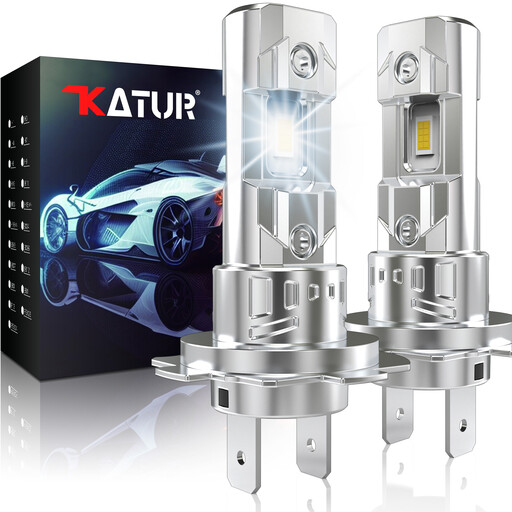
The Verdict: Ideal for those who want a noticeable and reliable upgrade without the hassle. The fanless design eliminates any risk of mechanical failure and noise, while simplifying installation.
Its 1:1 mini design and fanless construction bypass the fitment trap. The installation is truly "plug and play," even in the tightest headlights.
Whisper-quiet operation and maximum durability thanks to the absence of moving parts. The 26,000 lm brightness (per pair) is more than enough to see a dramatic difference.
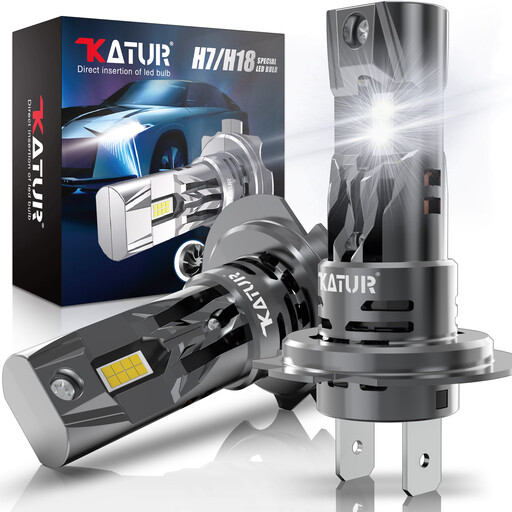
The Verdict: For those who swear by raw performance and want lighting that turns night into day. With 100W and 30,000 lumens per pair, this kit is designed for maximum range and visibility.
Despite its colossal power, this kit tackles the trap of an imprecise beam with "ultra-thin chip spacing" that promises a sharp cutoff. Cooling is handled by a 16,000 RPM turbo fan.
Exceptional light output for absolute visibility. Its intelligent external driver optimises Canbus compatibility and system longevity.
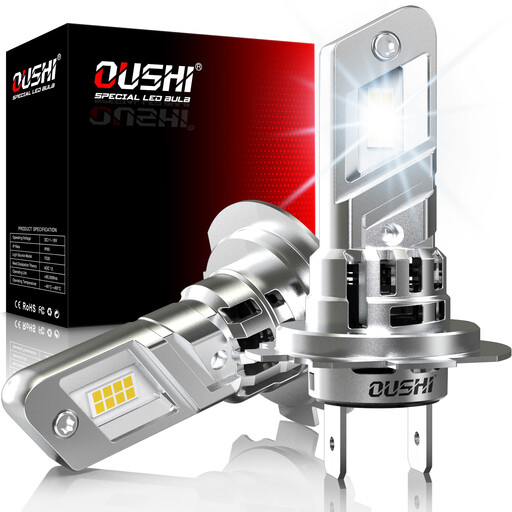
The Verdict: The go-to solution for owners of modern cars, especially German models, which are known for being notoriously finicky with electronics. This model bets everything on bulletproof Canbus compatibility for a "zero-hassle" integration.
It tackles the Canbus trap head-on by integrating a "latest-generation CANBUS system" advertised as compatible with 98% of vehicles, including the most sensitive ones.
Rock-solid electronic compatibility, paired with a 1:1 mini format that ensures a modification-free installation, even when space is at a premium.
We have put together a complete selection of products that meet our selection criteria and are highly rated by users.
Regulations are strict: to be street legal, a headlamp must be used with the type of bulb for which it was approved. Technically, replacing a halogen with an LED not originally specified by the manufacturer makes the vehicle non-compliant. In practice, during a vehicle inspection, the focus is on the light colour (white or yellow) and, most importantly, the beam quality (no glare). A high-quality H7 LED kit that faithfully reproduces the original beam cutoff will therefore pass inspection in the vast majority of cases. As a precaution, always keep your original halogen bulbs.
Yes, by a long shot, but with one crucial condition: heat management must be flawless. A classic halogen lasts between 500 and 1,000 hours. A quality LED can exceed 20,000 hours of operation. The Achilles' heel of an LED is the heat it generates. An effective cooling system (aerospace-grade aluminium heat sink, high-performance fan) is the key to achieving such longevity. A poorly cooled, low-end kit will see its lifespan collapse in just a few months.
Sometimes, yes. Some manufacturers (notably Volkswagen, BMW, Mercedes-Benz) use proprietary retaining rings or clips to hold the H7 bulb in place. The often wider base of an LED bulb may then require an adapter to ensure a stable and secure fit. It is therefore wise to check your vehicle's mounting system before purchasing, or choose a kit that explicitly mentions compatibility with your car model.