
Livraison le jour même ou le lendemain

Qualité garantie

Débloquez vos offres de bienvenue: Livraison GRATUITE | Jusqu'à -80 % | 30 jours d'essai gratuits à JoyPlus
Téléchargez l'application
Welcoming a puppy is a joyous occasion, but it's also a huge responsibility, starting with their nutrition. In the jungle of kibble options, it's easy to get lost. You want the best for their development and often turn to grain-free puppy food, but between complex labels and marketing jargon, the choice can quickly become a headache.
Don't panic. As a product expert at Joybuy, I'm here to break it all down with you and help you find the perfect formula for your new four-legged companion.
Before diving into our selection, here are the key points to check to make the right choice, without any guesswork.
The quality of a kibble is judged first and foremost by its composition. The rule is simple: ingredients are listed in order of weight. Prioritise formulas where the first ingredient is a clear and specific animal protein source (e.g., "fresh chicken," "salmon," "dehydrated lamb"). A high-protein puppy food is an excellent asset for developing muscle mass. Conversely, avoid vague terms like "animal by-products," which often hide ingredients of varying quality.
Highly popular, grain-free formulas replace grains (wheat, corn, rice...) with alternatives like sweet potato, peas, or lentils. This is a compelling option for a puppy with a sensitive stomach, as grains can sometimes be poorly tolerated. However, "grain-free" isn't a silver bullet. The most important thing is to find the recipe your companion digests best, with or without grains.
The growth of a large-breed puppy is a marathon, not a sprint. An unsuitable diet can weaken a developing skeleton. For a large-breed puppy food, two nutrients are crucial for joint support and should be monitored closely: glucosamine and chondroitin. Also, ensure that calcium and phosphorus levels are perfectly balanced to guarantee a strong bone structure and harmonious growth.
After the theory, let's get practical. Here is our selection of kibbles that check all the boxes for composition and benefits for growing puppies.
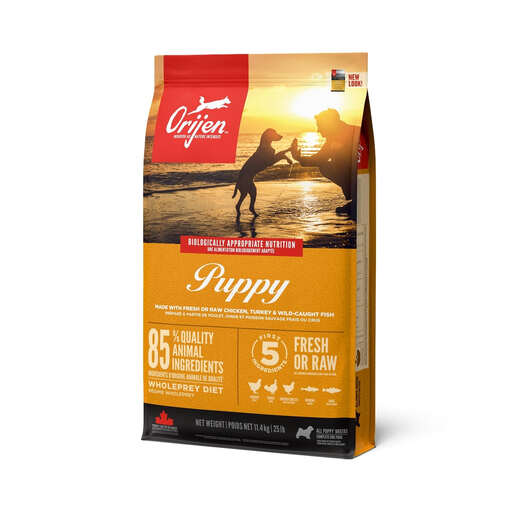
Why It Stands Out:Orijen puppy food is based on the brand's core "Biologically Appropriate" concept. Its strength? A record-breaking content of animal-based ingredients (85%), featuring a wide variety of meats, organs, and cartilage. It all follows the WholePrey principle, which closely mimics the natural diet of canines.
Key Features:
Who is it for? This is the premium option for owners of puppies of all breeds who are looking for the absolute best in animal protein and nutritional density for explosive growth.
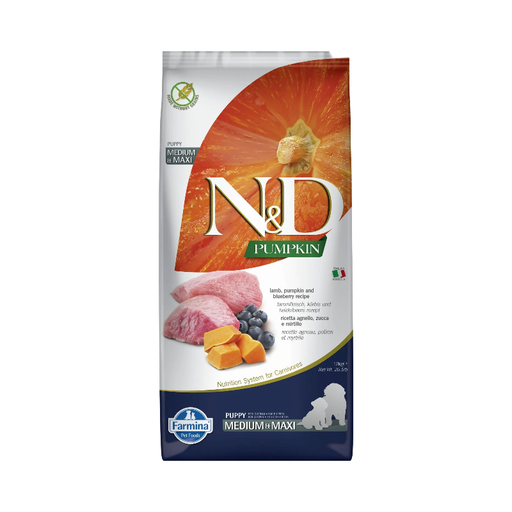
Why It Stands Out: The N&D Pumpkin line of Farmina puppy food focuses on premium ingredients, with a clearly identified star protein: lamb. Its special touch is the addition of pumpkin, a fibre powerhouse that's excellent for digestive health.
Key Features:
Who is it for? This formula is ideal for medium and large-breed puppies, especially if they have delicate digestion or if their owners want to avoid poultry.
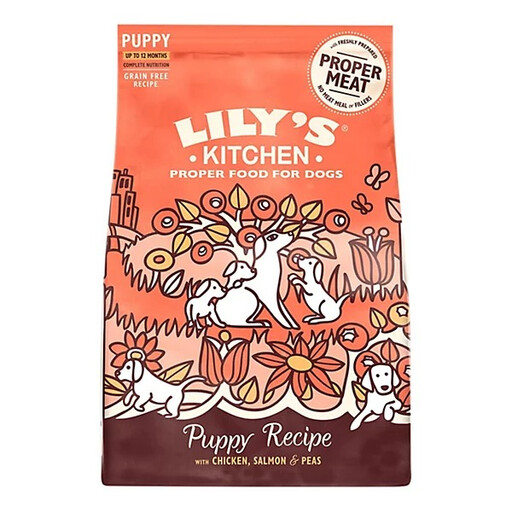
Why It Stands Out: Lily's Kitchen's philosophy? Using freshly prepared meat as the number-one ingredient. The recipe is then enhanced with a cocktail of vegetables, fruits, and botanical herbs to create a complete, balanced, and especially gentle diet for the youngest stomachs.
Key Features:
Who is it for? An excellent choice for owners who want a recipe with fresh, transparent ingredients, taking a holistic and healthy approach to nutrition.
Your puppy has their own tastes and needs. If our selection doesn't perfectly match your requirements, or if you're simply curious to discover other flavours and compositions, feel free to browse our full range.
? Discover Our Full Range of Puppy Food
The transition is generally made when the puppy reaches 80-90% of their adult size. This timing varies by breed:
The amount depends on their age, weight, activity level, and the caloric density of the kibble. Always refer to the detailed feeding guide on the packaging. For very young puppies, divide the daily portion into 3 or 4 meals, then switch to 2 meals a day around 6 months of age. Most importantly, keep an eye on their body condition and adjust the quantities as needed.
Grain-free is an excellent option for many puppies, especially those with sensitive digestion. But be aware, it's not an absolute guarantee of quality. The most important factor remains the overall quality of the ingredients (proteins, fats, fibres). If in doubt, or if your puppy has a health issue, there's only one thing to do: consult your veterinarian.