
Livraison le jour même ou le lendemain

Qualité garantie

Débloquez vos offres de bienvenue: Livraison GRATUITE | Jusqu'à -80 % | 30 jours d'essai gratuits à JoyPlus
Téléchargez l'application
Choosing the right p?té for your cat can often be a puzzle. Faced with shelves flooded with marketing claims, it's hard to separate fact from fiction. As a product expert for our editorial team, my mission is to help you see things more clearly. This guide focuses on grain-free cat p?té and gives you all the keys to making an informed choice, far from the usual marketing traps.
A growing number of owners, concerned about their feline's well-being, are turning to grain-free recipes. But be careful—not all products are created equal. Here are the most common pitfalls to be aware of.
To make the right choice, focus on these three fundamental points.
The cat is a strict carnivore: the quality of its diet depends above all on animal proteins.
This table, often in tiny print, is a real gold mine.
A healthy recipe is more than just grain-free. Check that the product is free from added sugars, artificial colours, or questionable preservatives. While some additions like herbs (sage, valerian) or berries (cranberries) can have nutritional benefits, sugar has absolutely no place in a cat's bowl.
By applying these criteria, one product stands out for its transparent formulation and the quality of its ingredients. It perfectly meets the expectations of the most discerning owners.
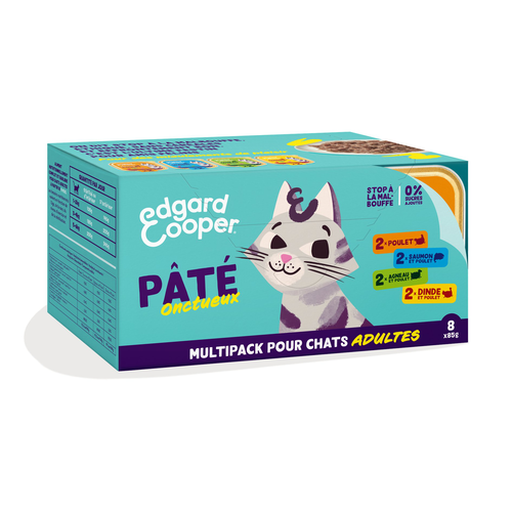
Why we recommend it: This pack is for owners seeking total transparency and premium ingredients. The Edgard Cooper brand focuses on fresh meat as the first ingredient, slow cooking that preserves nutrients, and strong ethical commitments (recyclable packaging, donations to charities). These are values that resonate with a growing number of savvy consumers.
The composition is crystal clear: up to 59% clearly identified fresh meat (chicken, turkey...), with no animal meal or filler ingredients. This counters the trap of vague lists and ambiguous 'natural' marketing.
High in fresh meat, grain-free, and gluten-free. The cat p?té variety pack format is perfect for adding variety to meals and preventing palate fatigue. The recipe is enriched with taurine, an essential amino acid for cat health.
Discover our full selection of products that meet our strict selection criteria and current regulations.
The ideal portion depends on your cat's weight, age, activity level, and metabolism. As a general rule, an adult cat weighing 4 kg is recommended to have between 2 and 3 trays of 85 g per day. Always refer to the instructions on the packaging and adjust the dose if your cat gains or loses weight. And of course, always provide fresh water.
No, but it should be done gradually to avoid upsetting their digestive system. Over a period of 7 to 10 days, mix a small amount of the new p?té with their old food, then gradually increase the proportion until the switch is complete.
Grain-free foods, rich in fresh meat, often have a higher purchase price. However, their high digestibility and nutritional density often mean you can feed smaller portions. Consider it an investment in the long-term health and well-being of your companion.