
Livraison le jour même ou le lendemain

Qualité garantie

Débloquez vos offres de bienvenue: Livraison GRATUITE | Jusqu'à -80 % | 30 jours d'essai gratuits à JoyPlus
Téléchargez l'application
As a cat owner, you want the very best for your pet's health and well-being. And it all starts in the food bowl. But with the jungle of pet foods out there, deciphering labels can be a real puzzle. If you're considering a grain-free cat p?té, you're looking to respect your cat's carnivorous nature with a suitable diet.
This guide is here to help you see things more clearly. We'll break down the essential criteria for choosing a good wet cat food and present a selection of products that tick all the quality boxes. The goal: to give you the keys to making the best choice with complete confidence.
To avoid getting lost in the aisles, here are three key points to check on the label to ensure a p?té's quality.
The golden rule is simple: meat should always be the first ingredient. As strict carnivores, cats have a digestive system designed to process animal-based proteins and fats. A high-quality natural cat food is therefore based on a high percentage of meat and quality offal (heart, liver, gizzards).
Demand transparency. Specific terms like "chicken fillet" or "veal heart" are a sign of quality, far more so than vague mentions like "animal by-products." The absence of grains (wheat, corn, rice) is an excellent starting point, but also look out for added sugars, preservatives, and artificial flavourings.
Every cat is unique. Its age, digestive sensitivity, or allergies are factors that should not be overlooked.
A meat-rich cat food guarantees the intake of essential amino acids, especially taurine, which a cat's body cannot produce. The other major benefit of wet food is hydration. Since cats naturally drink very little, a wet diet is a real plus for their urinary system health.
A closer look at three products from the MjAMjAM brand, renowned for its transparent recipes and very high meat content.
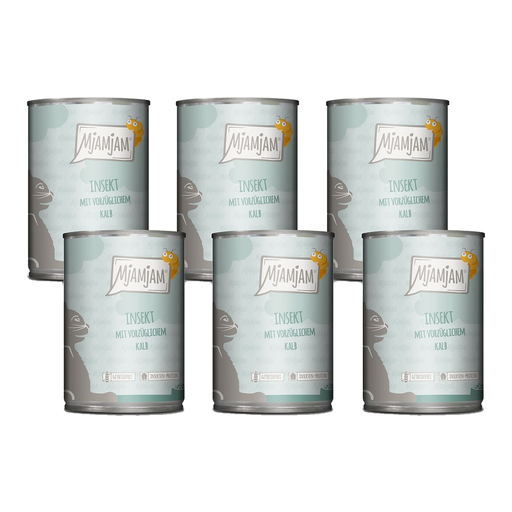
Why this p?té stands out
This recipe stands out by incorporating an innovative and sustainable protein source: insects. Combined with high-quality veal, they create a complete and highly digestible meal. Its hypoallergenic formula makes it an excellent alternative for cats with sensitive stomachs.
Key Features
Who is it for?
Ideal for adult cats, especially those with digestive sensitivities or food allergies. It's also a smart choice for owners who want to vary their pet's protein sources with a more eco-friendly option.
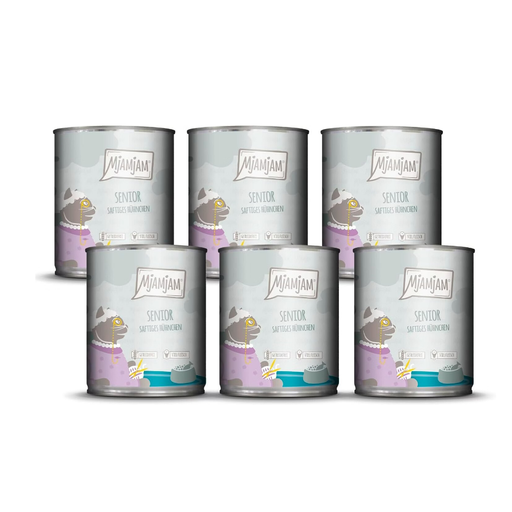
Why this p?té stands out
Designed for ageing cats, this senior cat p?té is a single-protein recipe made with chicken. It includes targeted ingredients like chicory (for digestion), salmon oil (for skin and coat), and green-lipped mussel (for joint support) to perfectly meet the needs of seniors.
Key Features
Who is it for?
Perfectly suited for senior cats. Its single-protein formula also makes it ideal for cats with intolerances to other meats.
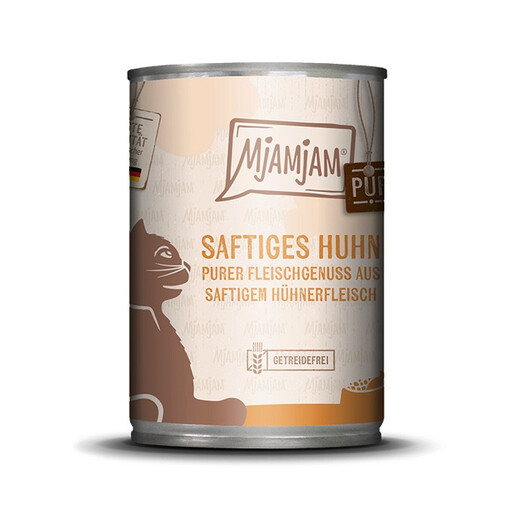
Why this p?té stands out
A commitment to simplicity and quality. With 71% chicken and its broth, this recipe gets straight to the essentials: high-quality meat and nutrients. A perfect foundation for a daily natural cat diet.
Key Features
Who is it for?
Perfect for most adult cats without specific dietary needs. It's the trusted choice for owners looking for a simple, effective, and meat-rich MjAMJAM cat p?té.
These three products are perfect examples of high-quality wet food. To discover other recipes, formats, or brands that share the same high standards, explore our full selection.
? Discover our full range of 400g wet food
Grains are ingredients that a cat's digestive system, as a strict carnivore, struggles to process. A grain-free diet, rich in animal protein, respects its fundamental nature. The benefits are numerous: better digestion, a lower risk of allergies, and often a healthier, shinier coat.
To avoid any digestive upset, the transition must be gradual. The principle is simple: over 7 to 10 days, mix a little more of the new p?té into the old one each day until it has been completely replaced.
A p?té is called single-protein when it contains only one source of animal protein (e.g., 100% chicken or 100% lamb). It's the ideal solution for cats with food allergies or intolerances, as it makes it easy to identify the culprit ingredient in case of a reaction (an elimination diet).