
Livraison le jour même ou le lendemain

Qualité garantie

Débloquez vos offres de bienvenue: Livraison GRATUITE | Jusqu'à -80 % | 30 jours d'essai gratuits à JoyPlus
Téléchargez l'application
The GPS smartwatch market is a crowded field. With models designed for hardcore runners, casual hikers, and those simply focused on health tracking, it's difficult to know where to start. Whether you're a passionate athlete or just mindful of your well-being, features vary dramatically from one device to the next.
This guide is here to bring clarity. We'll review the criteria that truly matter and present our selection of the top models to help you find the watch that's a perfect fit for your wrist, your lifestyle, and your athletic goals.
Before you commit to a specific model, it's crucial to understand what separates a great watch from a simple gadget. Here are the key points to consider.
Battery life is arguably the most frustrating factor in daily use. Manufacturers typically provide two figures: battery life in "smartwatch" mode (notifications, daily tracking) and in "active GPS" mode (during your workouts). For ultra-trail runners or long-distance hikers, record-breaking GPS battery life is non-negotiable. For everyone else, strong endurance in smartwatch mode will save you the chore of daily charging.
On a sports watch, reliable data is fundamental. Dual-frequency GPS (or multi-band) technology is a game-changer, offering ultra-precise location tracking, even when you're between tall buildings or deep in a dense forest. The accuracy of the wrist-based heart rate monitor is just as crucial for training in the correct zones. Finally, metrics like sleep tracking and SpO2 (oxygen saturation) measurement paint a complete picture of your overall fitness.
Your fitness watch needs to be built for adventure. Pay attention to the materials: the case (polymer, titanium, steel) and the screen's glass (Corning Gorilla Glass, sapphire crystal) determine its resistance to everyday bumps and scratches. Water resistance, rated in ATM, is another key factor. A 5 ATM rating is sufficient for swimming in a pool, but for diving or more demanding water sports, aim for at least 10 ATM.
With these criteria in mind, here are the models that caught our eye, each with its own distinct market position.
Garmin's vívoactive line has always excelled in versatility. It caters to regular athletes as well as those looking for a comprehensive and stylish health smartwatch for daily wear.
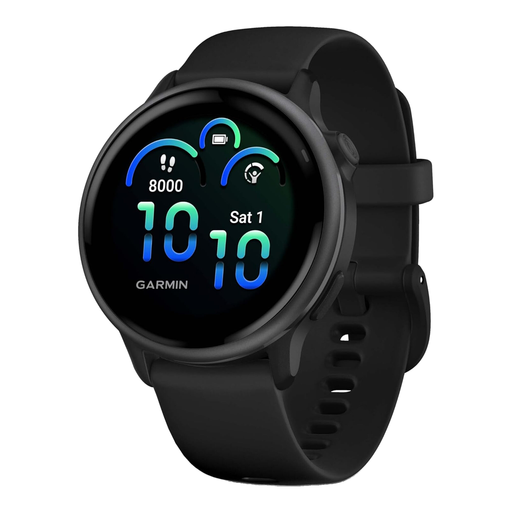
What sets it apart: The vívoactive 6 makes a strong impression with its stunning AMOLED display, which is readable in direct sunlight, and its full arsenal of sensors. We especially appreciate its Body Battery energy monitor and Sleep Score, two very practical tools for better managing your recovery.
Key features:
Who is it for? For those who want a do-it-all watch: elegant enough for the office, powerful enough for the gym, and uncompromising on health tracking. The ultimate Swiss Army knife.
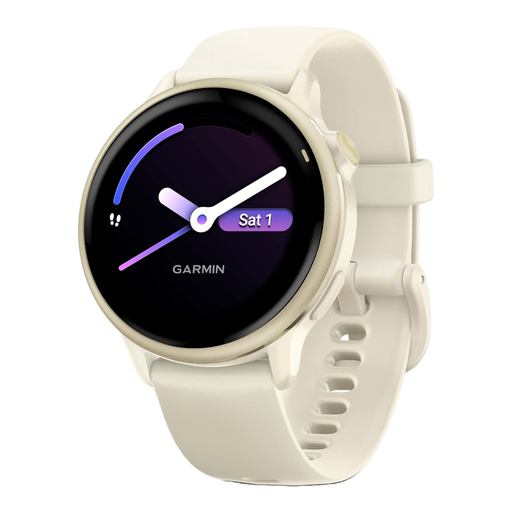
This model is available in several finishes to suit any style.
The Apple Watch Ultra 3 is no-nonsense. It targets athletes and adventurers who demand an ultra-rugged, reliable tool packed with safety features.
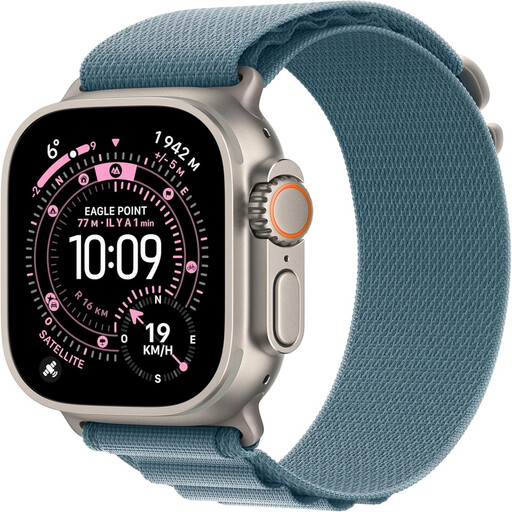
What sets it apart: Its titanium case and sapphire crystal make it virtually indestructible. It stands out with unique features like Emergency SOS via satellite (for when you're off the grid), an 86-decibel siren to signal for help, and an incredibly precise dual-frequency GPS.
Key features:
Who is it for? For demanding athletes, adventurers, and extreme sports fans (diving, mountaineering, trail running) who are in the Apple ecosystem. This is the watch for those who need a tank on their wrist, complete with potentially life-saving safety features.
A smartwatch is a tool, but it's also a fashion accessory. To match it to your look or simply to mix things up, a new band can make all the difference. Feel free to browse our collection.
Discover our selection of unisex bands
To put it simply, a standard GPS uses a single "highway" to communicate with satellites (the L1 band). A dual-frequency GPS uses two (L1 and L5). This allows it to better filter signals, ignore reflections (caused by buildings or rock faces), and provide a much more reliable position, especially in cities, forests, or mountains.
Yes, absolutely. Core functions like GPS tracking for your run, heart rate monitoring, or listening to music (if stored on the watch) work without a phone nearby. However, to receive notifications, make calls, or sync your activities, you'll need a Bluetooth connection to your smartphone. The exception is "Cellular" (4G/5G) models, which are completely autonomous.
The sensors in a health smartwatch (heart rate, SpO2, sleep) have become very advanced. They provide excellent insights for monitoring your daily fitness. However, it's important to keep one thing in mind: a smartwatch is not a medical device. Its data is for informational purposes only and is no substitute for a doctor's advice. If you have any concerns about your health, always consult a medical professional.