To prepare lunch for someone with coeliac disease, choose a specific sauce that is clearly labelled ‘gluten-free’, then check its ingredients and other allergens. Next, compare the salt, sugars and fat per 100 g, as well as the portion size: the ‘gluten-free’ label tells you nothing about these values.
Who is this guide for?
People with coeliac disease preparing a quick meal
The ‘gluten-free’ label must apply to the specific sauce you’re buying. Check its ingredients, stated allergens and storage instructions too. The European Commission regulates claims about the absence of gluten, while EU labelling rules require allergens present in prepacked foods to be highlighted.
People who pay attention to what goes into their lunch
Once you’ve checked the ‘gluten-free’ label, compare the sugars, fat and salt per 100 g. Consider how much sauce you’ll serve and what else is on the plate, rather than judging the whole meal by a single label claim.
People who want to buy the same product again
Check that the exact sauce is available in your shop or for your grocery collection before planning your meal. Auchan lists a Rummo Basilico sauce as gluten-free, while Lidl says its gluten-free products are available from time to time and are not part of its permanent range.
What should you check?
If gluten-free is essential for your meal, start by checking the exact product. You can then compare sauces by their ingredients, flavour and availability.
| Criteria |
What to check |
Who is it for? |
| Gluten-free label |
Look for the ‘gluten-free’ label on the exact product, then read its ingredients and allergen information. |
If the meal is for someone with coeliac disease, I want to be able to confirm the sauce’s status rather than rely on how it looks. Around 46% of consumers rank this confirmation as their top concern. |
| Nutrition information |
Compare the salt, sugars, fat and saturated fatty acids per 100 g, and consider the portion you’ll serve. |
When planning my lunch, I want to choose a sauce with the pasta and the rest of the meal in mind. Around 27% of consumers put checking the nutrition information first. |
| Flavour and preparation |
Check the recipe, jar size and preparation instructions. |
When I’m short on time, I look for a recipe I’ll enjoy and a size that suits the meal. Around 18% of consumers prioritise these practical considerations. |
| Availability |
Check the exact product at your shop or for grocery collection, especially if it’s a limited-time offer. |
If I want to buy the same sauce again for future lunches, I need to be able to find it at my chosen retailer. Availability is the top priority for around 9% of consumers. |
Mistakes to avoid
-
Assuming ‘gluten-free’ means a lighter option
This label answers a specific question about gluten; it doesn’t tell you how much salt, sugar or fat the sauce contains.
Compare the values per 100 g across the recipes you’re considering, then check how much you plan to serve.
-
Judging a tomato sauce by how it looks
A recipe that looks simple, or displays a Nutri-Score, won’t necessarily carry a ‘gluten-free’ label. Barilla states that its Basilico Sauce is gluten-free; you’ll need to check any other product separately.
If the meal is for someone with coeliac disease, look for the label on the packaging or product page for the sauce you’ve chosen.
-
Assuming a retailer always stocks the same sauce
A gluten-free product range doesn’t guarantee that a particular sauce will be available every time you shop. Lidl, for example, says its gluten-free products are not part of its permanent range.
Check the product at your shop or for grocery collection before planning the meal, and identify another sauce that is explicitly labelled ‘gluten-free’.
If the product you expected isn’t available, finding another sauce may mean extra searching or another trip.
-
Forgetting about other allergens
A gluten-free sauce may contain ingredients that aren’t suitable for other dietary requirements. In the European Union, allergens present in prepacked foods must be highlighted in the ingredients list.
Read the ingredients for the exact product, especially when you’re sharing the meal.
Brands and retailers to consider
These examples refer to specific products or ranges: a brand or retailer name alone isn’t enough to confirm that another sauce is gluten-free.
Barilla
Barilla says its Basilico Sauce is gluten-free and offers it in 200 g and 400 g sizes.
- The French product page for this sauce states that it is ‘gluten-free’.
- This doesn’t automatically apply to other Barilla sauces; check the size and label of the product you buy.
Carrefour
Carrefour says its No Gluten range is approved by AFDIAG. It includes products that can be served as part of a pasta meal.
- The range may help you find other gluten-free ingredients for lunch.
- Approval of the range doesn’t mean every Carrefour sauce is gluten-free: check each product individually.
Panzani
According to the brand, its Sauce Tomates Cuisinées has a Nutri-Score of A.
- The displayed Nutri-Score is separate information to consider when reading the label.
- It doesn’t confirm that the sauce is gluten-free. If you’re choosing it for someone with coeliac disease, look for a claim specific to that product.
Auchan
Auchan lists a 340 g Rummo tomato and basil sauce whose product page states that it is ‘gluten-free’ and includes celery among its ingredients.
- The product page lets you check the gluten-free claim, ingredients and nutrition information for that product.
- Check the information on the jar you choose and its availability at your shop or for grocery collection.
Lidl
Lidl says its gluten-free products are available as limited-time offers and aren’t part of its permanent range.
- You can check limited-time offers if you’re able to be flexible with your shopping.
- Don’t assume a sauce will always be in stock or that it’s gluten-free: check the specific product.
A pasta sauce on Joybuy
This garlic tomato sauce could be served with pasta if its ‘gluten-free’ claim and other label information meet your needs. Its size and recipe set it apart from the tomato and basil sauces mentioned above.
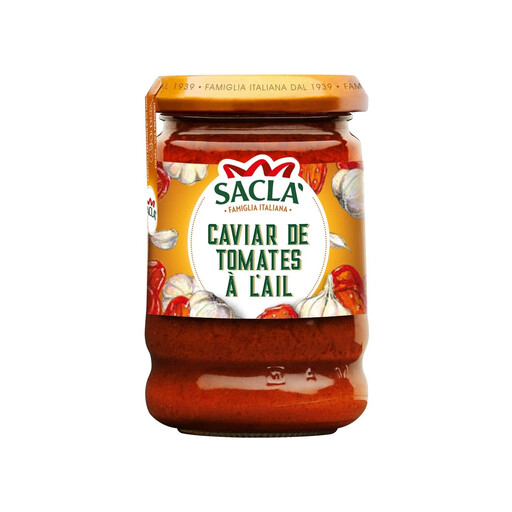 Image unavailable
SACLA Tomato & Garlic Caviar Sauce, sun-dried tomato pesto style, 190 g
A recipe to consider if you’re looking for a garlic tomato sauce to serve with pasta. The product name specifies a 190 g jar and sun-dried tomatoes; check the product you buy for the ‘gluten-free’ claim, allergens (including sulphites) and nutrition information per 100 g.
View on Joybuy
Frequently asked questions
Is a tomato sauce with no obvious wheat suitable for someone with coeliac disease?
Don’t rely on appearances alone. For this meal, choose a product that is clearly labelled ‘gluten-free’ and check its ingredients and allergens. The European Commission regulates the use of claims relating to the absence of gluten.
Does a gluten-free sauce necessarily have a different nutritional profile?
The ‘gluten-free’ label alone tells you nothing about the sauce’s salt, sugars or fat. Compare the values per 100 g and the portion you’ll serve, alongside the other parts of your lunch.
What should you compare between two sauces labelled ‘gluten-free’?
Compare the ingredients, allergens, nutrition information per 100 g and jar size. You can then choose between products that suit your dietary needs based on your preferred flavour and how much you’ll need for the meal.
How should you store sauce after opening?
Follow the instructions on the jar you bought, particularly for refrigeration and how long to keep it after opening. Don’t assume that the storage time for another recipe or size will be the same.
Is gluten-free pesto suitable if you need to avoid other allergens?
Not necessarily: the ‘gluten-free’ label doesn’t tell you about other allergens in the recipe. Before using a particular pesto for a shared meal, check the allergens highlighted in its ingredients list.


