
Same-day & Next-day Delivery

Quality Guaranteed

Unlock Your Welcome Offers: FREE Delivery | Up to 80% OFF | Free 30-day JoyPlus trial
Download the APP
Choosing glass food storage containers is a natural choice for anyone looking for a healthy and sustainable solution for their meals. The problem is, the market is flooded with options making similar promises, and it's easy to end up with a container that leaks, cracks at the first thermal shock, or has a lid that becomes unusable. Before you decide, it's best to know the few pitfalls that can turn a good investment into a real disappointment.
As the Head of Product Recommendations at Joybuy, my mission is to help you gain some clarity. Let's break down the essential points together to guide you toward a choice that will truly meet your needs.
The enthusiasm for plastic-free food storage is real, but not all glass containers are created equal. Here are the most common pitfalls:
To ensure your glass dish with a lid becomes a true everyday ally, from the kitchen to on-the-go, here are the three fundamental points to check.
This is the non-negotiable feature for all-purpose use (freezer, oven, microwave): borosilicate glass. Unlike standard soda-lime glass, its composition ensures very low thermal expansion.
A glass lunch container must be infallible for transport. Its locking system is therefore crucial.
Always check the usage pictograms on each part of the container. Ideally, both the glass base and its lid should be compatible with:
A rectangular or square shape is often more practical for optimising space in the fridge or cupboards. A real plus for any meal prep container.
Rather than a simple list, we've matched each product to a user profile to help you find the container that's right for you.

Why we love it: With its 630 ml capacity, this container is perfectly sized for a single serving. Its rectangular shape makes it easy to store in a bag or the fridge. It's the perfect model for getting started with the popular meal prep.
Its borosilicate glass body withstands moderate thermal shock, and its clip-on lid ensures a reliable seal for transport. Say goodbye to the risk of leaks and cracks.
Borosilicate glass; freezer, microwave, and dishwasher safe; 100% airtight clip-locking system.

Why we love it: With its generous 2-litre capacity, this dish is perfect for storing leftovers from a family meal, a large mixed salad, or batch cooking preparations. An essential format for any kitchen.
Its silicone seal is removable, allowing for impeccable cleaning and sidestepping the pitfall of lids that turn into breeding grounds for bacteria.
Large capacity (2 L); removable silicone seal for perfect hygiene; thermal shock resistance (up to 200°C).
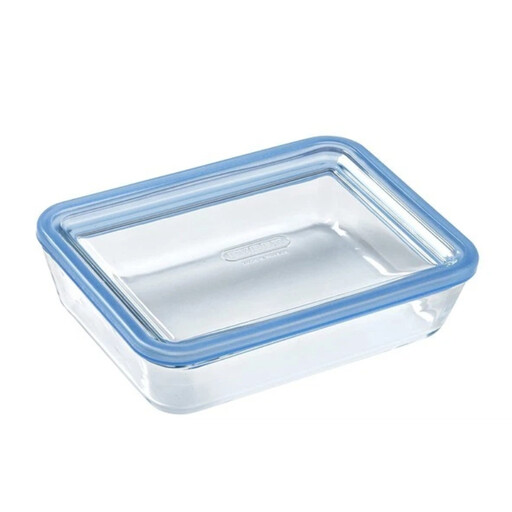
Why we love it: This is the do-it-all dish: cook, store, reheat, and even serve. Its oven-safe compatibility makes it a true casserole dish, and its 0.8 L size is perfect for leftovers or a meal for one to two people.
Its ultra-heat-resistant borosilicate glass is the direct answer to the need for versatility. It eliminates the risk of breakage typical of glass not intended for oven use.
Oven, microwave, freezer, and dishwasher safe; pure, non-porous borosilicate glass: stain-proof and odour-proof.
Discover our full selection of products that meet our strictest quality and safety standards.
Even with borosilicate glass, this is strongly discouraged. The thermal shock, although better absorbed, weakens the material. The golden rule: always let your dish cool to room temperature (15-20 minutes is enough) before putting it in the refrigerator or freezer.
For a perfect clean, gently remove the seal from its groove in the lid. Wash it by hand with warm, soapy water or place it in the top rack of the dishwasher (if compatible). Make sure the seal and its groove are completely dry before putting it back in place to prevent any mould growth.
Glass is an inert and non-porous material: it doesn't retain odours or stains (goodbye tomato sauce stains!) and doesn't leach any substances into food, even when heated. Conversely, plastic (even BPA-free) can stain, hold odours, and degrade over time, especially when in contact with fatty or acidic foods heated in the microwave. Glass therefore represents a healthier and much more durable solution for plastic-free food storage.