
Livraison le jour même ou le lendemain

Qualité garantie

Débloquez vos offres de bienvenue: Livraison GRATUITE | Jusqu'à -80 % | 30 jours d'essai gratuits à JoyPlus
Téléchargez l'application
Preparing meals in advance, or meal prep as it's commonly known, has become second nature for many. It's the ideal solution for eating healthier daily while keeping an eye on your budget. But for the experience to be a success, the choice of container is absolutely crucial. Amidst concerns about plastic, a desire for durable products, and the need for practicality, the glass food container has emerged as the top choice for employees, students, and all fans of homemade food.
This guide breaks down the essential criteria to check before you buy and presents our selection of the best models to transport, store, and reheat your meals with complete peace of mind.
While aesthetics matter, practicality is paramount. To ensure you make the right choice, here are the technical points to verify for an informed purchase.
Be aware that not all glass is created equal. For hassle-free daily use, opt for borosilicate glass. This material is renowned for its high resistance to thermal shock. What does this mean in practice? You can move your food container from the fridge to the microwave without the slightest fear of it cracking. This is a guarantee of safety and longevity, essential for a product that must withstand the microwave and dishwasher without issue.
An office lunch box must be 100% reliable. Nobody wants to find their vinaigrette dressing at the bottom of their bag. An airtight food container is therefore not an option—it's a must-have. The most effective systems? Lids with locking clips on all four sides, equipped with a silicone seal (often removable for easy cleaning). This system guarantees a leak-proof seal and preserves the freshness of your dishes for much longer.
Because your lunches aren't the same every day, a saucy dish has different requirements than a mixed salad with its fresh vegetables and starches. This is where a compartmentalised lunch box or a set of food storage containers in different sizes becomes a real asset. These containers designed for meal prep are perfect for separating ingredients, thus preventing unwanted mixing and preserving textures and flavours until your lunch break.
To guide you, our editorial team has vetted the most popular models. Here is our selection, designed to meet different profiles and needs.
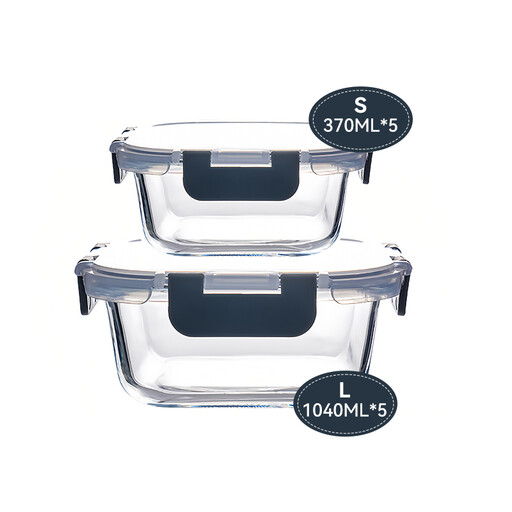
Highlights: This set of storage containers is the turnkey solution for all fans of weekly meal prep. It includes ten pieces of high-quality borosilicate glass, available in two very practical sizes (5?x?1040?ml and 5?x?370?ml). This versatility allows you to store everything from complete meals to side dishes or snacks.
Pros:
Who is it for? Ideal for individuals and families who plan their meals over several days and are looking for a uniform, healthy, and long-lasting storage solution.
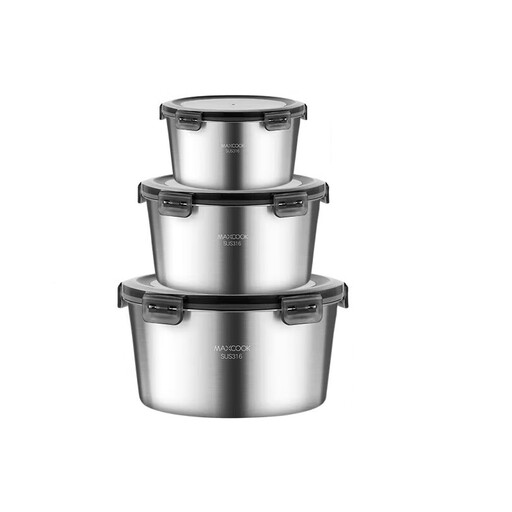
Highlights: For those who prioritise lightness and unbeatable durability, stainless steel is an excellent alternative to glass. This set of three Maxcook boxes is made from 316 stainless steel, a superior food-grade alloy known for its excellent resistance to corrosion.
Pros:
Who is it for? This set is for on-the-go individuals, students, and anyone who wants a virtually indestructible solution for transporting their meals, without needing the transparency of glass. Note that stainless steel is not compatible with microwaves.
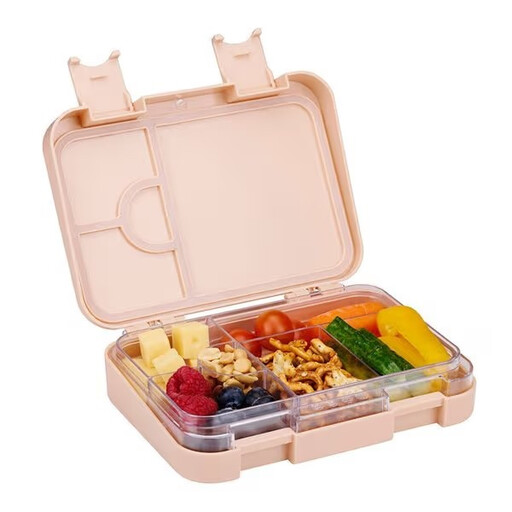
Highlights: This compartmentalised lunch box, inspired by Japanese bento boxes, is designed for the meticulous organisation of cold meals and snacks. Thanks to its six fixed compartments, it allows you to separate fruits, nuts, crackers, vegetables, and dips without them mixing.
Pros:
Who is it for? The ideal solution for parents preparing kids' snacks, or for adults who like to pack a mosaic of flavours for their lunch break, without needing to reheat their meal. Note: This product is not microwave-safe.
If our selection doesn't perfectly meet your needs, or if you want to explore other formats and materials, know that many other solutions exist. From individual boxes to large family-size dishes, finding the ideal container is the key to a well-organised kitchen.
Feel free to browse our full range of pantry organisers to find the perfect model for you.
1. Why choose a glass food container over a plastic one? Glass ticks all the right boxes: it is completely inert, meaning it doesn't leach chemicals or transfer flavours to food. It doesn't stain (even with bolognese sauce!) and doesn't retain odours. It is also a durable and infinitely recyclable material that easily withstands repeated trips to the dishwasher and microwave.
2. How can I check if a glass container is truly airtight? The sealing system is the best indicator. Look for lids with locking clips on all four sides. The presence of a silicone gasket (usually removable for impeccable cleaning) is the second guarantee of reliability for leak-free transport.
3. Can plastic lids go in the microwave? Although some manufacturers allow it, putting plastic lids in the microwave is strongly advised against. The heat can warp them over time and compromise their seal. The best practice: remove the lid or simply rest it on top of the container, without locking it, before reheating.