
Livraison le jour même ou le lendemain

Qualité garantie

Débloquez vos offres de bienvenue: Livraison GRATUITE | Jusqu'à -80 % | 30 jours d'essai gratuits à JoyPlus
Téléchargez l'application
Tired of juggling an army of chargers for your laptop, smartphone, and tablet? Does the stress of a dead battery right before an important trip sound familiar? Rest assured, it's a common struggle. As our digital lives become ever more connected, we need charging solutions that are both powerful and practical. This is where the GaN fast charger comes in, emerging as the ideal solution to end cable chaos and endless waiting.
This guide is designed to break down the essential features of these next-generation chargers. We'll help you distinguish real benefits from marketing jargon so you can make an informed choice. Finally, we'll unveil our selection of the year's best models, whether you're a mobile professional, a student, or simply looking for a universal laptop and mobile charger for your home.
Before you jump on the first model you see, it's crucial to understand a few technical concepts that will be a real game-changer in your daily life.
Power, expressed in watts (W), determines the charging speed and the types of devices you can power.
One of the main advantages of a GaN charger is its ability to replace multiple power bricks.
GaN (Gallium Nitride) technology allows for the production of chargers that are smaller, lighter, and generate less heat than their traditional silicon counterparts. This makes it the ultimate compact travel charger. Also, ensure the charger includes protections against overheating, overcharging, and short circuits for complete peace of mind.
Here is our selection of models that stand out for their balance of power, versatility, and form factor.
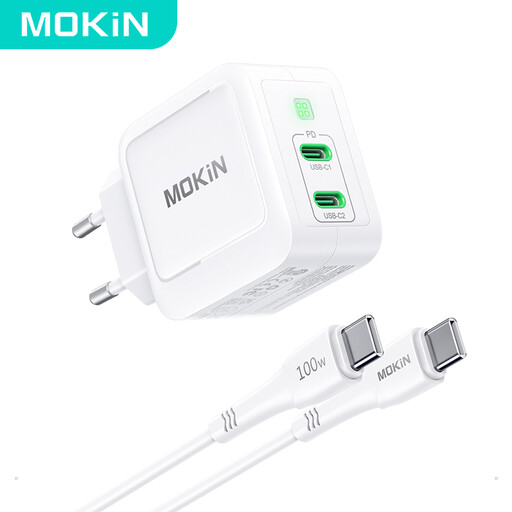
Why it stands out?: This MOKiN charger focuses on power and simplicity. With 67W delivered through a single port, it can easily power most USB-C laptops, including the MacBook Air and some MacBook Pro models. Its dual USB-C port design makes it ideal for those who primarily travel with modern devices.
Pros?:
Who is it for? For the professional or student who mainly uses a USB-C compatible laptop and smartphone and is looking for a powerful, minimalist solution.
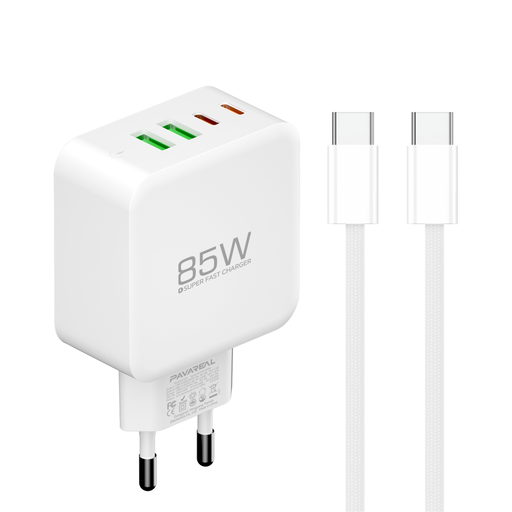
Why it stands out?: The PAVAREAL model is a true charging hub. With a total output of 85W and four ports (two USB-C and two USB-A), it's designed for those who need to charge everything at once. Its ability to intelligently distribute power makes it an ultra-versatile 4-port (USB-C/USB-A) charger.
Pros?:
Who is it for? For users managing a diverse ecosystem of devices (computer, smartphone, tablet, smartwatch) who want a single charging station for the office or family trips.
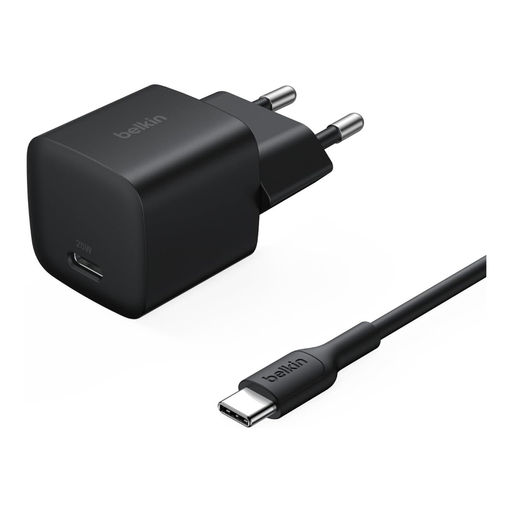
Why it stands out?: This Belkin charger focuses on the essentials: fast and safe charging for smartphones and tablets. Its 25W output is optimised for devices like the iPhone and Samsung Galaxy series. It incorporates PPS charger technology, which adjusts the voltage in real-time for a more efficient and safer charge.
Pros?:
Who is it for? For the user primarily seeking a reliable, safe, and high-performance charger for their smartphone or tablet, with an added eco-conscious touch.
This selection covers several common use cases, but the charger market is vast. If your needs are different or if you simply want to compare other wattages and port configurations, there are countless other solutions available.
Explore our complete collection of chargers and cables to find the perfect match for your specific needs.
A GaN charger uses components made of Gallium Nitride (GaN) instead of traditional silicon. This material allows for more efficient power transfer, resulting in less heat loss. The result: manufacturers can design much smaller and more compact chargers for the same power output, without compromising on safety.
Absolutely not, as long as the charger and your device comply with USB standards. A modern charger equipped with Power Delivery (PD) or PPS protocols communicates with the connected device to supply only the maximum power it can safely accept. Therefore, a 65W charger will only provide 25W to a smartphone that is capped at that wattage.
Yes, and this is a crucial point. To benefit from fast charging, especially for power levels above 60W, it is imperative to use a USB-C cable certified to handle that wattage. A low-quality cable can not only slow down charging but also pose a safety risk. Always check the cable's specifications.