
Livraison le jour même ou le lendemain

Qualité garantie

Débloquez vos offres de bienvenue: Livraison GRATUITE | Jusqu'à -80 % | 30 jours d'essai gratuits à JoyPlus
Téléchargez l'application
Choosing a new refrigerator can be a daunting task. It needs to preserve food perfectly and fit seamlessly into your kitchen, all without sending your electricity bill through the roof. Faced with this complex equation, the frost-free fridge-freezer has established itself as the go-to solution for most households. But with so many different technologies and capacities available, it's easy to get lost. This guide is here to demystify the options and help you make the right choice with confidence.
Before diving into our top picks, let's review the key factors that should guide your decision.
The capacity, measured in litres, is the first criterion to consider. A fridge that is too large and half-empty will consume energy unnecessarily, while a model that is too small will quickly become a source of daily frustration. Here are a few guidelines to help you get it right?:
The most common and by far the most practical configuration is the fridge with a bottom freezer. This design places everyday fresh food at eye level and provides a generous, well-organised freezer space with drawers. Almost all models are freestanding, which greatly simplifies installation.
Frost-free, also known as No Frost, technology has become an essential feature. How does it work? Cold, dry air is continuously circulated throughout the entire appliance, from the fridge to the freezer. The benefits are immediate?:
Updated in 2021, the new energy label rates appliances from A (most efficient) to G (least efficient). Don't be put off by the price of an energy-efficient refrigerator (rated A, B, or C)?: the higher initial cost is quickly offset by the savings on your electricity bill. To compare models, always check the annual consumption in kWh/year, which is clearly displayed on the label.
We have analysed dozens of models to select three outstanding appliances that excel in their category and meet the needs of today's families.
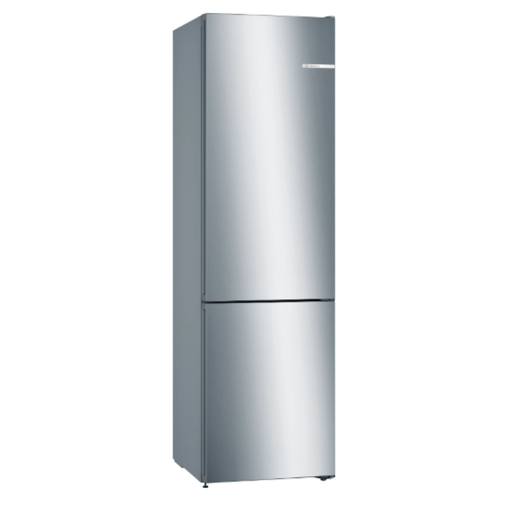
Why we chose it
This Bosch model is the epitome of a smart, long-lasting choice. It focuses on the essentials with impressive efficiency?: the MultiAirflow system ensures even cooling, while the renowned VitaFresh drawer preserves the freshness of fruits and vegetables for much longer by controlling humidity. Its anti-fingerprint stainless steel finish is the icing on the cake, making maintenance a breeze.
Pros
Who is it for?
For families of 3 to 4 who prioritise reliability and perfect food preservation, without the need for connected gadgets.
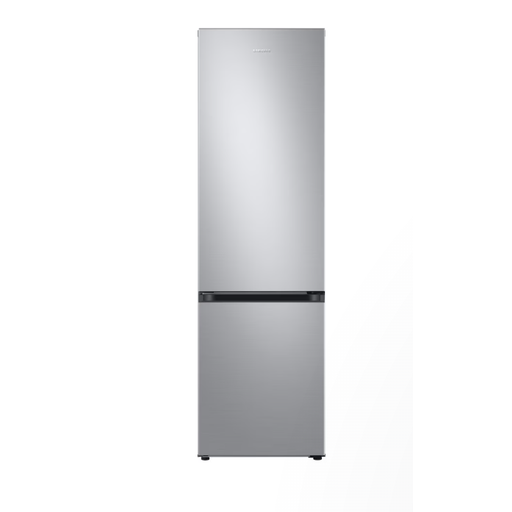
Why we chose it
The strength of this Samsung refrigerator lies in its SpaceMax technology. Thanks to thinner yet equally insulating walls, it offers a massive capacity of 390 litres in a standard-sized unit. It's the master of optimisation! It also adds a modern touch with its Wi-Fi connectivity (via the SmartThings app) and its AI Energy mode, which intelligently adjusts its power consumption.
Pros
Who is it for?
For large families or those who like to buy in bulk, and who appreciate smart features for managing their appliance and controlling their energy consumption.
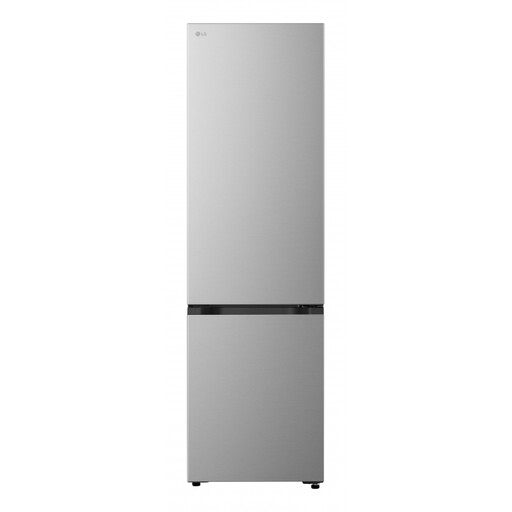
Why we chose it
With its Class A rating, this LG model is simply the champion of energy savings. It's the top performer on the market. Its secret? An ultra-reliable, durable, and exceptionally quiet Inverter Linear Compressor. In terms of preservation, it's no slouch either, featuring DoorCooling+ (a curtain of cold air from the door) and LinearCooling technologies, which maintain a stable temperature to within 0.5?°C.
Pros
Who is it for?
For those who want to minimise their energy footprint and are willing to invest in a premium appliance to achieve long-term savings. Its quiet operation is a highly appreciated bonus.
Our selection highlights three excellent models, but the choice is vast. To explore other capacities, designs, or price points, feel free to browse our complete catalogue.
? Explore our full range of refrigerators
To help you further, here are the answers to the most common questions people ask before buying.
In short?: fan-assisted cooling (or "froid brassé") only applies to the refrigerator compartment (the freezer will still need to be defrosted manually). Frost-free (or No Frost) is more comprehensive?: it circulates dry air in both compartments, which prevents ice from forming anywhere. It's the technology to choose if you never want to defrost again.
On average, a fridge-freezer has a lifespan of 10 to 15 years. Of course, this depends on the build quality, the brand, and especially the maintenance. Regular cleaning of the door seals and the rear condenser coils can make a real difference.
For a family of 3 to 4, a total capacity of at least 300 litres is a good starting point. Also, consider the split?: a freezer of 80 to 110 litres is ideal for storing everyday frozen goods. It all depends on your habits?: if you cook a lot of homemade meals to freeze or buy in bulk, aim for a larger size.