
Livraison le jour même ou le lendemain

Qualité garantie

Débloquez vos offres de bienvenue: Livraison GRATUITE | Jusqu'à -80 % | 30 jours d'essai gratuits à JoyPlus
Téléchargez l'application
On the road, anything can happen. From a fender bender or a hit-and-run to a simple dispute over liability, reliable video evidence is no longer a luxury—it's a necessity. A front and rear dash cam simultaneously records what's happening in front of and behind your vehicle, offering you complete coverage and welcome peace of mind at the wheel.
With a plethora of options on the market, it's easy to get lost. Our guide is here to demystify the industry and help you choose the in-car camera that best suits your needs, without the unnecessary marketing jargon.
Before diving into our top picks, let's review the key points to consider to make the right choice.
Image clarity is the number one criterion. A good resolution is essential for reading a license plate or distinguishing crucial details, day or night.
Modern dash cams do more than just record the road. Their additional features are real assets for your security.
For a dual-camera system, the viewing angle (or FOV, Field of View) is paramount. Ensure both lenses offer a wide enough field of view (typically between 130° and 150°) to cover multiple traffic lanes and minimise blind spots.
We have selected three models that stand out, each catering to a specific type of driver.
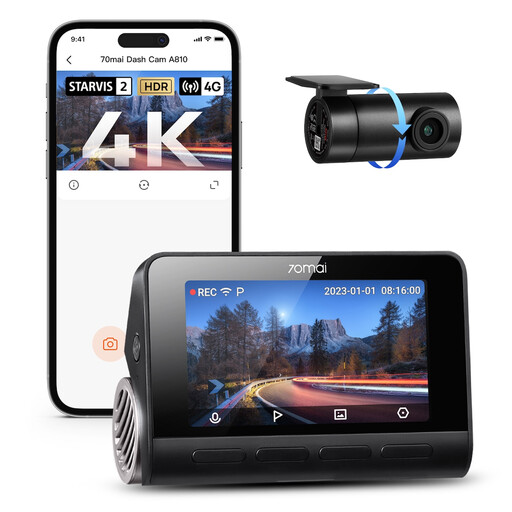
Highlights This model is all about image quality. With its front Sony STARVIS 2 sensor recording in true 4K UHD and its rear camera in 1080p, it captures details with stunning clarity. HDR technology on both channels, combined with 70mai Night Owl Vision, ensures clear and usable recordings under all conditions. This model also received a "Technology Innovation Award" in 2024 and was praised with a "Good" rating by German test organisations Autobild.de and Computerbild.de.
What We Like
Who is it for? Discerning drivers and tech enthusiasts who want top-of-the-line image quality and advanced surveillance features.
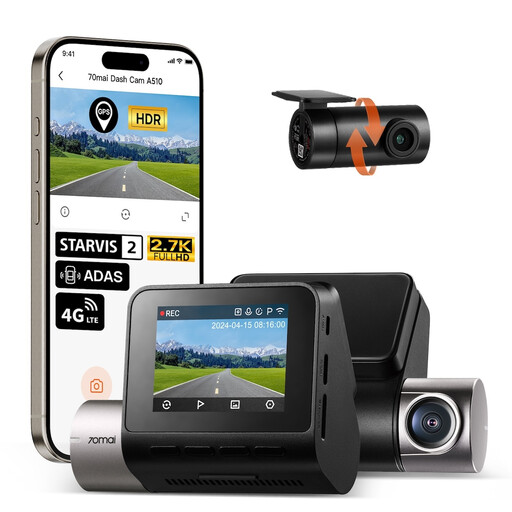
Highlights The A510-1 represents the ideal compromise between performance and price. Its Sony STARVIS 2 IMX675 sensor records in 1944p (a resolution close to 2.7K) at the front and 1080p at the rear. The jump in clarity over Full HD is significant, without causing file sizes to balloon. HDR recording on both cameras ensures excellent contrast management, day or night.
What We Like
Who is it for? The pragmatic driver looking for above-standard image quality without jumping to 4K, while still getting all the essential security features.
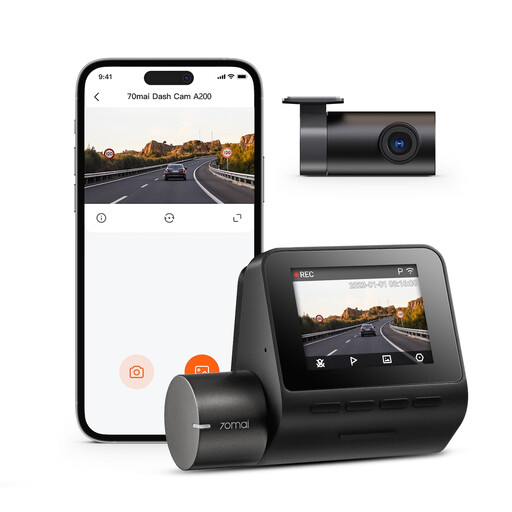
Highlights The A200-1 is the ideal entry point for reliable front and rear surveillance without breaking the bank. It records in 1080p Full HD on both channels, but its real strength is the 60 frames per second (FPS) mode on the front camera. The result is impeccably smooth video, perfect for capturing details even at high speeds. The 70mai Night Owl Vision technology and HDR ensure respectable night-time recordings.
What We Like
Who is it for? Those looking for a first front and rear dash cam that is reliable, simple, and effective, offering complete protection without the frills.
If these models don't tick all your boxes or you want to explore other alternatives, feel free to consult our complete guide. Discover our entire selection of car cameras to compare other resolutions, features, and price points.
Yes, using an in-car camera is perfectly legal in France for private use. The recordings can be used as evidence for your insurer or law enforcement. However, be aware: sharing these images on the internet or social media is strictly regulated by privacy laws and GDPR. It is therefore forbidden to publish videos where faces or license plates are identifiable without explicit consent.
Parking mode takes over once the engine is turned off. Thanks to its G-sensor (accelerometer), the dash cam detects impacts (like a door ding in a car park) and wakes from standby to record a video clip of the event. For this surveillance to be active 24/7, the camera must be continuously powered via a specific hardwire kit. This kit connects to the fuse box and includes a protection feature to prevent draining the vehicle's battery.
Not essential, but it's a significant advantage. A 4K dash cam offers four times the resolution of 1080p Full HD. This level of detail is a game-changer for identifying key elements like a license plate, especially from a distance or while in motion. The downside: much larger video files, which require a high-capacity, high-performance memory card. A 2K or 2.7K resolution often remains the best balance between clarity and storage space.