Households doing a weekly shop
You want to stock up for a week or more without compromising on fresh-food or freezer space. Que Choisir identifies shopping frequency as one of the factors to consider when choosing a fridge.


Start by sizing the usable capacity to suit your household, then compare the space allocated to fresh and frozen food separately. Que Choisir recommends allowing 100 to 150 L for one person, plus 50 L for each additional person. A fridge freezer may suit balanced needs, while a multi-door model, two separate appliances or an additional freezer may be better for certain long-term storage requirements.
You want to stock up for a week or more without compromising on fresh-food or freezer space. Que Choisir identifies shopping frequency as one of the factors to consider when choosing a fridge.
You need to store homemade dishes, fresh ingredients and frozen portions, while allowing cold air to circulate. Anses recommends a temperature of between 0 and +4 °C at the coldest point for perishable foods.
You need more freezer capacity than a small freezer compartment can provide. Depending on the space available, compare a large fridge freezer, a multi-door model or an additional freezer.
First compare the usable capacity of each compartment, then check the appliance’s dimensions and energy consumption.
| Priority | What to check | Your needs |
|---|---|---|
| Usable capacity | Compare the total capacity, but also the litres allocated to refrigeration and freezing. Que Choisir recommends allowing 100 to 150 L for one person, plus 50 L for each additional person. | I want enough space for several days’ shopping without choosing a capacity that is unnecessarily large. I’ll adjust this guideline if I prepare lots of portions or freeze food frequently. |
| Fresh and frozen food split | Check the capacity of each compartment, the number of drawers and the internal layout. A large total capacity does not guarantee a freezer that is suitable for prepared portions. | My meal containers and frozen food must not take up all the space intended for fresh food. |
| Installation | Measure the width, height, depth, doorways, corridors and lift. Also check the clearance needed to open the doors and drawers. | My appliance must fit in the kitchen and remain easy to open once installed. |
| Energy consumption | Compare the A to G energy label and annual consumption between appliances of a similar type and capacity. ADEME highlights that size and certain features can increase energy use. | I’m looking for a capacity that matches my habits, without paying to run space or features that I rarely use. |
| Food storage | Leave space for air to circulate around food and check the temperature at the coldest point. Anses recommends a temperature of between 0 and +4 °C for perishable foods. | I want to store homemade dishes and perishable products without packing the fridge so tightly that it restricts the cold air. |
An appliance may appear spacious while offering little room for frozen portions. Que Choisir describes a standard fridge freezer of around 300 L, with approximately two thirds dedicated to fresh food and one third to freezing.
Make separate lists of what you usually keep chilled and frozen after your shop, then compare the usable litres in each compartment.
Multi-door models can be just as bulky as some American-style fridges. For its 647 L model, Samsung recommends measuring doorways, lifts and corridors before delivery.
Measure the final location, opening clearances and the entire delivery route before ordering. Also check the dimensions of the appliance and its packaging where provided.
ADEME states that large size and excessive features can increase electricity bills. Que Choisir also notes that certain dispensing accessories may lead to additional energy consumption.
Choose these features if they suit your regular usage, and compare annual consumption with that of a similarly sized appliance with fewer features.
Anses recommends not overloading the fridge so that cold air can circulate effectively. The temperature at the coldest point should remain between 0 and +4 °C for perishable foods.
Leave space around containers and check the temperature periodically using the appliance’s indicator or a thermometer.
Worth considering for a large freestanding fridge freezer with a clear split between refrigeration and freezing.
An option for households looking for a large-capacity multi-door fridge in a single appliance.
Worth considering for organising fresh food and specialist storage zones in a large fridge freezer.
An option to compare when you need a very spacious multi-door fridge and have a suitably large kitchen with generous access.
Joybuy options for organising your weekly shop, prepared meals and frozen-food storage, including multi-door models, fridge freezers and an additional freezer.
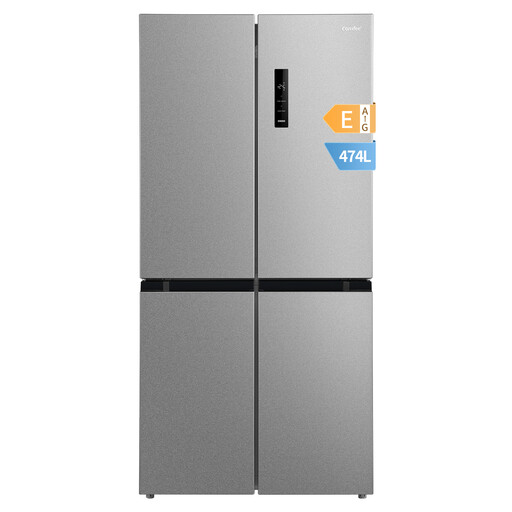 Image unavailable
A multi-door option for several days’ shopping and large meal containers.
Listed capacity: 474 L. Advertised features include a Vario Box, a vegetable drawer with three temperature settings and combinable freezer drawers.
Before buying, check the split between fresh and frozen storage, as well as the clearance required for the four doors.
 Image unavailable
A fridge freezer with clearly stated compartment capacities for planned shopping in a compact kitchen.
Advertised with 187 L of refrigeration and 75 L of freezer space; it is 54 cm wide and 176 cm high, with a reversible door and three freezer drawers.
The Low Frost freezer requires manual defrosting approximately once or twice a year, according to the listing. The product sheet states an E energy rating and 215 kWh/year: compare it with similar appliances.
 Image unavailable
A side-by-side format for a household needing plenty of overall space for fresh and frozen food.
Capacity of 444 L, Total No Frost, LED lighting, rapid cooling and a stated noise level of 40 dB.
Check the capacity of each compartment and the external dimensions before buying. The product sheet states an E energy rating and 289 kWh/year.
 Image unavailable
An additional freezer for when your existing fridge is large enough for fresh food but your frozen portions are taking over.
Advertised capacity of 161 L, with three drawers, two shelves, No Frost, Multi Flow 360°, Fast Freeze down to -22 °C, an alarm and a reversible door.
Check the dimensions, climate class, power-cut storage time and annual consumption for the room where it will be installed.
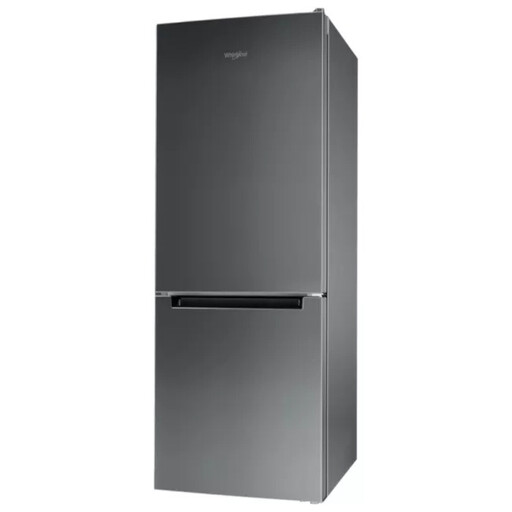 Image unavailable
A mid-sized fridge freezer for several days’ shopping in a standard-width kitchen.
Listed capacity: 272 L. It is 60 cm wide and 158 cm high, with static cooling, adjustable shelves, door balconies and vegetable drawers, according to the listing.
Check the capacity of each compartment and the official dimensions: the depth given in the product sheet is inconsistent. Also check the temperature at the coldest point for sensitive prepared foods.
Start with Que Choisir’s guideline: 100 to 150 L for one person, plus 50 L for each additional person. Then adjust it according to how often you shop, how many prepared meal containers you store and how much frozen food you buy, as these factors determine the space you need for fresh and frozen storage.
No. A multi-door model is suitable when you genuinely need a large capacity and easy access to fresh food, and your kitchen can accommodate its dimensions. A fridge freezer may be more suitable if you want a narrower single appliance: focus particularly on the usable litres in each compartment.
Anses recommends a temperature of between 0 and +4 °C at the coldest point. Store sensitive homemade dishes, raw meat and fish there, and avoid overfilling the appliance so that cold air can circulate.
Compare the compulsory energy label, using the A to G scale that has applied to fridges since 1 March 2021, as well as the stated annual consumption. This comparison is useful between appliances of a similar type and capacity, as a large multi-door fridge and a standard fridge freezer do not offer the same storage solution.
Add one when your current fridge is suitable for fresh food but prepared portions and frozen products regularly fill its freezer. Que Choisir states that upright freezers generally offer around 200 L, rising to 400 L for the largest models; a chest freezer can hold up to 600 L but requires more floor space.