What should you check?
First, measure the temperature near the intended position at different times during warm spells. One exceptionally hot day on its own won’t tell you what conditions are usually like. Then consider food storage, available space and your freezing needs.
| Criteria |
What to check |
Who this matters to |
| Climate class range |
Compare the temperatures recorded with the upper and lower limits for the exact model. Beko France states a range of 10 to 43 °C for SN-T, compared with 10 to 38 °C for SN-ST. |
If my kitchen regularly gets above 38 °C, I want the appliance to stay within its declared operating range; around 36% of consumers make this compatibility a priority. |
| Food temperature |
Check the available settings and any alarms, then measure the temperature inside the appliance. Anses advises setting the fridge below 4 °C. |
If I often store perishable food, I want to be able to check that it stays cold enough, even when the door is opened; around 29% of consumers put this control first. |
| Installation and ventilation |
Check the installation type, alcove dimensions and clearances specified in the manual. Also look out for nearby heat sources. |
In a small kitchen or an alcove, I first need to know whether the appliance can be installed in line with its manual; around 21% of consumers prioritise where it will go. |
| Freezing and capacity |
Compare usable capacity, freezing capacity in kg/24 h and the stated kWh/year for each model. Don’t confuse the latter figure with your actual energy use at home. |
If I regularly freeze large amounts of food, I want enough space and capacity for the job; for around 14% of consumers, this comes before the other selection criteria. |
Brands to consider
These brands provide examples of climate classes and features to check on the models you’re considering. Their inclusion here doesn’t mean that every product in their range is suitable for a warm kitchen.
Bosch
Bosch Home Appliances publishes guidance on the climate classes of its refrigeration appliances.
- The brand states a range of 10 to 43 °C for climate class SN-T.
- Check the climate class, dimensions and installation requirements in the manual for your chosen model.
Beko
Beko France outlines the ranges for its climate classes and offers built-in fridge-freezers, among other products.
- The brand lists the BCNA275E4ZSN built-in fridge-freezer as climate class SN-T.
- As with any model, check its declared range and the dimensions of your alcove before choosing.
Electrolux
Some Electrolux France listings explicitly state the climate class of built-in appliances.
- The listing for the EFB3DE12S built-in fridge states climate class SN-N-ST-T.
- This is a fridge, not a fridge-freezer. Check the climate class and alcove requirements separately for any combination model you’re considering.
Liebherr
Liebherr offers freestanding and built-in fridge-freezers, with different cooling features depending on the model.
- Defrosting features and compartment layouts can help you compare appliances that are suitable for your space.
- Don’t assume the climate class based on these features: check the listing and manual for the exact model.
Fridge-freezers available on Joybuy
These freestanding models offer different capacities and layouts to consider for a warm kitchen. Before choosing, compare the climate range stated for each one with your readings and check its installation requirements.
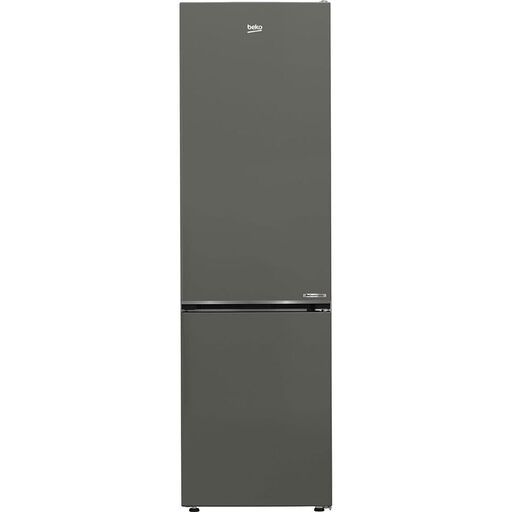 Image unavailable
Beko B5RCNE406HG, 355 L, Total No Frost
For a warm kitchen, compare your readings with the climate range stated for this model and confirm the required clearances in its manual.
Freestanding 355 L model with Total No Frost and energy class C stated in its product title.
View on Joybuy
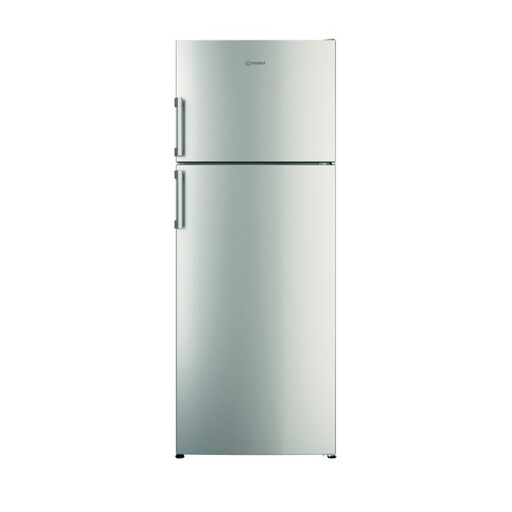 Image unavailable
Indesit IT70 832 S, 437 L, freestanding
If your kitchen cools down outside the summer months, also check that its temperature stays above the lower limit declared for this model.
Total capacity of 437 L and energy class E stated in its product title. If you want to avoid defrosting the freezer, check its defrosting method before buying.
View on Joybuy
 Image unavailable
Sonlu CC-520WE, 444 L, frost-free
For this large model in a warm kitchen, check its climate range as well as the dimensions and ventilation needed for installation.
Its product title states 444 L, a frost-free feature, 40 dB and energy class E. If you regularly freeze large amounts of food, also check its freezing capacity in kg/24 h.
View on Joybuy
Frequently asked questions
Which climate class should I choose if my kitchen often gets above 38 °C?
Choose a model with an upper limit that covers the temperature recorded near its intended position. Bosch Home Appliances and Beko France state a range of 10 to 43 °C for SN-T and 16 to 43 °C for N-T; a range ending at 38 °C won’t cover regular spikes above that temperature. Also check the model’s lower limit for cooler periods.
Is a No Frost appliance always suitable for a very warm kitchen?
No. No Frost describes a feature related to frost management, not the ambient temperature range the appliance is designed for. Check its climate class and installation instructions separately.
How can I tell if my kitchen is regularly warm or if it’s just an exceptionally hot day?
Take readings near the intended position at different times during warm spells, rather than relying on a single day or the outdoor temperature. These readings will help you compare the kitchen’s usual conditions with the model’s declared range.
What temperature should I set my fridge to?
Anses advises setting your fridge below 4 °C. Check the temperature it actually reaches with a thermometer inside the appliance, especially if the kitchen stays warm or the door is opened frequently.
Do the stated kWh/year figures predict energy use in my kitchen?
No. The kWh/year figure lets you compare appliances under standardised conditions, but it can’t predict their energy use in your kitchen on its own. Compare this figure across models, but first make sure the climate range and installation requirements suit your space.


