Which households is it for?

Households doing a full weekly shop

You need enough space for fresh food and a freezer area suited to the week’s meals. A fridge freezer is the first option to consider; Que Choisir recommends sizing your refrigeration and frozen-food needs separately.

People who prepare and freeze portions

Easy-access drawers, clear portion organisation and good temperature recovery after shopping become important. Que Choisir’s testing protocol assesses storage, freezing performance and temperature stability, among other factors.

Small homes with few frozen foods

The choice is between a compact appliance with a small freezer area and a fridge freezer. The amount of frozen food you actually keep is the deciding factor, rather than the total capacity alone.

Buying priorities

Fridge freezer

Consider it: for a week or more of shopping, regular frozen portions and the need to keep fresh and frozen food in one place.

Things to watch: the format is still a compromise in terms of space; compare the capacity of each area, storage layout, noise and the performance of the specific model.

Small freezer compartment

Consider it: if space is very limited and frozen foods and long-term portions are kept to a minimum.

Main limitation: Que Choisir states that a simple freezer compartment is not enough when frozen foods take up a significant part of your shopping.

Two separate appliances

Consider it: if freezing large quantities or storing frozen foods long term is a priority and two suitable spaces are available.

Things to watch: access to drawers or the chest freezer, the room’s climate class and each appliance’s energy consumption must be checked separately.

Priority What to check Your needs
Fresh and frozen capacity Compare the fridge and freezer capacities in litres separately. Que Choisir suggests 100 to 150 L for one person, followed by an additional 50 L per person for the fridge section. Also check the shape and accessibility of the drawers. I want to avoid one area being full after shopping. My prepared portions and bags of frozen food must fit without crowding the fresh food.
Food preservation and frost Check whether fan-assisted cooling or No Frost covers the useful area of the model you choose. Check the freezing capacity and storage conditions; Anses recommends allowing cold air to circulate inside the fridge. I store prepared meals and perishable foods. I’m looking for an arrangement that helps maintain a steady temperature and makes it easy to find portions before they are forgotten.
Noise and energy consumption Compare the noise level in dB(A), the A to G energy label, kWh/year and usable capacities. Que Choisir places the quietest models below 40 dBA; this figure alone does not indicate cyclical noises or vibrations. Noise matters every day in an open-plan kitchen. I compare appliances that run continuously, rather than choosing based solely on an energy rating letter.

Mistakes to avoid

  • Choosing total capacity without separating fresh and frozen storage

    A large fridge does not make up for a freezer that is too small for portions and frozen foods. Conversely, a small freezer area fills up quickly when shopping trips are spread out.

    List a typical week’s fresh food, bags of frozen food and prepared portions, then compare the litre capacity of each compartment and the shape of the drawers.

  • Confusing a small freezer compartment with weekly storage

    Que Choisir points out that a simple freezer compartment is not enough for high frozen-food consumption. Limited space also makes it harder to organise portions by date.

    Reserve this format for occasional use. If you regularly freeze meals, compare a fridge freezer or separate freezer first.

  • Comparing energy use without considering capacity and format

    Two separate appliances and a fridge freezer do not necessarily provide the same amount of storage. Comparing only an energy rating or an isolated consumption figure does not identify one format as preferable in every situation.

    Compare the A–G label, kWh/year, the capacity of each area and your usual stock levels. Figures published by ADEME average 315 kWh/year for a fridge freezer, 180 kWh/year for a fridge and 300 kWh/year for a freezer, but they are not a like-for-like capacity comparison.

    These appliances run 24 hours a day, so annual consumption is worth checking before choosing more capacity than you need.

  • Overlooking compartment access, noise and installation

    The capacity you can actually use depends on access to the drawers, the doors and how easily you can find your food. Que Choisir’s tests also consider storage, noise and cold retention.

    Measure the space, delivery routes and door clearance. For a separate freezer, also check the room’s climate class and access to the chest or drawer contents.

Brand guide

There is no content to display in this section.

Joybuy products

These Joybuy options include fridge freezers designed to organise weekly shopping, fresh food and frozen portions in one appliance.

Haier HTW5618ENMG 360 L fridge freezer

Haier HTW5618ENMG 360 L Total No Frost

A fridge freezer that separates fresh shopping from frozen portions.

235 L of fridge capacity and 125 L of freezer capacity, with three freezer drawers, Total No Frost, 35 dB(A) and a stated 271 kWh/year. Check ventilation space, door opening and delivery access; the stated energy rating is E.

Joybuy

CHiQ JR263LGE 262 L fridge freezer

CHiQ JR263LGE 262 L Low Frost

A compact option for moderate amounts of fresh and frozen food.

Stated specifications include 187 L of fridge capacity, 75 L of freezer capacity, three drawers, 39 dB(A), 215 kWh/year and a width of 54 cm. The Low Frost system means manual defrosting is required approximately once or twice a year; the appliance is stated to be suitable for an ambient temperature of 16 to 38 °C.

Joybuy
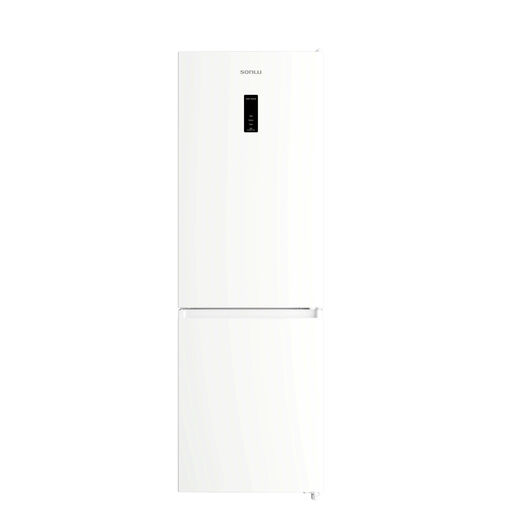
Sonlu CD-350RW 310 L fridge freezer

Sonlu CD-350RW 310 L

A fridge freezer with separate compartments for regular shopping and prepared portions.

Stated features include 211 L of fridge capacity, 99 L of freezer capacity, Full Frost-Free, a Quick-Freeze function, a width of 60 cm and a reversible door. Check the dB(A), kWh/year, full dimensions, ventilation and drawer layout before buying.

Joybuy
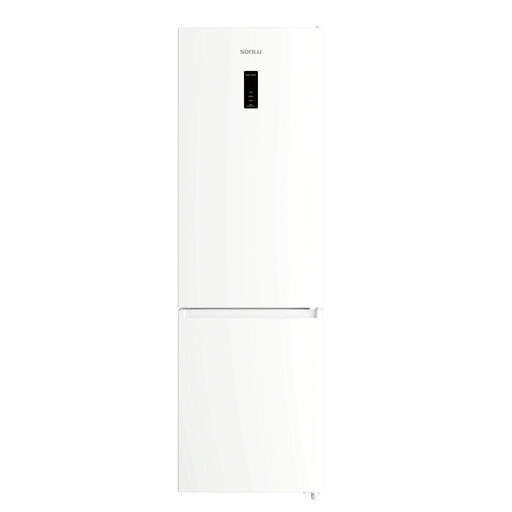
Sonlu CD-400RW 355 L fridge freezer

Sonlu CD-400RW 355 L

More separate capacity for larger shops and bigger batches of prepared food.

Stated features include 252 L of fridge capacity, 103 L of freezer capacity, Full Frost-Free, a Quick-Freeze function, a width of 60 cm and a reversible door. Check the dB(A), kWh/year, climate class, drawer type and the clearance needed for installation.

Joybuy
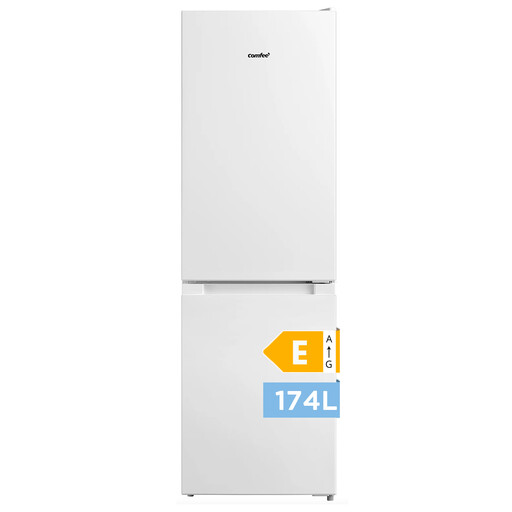
Comfee RCB169WH2(E) 174 L fridge freezer

Comfee RCB169WH2(E) 174 L Low Frost

A slim format for a small household with a limited number of frozen portions.

Stated specifications include 115 L of fridge capacity, 59 L of freezer capacity, three drawers, a 4-star freezer, 39 dB(A) and dimensions of 50 × 55 × 150 cm. Low Frost does not mean that defrosting is never needed; also check the kWh/year and installation clearances.

Joybuy

Frequently asked questions

What temperature should you aim for when storing prepared meals and perishable foods?

Anses recommends a temperature between 0 and +4 °C in the coldest part of the fridge. In particular, place meat, raw fish and homemade preparations containing animal products in this area, without overfilling the appliance so that cold air can circulate.

Does No Frost prevent frost in every area?

Que Choisir describes fan-assisted cooling or No Frost as an even-cooling system that does not produce frost. However, check the specification sheet for the exact model: the function may apply to the freezer section, the entire appliance or a specific area.

How should you compare noise levels in an open-plan kitchen?

The stated noise level is a useful first filter: Que Choisir places the quietest models below 40 dBA. Where possible, also consult an independent test, as cyclical sounds, vibrations and tones cannot be summed up by the dBA figure alone.

What should you compare on the energy label?

In France, the energy label rates appliances from A to G according to their consumption. Compare the rating with kWh/year, the usable capacity of each compartment and the noise level, rather than relying on a single letter when comparing appliances with different capacities.

Which rights and services should you check before delivery?

The statutory guarantee of conformity applies to goods sold by a professional to a private individual; the seller is responsible, in particular, if an appliance does not match its description or the use normally expected of it. When buying an equivalent new appliance, the retailer must offer to take back the old appliance free of charge on a “one-for-one” basis, including for distance purchases, subject to the applicable arrangements.