Households shopping for one to two weeks at a time
You want to store a full shop of fresh food and a supply of frozen food without needing multiple appliances. The capacity you need depends on what you actually buy on each trip to the shops.


If your regular shop includes fresh and frozen food, start by comparing fridge-freezers: check the separate fridge and freezer capacities against what you usually bring home. A multi-door model or separate freezer is worth considering if storing frozen food is a priority and you have enough room; a small freezer compartment is better suited to occasional use. Before you choose, also check the route into your kitchen, door clearance and annual energy consumption.
You want to store a full shop of fresh food and a supply of frozen food without needing multiple appliances. The capacity you need depends on what you actually buy on each trip to the shops.
Freezer capacity matters more to you than the total capacity alone. As Que Choisir points out, a small freezer may not be enough if you eat a lot of frozen food.
You need to be able to get the appliance into your home, open its doors and allow for the clearances required for installation. A generous capacity won’t solve problems with access or ventilation.
If you shop less often, the right format depends mainly on how much room you need for fresh and frozen food, and how much space you have in your kitchen. Que Choisir also links this choice to how often you shop and how much frozen food you eat.
Consider one if: you want to store fresh and frozen food regularly in a single appliance, with a separate freezer compartment.
Bear in mind: the split between fridge and freezer capacity may not suit your shopping, even if the total capacity seems sufficient.
Consider one if: you only keep a small amount of frozen food for occasional use, or the space available means you need a compact appliance.
Bear in mind: the compartment may limit how much frozen food you can buy regularly. Que Choisir advises against relying on a small freezer for high consumption.
Consider one if: a large shop and multiple storage zones justify a wide appliance in your kitchen.
Bear in mind: its width and door clearance mean you’ll need to check access and the available space particularly carefully.
Consider one if: storing frozen food is your priority and you have a suitable second space for an appliance.
Bear in mind: you’ll need to install and power an additional appliance. Compare its annual energy consumption with that of the fridge it will sit alongside.
| Feature | What to check | Who it matters to |
|---|---|---|
| Capacity for a full shop | Compare the fridge and freezer capacities separately with the contents of your largest shop. Also check whether the drawers and shelves will fit the packaging you usually buy. | When I bring home lots of fresh food and a few frozen items in one go, I want to fit everything in without having to shop more often. Around 36% of consumers may put this overall capacity first. |
| Frozen food storage | Check the freezer’s capacity and layout. If you freeze fresh food, also look at the model’s stated freezing capacity. | If frozen food makes up a large part of my shop, a small freezer may run out of room before the fridge does. This may be the main priority for around 29% of consumers. |
| Access and installation | Measure the delivery route and the space where the appliance will go, then check the manual for door clearance and ventilation requirements. | In a narrow or fitted kitchen, I need to be able to get the appliance in and open its doors without any problems. For around 21% of consumers, this may matter more than capacity. |
| Annual energy consumption | Compare the kWh/year figures on the energy label for appliances with a similar layout and capacity, rather than relying on the energy rating alone. | Once I’ve found an appliance that fits, I prefer to keep an eye on the electricity used by something that runs all year round. Around 14% of consumers may make this their main consideration. |
An appliance may seem large enough overall, but still have too little space in the compartment that fills up fastest in your home.
Compare the fridge and freezer capacities separately, bearing in mind what you buy on your biggest shop.
A wide appliance may fit through your front door but cause problems in a hallway, in its intended position or when its doors are open.
Measure the entire route and check the installation diagram for your chosen model, including the ventilation clearances. If the model has a dispenser, check whether it needs a water connection.
Extra capacity is only useful if you use it, and annual energy consumption can vary considerably between models.
Compare the kWh/year on the energy label with the capacity and layout of the appliances you’re considering, rather than comparing their energy ratings in isolation.
In France, the legal guarantee of conformity applies to new, second-hand and refurbished goods sold by a trader to a consumer, as the Ministry of the Economy points out. Any commercial warranty is in addition to this; it does not replace it.
Before taking out an extended warranty, read its written terms carefully: extra cover period, call-outs, parts, labour and exclusions.
The examples below illustrate configurations you could compare; they don’t represent every appliance from each brand. Always check the specifications for the model you’re interested in.
A brand to consider if you’re looking for a high-capacity freestanding fridge-freezer without immediately opting for a wide multi-door model.
Worth considering if you want to compare the capacity of a standard-width fridge-freezer, with smart features available on some models.
Worth considering if a convertible zone suits your changing storage needs at different times of year.
Worth considering among built-in and freestanding fridge-freezers when your kitchen layout guides your choice.
This selection includes multi-door models, freestanding fridge-freezers and a built-in fridge-freezer for storing fresh and frozen food. Compare the stated capacity with your shopping needs, then check the installation requirements for the model you’re interested in.
 Image unavailable
Worth comparing if you’re planning a large shop of fresh and frozen food and want a multi-door appliance.
The product name lists a capacity of 467 L, Total No Frost and an E energy rating.
Before choosing this format, check the capacity of each compartment, the route into your kitchen and the space needed to open the doors.
 Image unavailable
Worth considering if you’re looking for a multi-door model to spread a large shop across fresh and frozen food.
The product name lists a capacity of 495 L and an E energy rating.
Compare the fridge and freezer capacities, then measure access and door clearance.
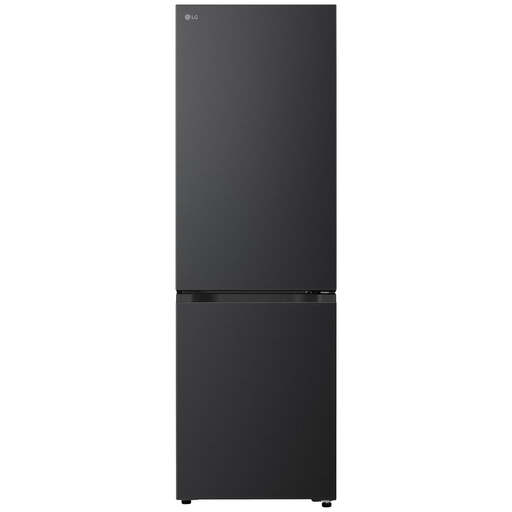 Image unavailable
A fridge-freezer to consider if you want to store fresh and frozen food in one appliance rather than installing a separate freezer.
The product name lists a capacity of 333 L and a C energy rating.
Check how this capacity is split between the compartments and what clearances are needed in your kitchen.
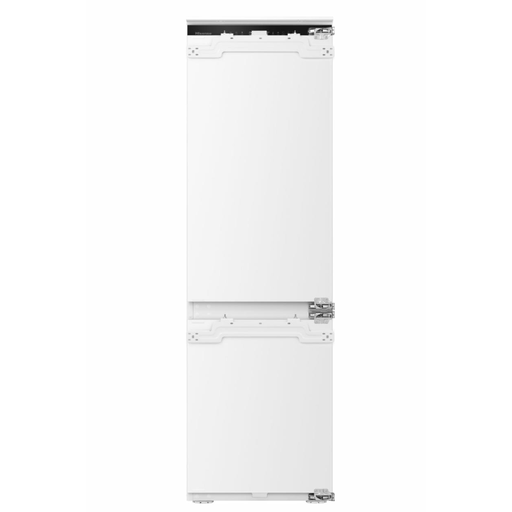 Image unavailable
Worth considering if your fitted kitchen needs a built-in fridge-freezer and its capacity suits your usual shop.
The product name lists a capacity of 252 L, No Frost and a C energy rating.
Check the dimensions of the housing unit, the fitting and ventilation requirements for this model, and the space available for the freezer.
 Image unavailable
Worth comparing if you want a fridge-freezer with the freezer at the bottom for your regular shops of fresh and frozen food.
The product name lists a capacity of 282 L and an E energy rating.
Compare the space in each compartment with your shopping needs, and check access, door clearance and the required ventilation.
Work out the capacity you need by comparing the space required for fresh and frozen food from your biggest shop separately. Que Choisir gives an average guide of 100 to 150 l for one person, plus 50 l for each additional person. Use this as a starting point and adjust it to suit how often you shop and how much frozen food you eat.
It may be enough if you only buy a small amount of frozen food from time to time. If you regularly store a lot, compare the capacities of models with a separate freezer compartment instead. Que Choisir says a small freezer is not enough for high consumption of frozen food.
Measure the space where it will go and the entire delivery route, including doors, hallways and any stairs or lift. Then check the model’s manual for door clearance and ventilation requirements. If the appliance dispenses water or ice, check whether it needs a water connection.
Don’t assume it’s suitable to plug your appliance in straight away; follow its manual. Electrolux recommends transporting its appliances upright and waiting at least 4 hours after transport before plugging them in.
First compare the annual consumption in kWh/year for models with a similar capacity and layout that meet similar needs. Also look at their capacity and energy rating: the rating alone won’t tell you how much room you’ll have for your shopping.