Households that stock up for the week
You’ll need enough usable capacity for everyone in your household, with space for both fresh and frozen food. Que Choisir recommends considering a fridge freezer when both compartments matter.


For a weekly shop that includes fresh and frozen food, start by comparing the usable capacity of both compartments. A fridge freezer is worth considering when you need plenty of space in each, while an under-counter fridge or a fridge with a freezer compartment is better suited to more limited storage needs. Next, check where it will go and the clearances specified in the manual, then compare the stated annual energy consumption and noise level. A multi-door fridge freezer is only a good choice if you genuinely need the extra capacity and have a suitable kitchen.
You’ll need enough usable capacity for everyone in your household, with space for both fresh and frozen food. Que Choisir recommends considering a fridge freezer when both compartments matter.
If space is tight and you don’t freeze much, compare the usable capacity of an under-counter fridge with that of a fridge with a freezer compartment. Que Choisir particularly recommends under-counter models for studio flats; check that the capacity is enough for your shopping.
Factor the stated noise level into your choice, but don’t treat it as a guarantee of quiet operation. Que Choisir points out that vibrations and the type of noise also affect how noticeable it is.
First decide how much space you need for fresh and frozen food. Then consider which style is right for you in light of your kitchen dimensions and the features of each model.
Consider it: if space is very limited and you don’t need to store many provisions, particularly in a studio flat.
The trade-off: capacity is more limited; check whether the model has a freezer compartment.
Consider it: if your weekly shop regularly includes both fresh and frozen food.
The trade-off: the balance between the two compartments needs to suit your shopping; total capacity alone isn’t enough.
Consider it: if most of your storage space is for fresh food and you only buy frozen food occasionally.
The trade-off: according to Que Choisir, a small freezer compartment may not be enough if you need to store a lot of frozen food.
Consider it: if you need plenty of storage space and your kitchen and access route can accommodate it.
The trade-off: check the dimensions of each model individually. Dimensions quoted by Que Choisir for American-style appliances don’t apply to all multi-door models.
| Consideration | What to check | Who it matters to |
|---|---|---|
| Space for fresh food | Compare the fridge’s usable capacity and the layout of its shelves and drawers. | If I prepare several meals between shops, I want to store fresh food without overcrowding the shelves. Around 31% of consumers would prioritise having enough space for fresh food. |
| Space for frozen food | Look at the usable capacity and features of the freezer compartment, rather than just the total capacity. | If frozen food makes up a regular part of my shop, a small freezer compartment may not give me the storage space I need. Around 25% of consumers would prioritise this capacity. |
| Size and installation | Measure the appliance, delivery access and door clearance; check the required clearances in the manual. | In a small kitchen, I need to be able to open the doors and install the appliance with the required clearances. Around 25% of consumers would prioritise how well it fits their space. |
| Energy consumption and noise | Compare the kWh/year, stated noise level and usable capacity of the models you’re considering. | In an open-plan kitchen, I want to consider noise while keeping an eye on the energy consumption of an appliance that runs continuously. Around 19% of consumers would prioritise these two factors. |
A fridge may fit in its space but still not leave enough room for ventilation or opening the doors. The required clearances depend on the model and its manual.
Also measure the height, depth, door swing and delivery access, then check these measurements against the installation instructions.
If a large part of your shop is frozen food, having a freezer compartment doesn’t automatically mean it will have enough capacity for your needs.
Estimate how much space your frozen food takes up over a week or two, then compare it with the compartment in the model you’re considering.
A large capacity is only useful if the compartment layout suits you and the appliance can be delivered, installed and used in your kitchen.
Check the dimensions and kWh/year for the specific model, rather than assuming that features of an American-style appliance apply to every multi-door fridge freezer.
Que Choisir points out that two fridges with the same stated noise level may sound different, partly because of vibrations.
Use the stated noise level to narrow down your options, then, if possible, read reviews or test results that describe the noise and vibrations in more detail.
These fridge freezers and multi-door models offer a range of capacities for storing fresh and frozen food between shops. Compare the internal layout with your needs, then check the dimensions and installation requirements of the model you choose.
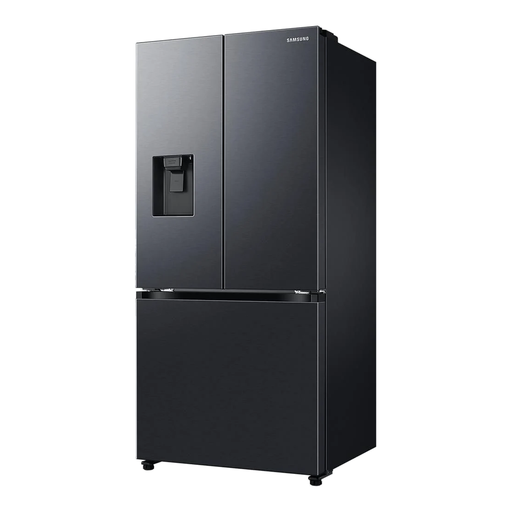 Image unavailable
Worth considering if your shop needs plenty of space for both fresh and frozen food. Check how the stated 495 L is divided between the compartments.
Energy rating E. Also measure delivery access and the space needed to open the doors.
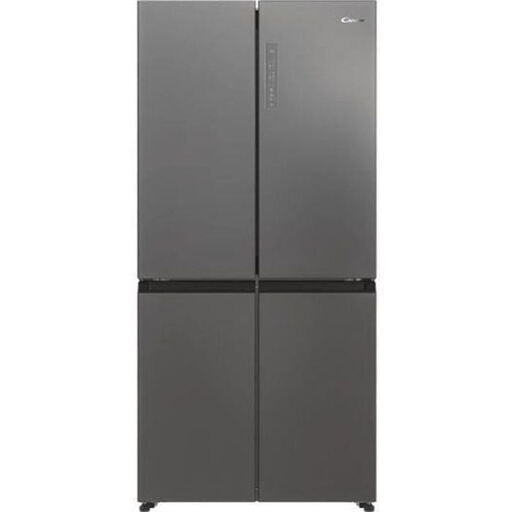 Image unavailable
Worth considering if you need plenty of storage for your weekly shop, provided the balance between fresh and frozen food suits you.
The model name includes Total No Frost and energy rating E. Check the installation clearances in the manual.
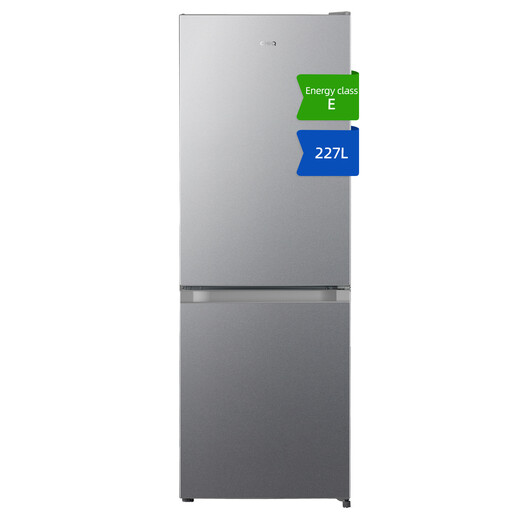 Image unavailable
For more modest storage needs that still include some frozen food, this model offers 153 L of fridge space and 74 L of freezer space.
Its name includes Low Frost, a reversible door and energy rating E. Check its exact width before deciding whether it will fit in your kitchen.
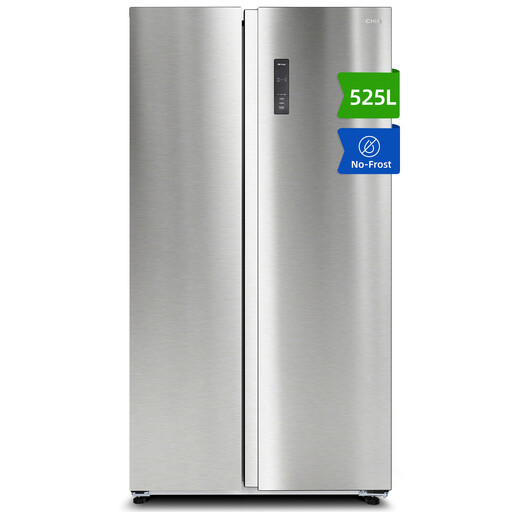 Image unavailable
For storing plenty of fresh and frozen food, the product details divide the stated 525 L into 333 L of fridge space and 192 L of freezer space.
The product name also includes No Frost, a stated noise level of 37 dB and energy rating E. Check the dimensions, installation clearances and kWh/year before choosing it.
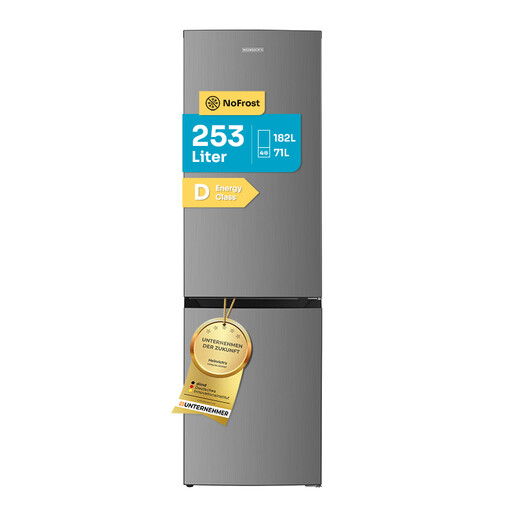 Image unavailable
Worth comparing for a weekly shop that includes a moderate amount of frozen food: the product details state 182 L of fridge space and 71 L of freezer space.
It also lists No Frost and a stated noise level of 39 dB. Check the full dimensions, kWh/year and clearances specified in the manual; decibels alone don’t determine how quiet it will feel.
As a starting point, Que Choisir recommends an average of 100 to 150 L of usable capacity for one person, plus 50 L for each additional person. Adjust this to suit your shopping habits and batch-cooked meals, and check the fridge and freezer capacities separately.
Not without checking the manual for your model. It will specify ventilation requirements, as well as the space needed to open the doors and level the appliance. For the appliances covered by its guidance, Bosch recommends at least 200 cm² of ventilation space behind and beneath the fridge; this figure doesn’t automatically apply to other models.
Compare the kWh/year, usable capacities and stated noise levels of models that meet your space requirements. The European Commission’s public EPREL database includes details such as dimensions, annual energy consumption and compartment capacities for individual appliances. As Que Choisir points out, decibel ratings alone can’t predict how noticeable the noise will be.
Before ordering a replacement, ask the retailer how to arrange for your old appliance to be taken away, especially if your new one is being delivered to your home. Explain any access restrictions and agree how the old fridge will be collected when your new one arrives.