Households that prepare several meals in advance
You need enough room to find fresh meals easily, as well as freezer drawers that can accommodate the portions you plan to store.


If you store both fresh food and frozen portions, start by comparing the usable capacity of each compartment. A fridge-freezer could suit this mix, while a small freezer compartment is better for occasional freezing. If you freeze large batches regularly and have enough room, consider two separate appliances instead. In every case, check the dimensions, interior layout and energy label information. Don’t judge cooling performance by the name of a technology alone.
You need enough room to find fresh meals easily, as well as freezer drawers that can accommodate the portions you plan to store.
If frozen food regularly takes up space in your shopping, start by checking the freezer capacity and how easy its compartments are to access.
Being able to see your food and allowing air to circulate matter more to you than having a large freezer. ADEME recommends taking stock of what you have and tidying your fridge regularly to avoid duplicate purchases and forgotten food.
Your choice of style depends mainly on how much room you need for fresh and frozen food, and how much space you have for the appliance.
Consider this if: you store fresh food every week, along with a regular but limited supply of frozen portions.
Bear in mind: the freezer space needs to be big enough for your containers and dishes, even if the appliance’s total capacity seems generous.
Consider this if: you mainly eat fresh food and only freeze a few small portions now and then.
Bear in mind: the compartment may not have enough space if frozen food or prepared meals become a significant part of your shopping.
Consider this if: freezing food in batches is a priority and you have a suitable space for a second appliance.
Bear in mind: you’ll need room for two appliances and should compare their respective annual energy consumption.
| What to consider | What to check before you buy | Who it matters to |
|---|---|---|
| Capacity split | Compare the usable capacity in litres of the fridge and freezer separately, then check there’s enough drawer space for your containers. | If I often freeze portions or bulk buys, I want to store them without sacrificing all the space for fresh food. Around 42% of consumers would put this balance of capacity first. |
| Cooling and fresh food storage | Check the storage zones and how the model distributes cold air. Once it’s installed, check the temperature and avoid overfilling it. | To use fresh meals before I forget about them, I need to be able to see them and have air circulate around them. This would be the top priority for around 33% of consumers. |
| Installation and use | Measure the space and check that the doors can open fully. Also compare the kWh/year and noise figures on the energy label for each appliance you’re considering. | In a kitchen where every centimetre counts, I don’t want to choose an appliance that I can’t install or use conveniently. Around 25% of consumers would prioritise the space it takes up and its usage figures. |
When comparing models, the European Commission says the energy label includes information such as the efficiency class, annual energy consumption, storage volumes and noise level. Que Choisir also assesses how evenly cold air is distributed in its fridge-freezer tests. A feature such as No Frost alone doesn’t tell you what temperatures each zone will reach.
A spacious appliance might devote most of its capacity to fresh food, even if you mainly want to freeze portions – or the other way round.
Compare the two capacities separately and check that the drawers fit the size of your containers and dishes. The European energy label lists the capacity of each compartment.
The depth, door opening or access to the drawers could make an appliance awkward to use in the space you’ve chosen.
Measure the appliance, the clearance it needs and the delivery route. If you’re putting a freezer in a garage, cellar or utility room, also check that its climate class is suitable for the room temperature.
A cooling technology doesn’t replace setting the right temperature or arranging food so air can circulate.
Anses recommends keeping food between 0 and +4 °C in the coldest part of the fridge and advises against overfilling it. Check the temperature and follow the appliance’s storage guidance.
Cover offered by a retailer doesn’t replace the rights that apply when you buy goods from a professional seller.
In France, the Ministry of the Economy explains that the legal guarantee of conformity applies to new, second-hand and refurbished goods sold by a professional to a consumer. Check what any extended cover actually adds, including its duration, repairs and exclusions.
The range includes freestanding fridge-freezers, with features that vary by model.
Some two-door models offer a capacity split worth considering if you store large quantities.
The SpaceMax range includes fridge-freezers worth considering when width is a key constraint.
These models combine a fridge and freezer in one appliance. Compare their capacity with the fresh and frozen food you store, then check that the dimensions and storage layout suit your kitchen and containers.
 Image unavailable
Worth considering if you want to keep fresh food separate from portions for freezing in a fridge-freezer.
The model title lists a total capacity of 360 L, Total No Frost, an E energy rating, Wi-Fi and My Zone. Check the usable space in each compartment, the zone settings and the clearance needed for installation.
 Image unavailable
Its four doors may appeal to households that want separate access to different parts of their food storage.
The title lists a total capacity of 467 L, Total No Frost and an E energy rating. Before choosing this multi-door style, measure the space, check the doors can open fully and make sure it will fit through the delivery route.
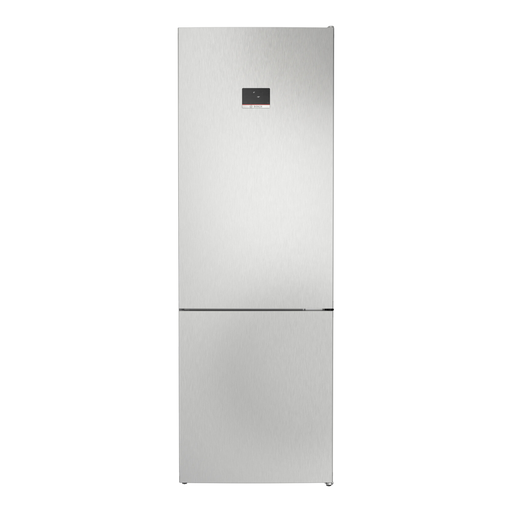 Image unavailable
Consider this if you’re looking for a large-capacity fridge-freezer to store fresh food and frozen portions.
The title lists a total capacity of 440 L and a D energy rating. Check the capacity of each section, as well as the size and layout of the freezer drawers against your dishes. Also check the available height.
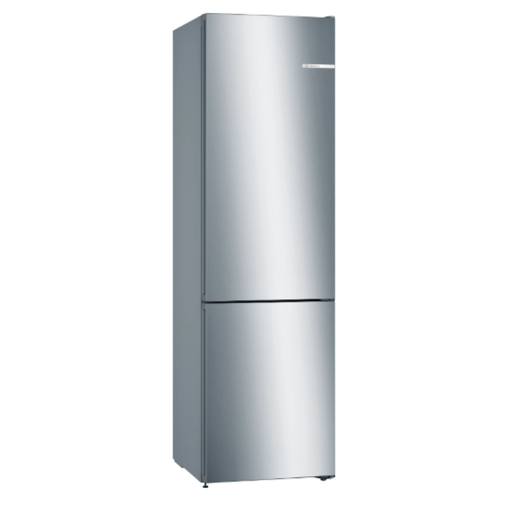 Image unavailable
This fridge-freezer is worth comparing if you keep fresh food in stock while also freezing portions.
The title lists a total capacity of 368 L and an E energy rating. Check the freezer capacity and access to the drawers separately: a suitable total capacity doesn’t guarantee that your containers will fit.
 Image unavailable
Worth considering if space is limited and your frozen portions will fit in a 74 L compartment.
The title lists 153 L of fridge space and 74 L of freezer space, as well as Low Frost, a reversible door and an E energy rating. Check the height, annual energy consumption and the model’s defrosting instructions before choosing.
Anses recommends a temperature between 0 and +4 °C in the coldest part of the fridge. Find this area for food that needs to be kept especially cold, check the temperature regularly and avoid overfilling the appliance.
Compare the capacity of each compartment separately, the energy rating, annual energy consumption in kWh and the noise level. The European Commission says this information appears on the labels of appliances covered by the scheme. Check the details for the exact model rather than relying on its total capacity alone.
Not on its own: No Frost doesn’t guarantee the temperature the appliance will maintain or ensure that food is stored correctly. Que Choisir describes the technology as fan-assisted cooling that prevents frost from forming. Also check the model’s settings and leave space for air to circulate between foods, as Anses advises.
No. The Ministry of the Economy explains that the legal guarantee of conformity applies to new, second-hand and refurbished goods sold by a professional to a consumer. It is separate from extended cover. Check what the latter includes and excludes, and don’t confuse the two protections.