
Livraison le jour même ou le lendemain

Qualité garantie

Débloquez vos offres de bienvenue: Livraison GRATUITE | Jusqu'à -80 % | 30 jours d'essai gratuits à JoyPlus
Téléchargez l'application
The French press, or cafetière as it's also known, is a favourite among slow coffee enthusiasts for a good reason: it extracts incomparably rich and full-bodied aromas. Simple, efficient, and eco-friendly (goodbye, paper filters and pods!), it embodies an authentic brewing method. But be warned: the market is flooded with models of wildly varying quality. One wrong choice, and the morning ritual can quickly turn into a caffeinated disappointment.
As a section editor at Joybuy, I test dozens of products for you. Let me guide you through avoiding the most common pitfalls and identifying the criteria that truly matter for your next manual coffee maker.
Before we even start comparing models, let's review the deal-breakers that can turn your experience into a nightmare.
To ensure you make the right choice, focus on these three key points. They are your guarantee of quality and longevity in a coffee maker.
This is the most vulnerable component, making its material a non-negotiable criterion.
To avoid any surprises, only look at the capacity in millilitres (ml) or litres (L).
This is the centrepiece of your manual coffee maker. A high-performance system consists of three parts: a spiral plate to hold the filter against the carafe wall, a fine and tightly woven mesh filter, and a rigid base for the entire assembly. Insist on a 100% stainless steel assembly: it's the only way to guarantee against rust and ensure unbeatable durability. In use, the plunger should glide smoothly but offer slight resistance—the sign of an effective seal and a perfect fit.
To illustrate these criteria in action, here are our top picks, each tailored to a specific need.
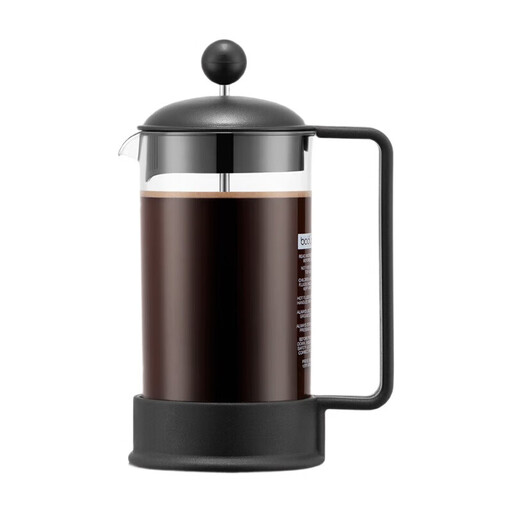
The perfect choice for beginners: Its compact 350 ml (12 oz) size is ideal for one large mug or two small cups, preventing waste. It's the ideal entry point for discovering the French press method with a tried-and-true brand.
Its borosilicate glass carafe resists thermal shock, eliminating the main risk of breakage. Its stainless steel filtration system, a Bodum signature, guarantees a pure, sediment-free coffee.
Unbeatable value for money to get started, with reliable materials and a straightforward, no-frills design.
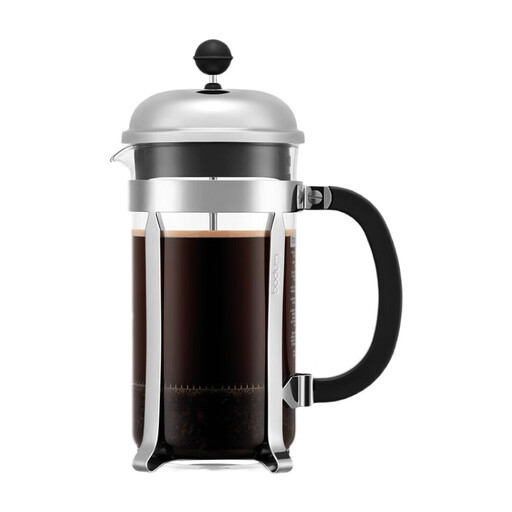
For those who love to share: With its generous 1-litre (34 oz) capacity, it's perfect for family breakfasts or serving multiple guests. A design icon, the Bodum Chambord is also a beautiful piece that will sit elegantly on your table.
Its stainless steel frame effectively protects the borosilicate glass carafe, giving it enhanced durability. The capacity is clearly stated in litres (no tricks here!), and its filter is built for heavy use.
Its large capacity combined with an iconic, timeless design. A smart and durable investment for enjoyable coffee moments together.
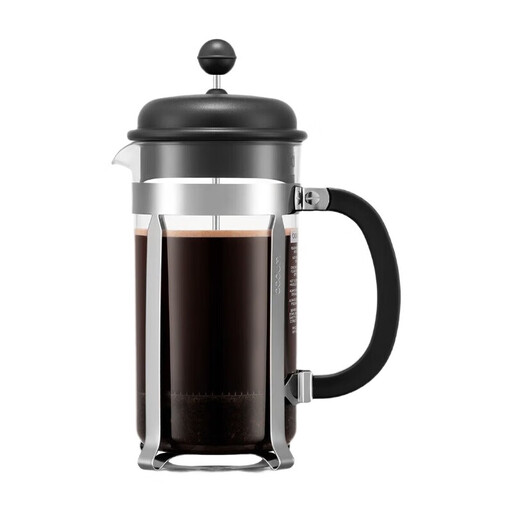
The daily workhorse: It features the same filtration quality and 1L capacity as the Chambord but in a lighter, more resilient BPA-free plastic frame that withstands everyday bumps. It's the true workhorse of the lineup.
It has the same borosilicate glass carafe and stainless steel plunger that are the hallmarks of Bodum's quality. Its sturdy plastic shell offers excellent protection for the glass, and its capacity is unambiguous.
The perfect compromise between large capacity, durability, and everyday practicality. Bonus: cleaning is a breeze, as it's dishwasher-safe.
Explore our full selection of coffee makers that meet all our quality criteria.
A coarse grind is non-negotiable. Coffee that is ground too finely (like for espresso) will pass through the filter, creating an unpleasant sediment (the infamous "sludge") and making it almost impossible to press the plunger down. The ideal consistency is similar to that of coarse salt.
It couldn't be simpler. After discarding the grounds (ideally in your compost), just unscrew the plunger to separate its three components: the filter, the spring-loaded plate, and the base. A quick rinse with warm, soapy water is all it takes. For a deeper clean, the glass carafes and stainless steel parts of most quality models are dishwasher-safe.
Absolutely! It's a much more versatile tool than you might think. It's perfect for brewing loose-leaf tea, herbal infusions, or even making cold brew. Its filtration system is just as effective at separating leaves or herbs from your beverage.