
Same-day & Next-day Delivery

Quality Guaranteed

Unlock Your Welcome Offers: FREE Delivery | Up to 80% OFF | Free 30-day JoyPlus trial
Download the APP
The French press promises a rich, aromatic coffee, achieved through a ritual that is as simple as it is authentic. It's the quintessential slow coffee method, preserving the bean's natural oils for an unparalleled in-cup result. The only problem is that the market is flooded with models that, beneath their appealing exteriors, hide flaws capable of turning your coffee break into a disappointment. To avoid falling into this trap, here are the common pitfalls and how to steer clear of them.
To make the right choice, here are the technical details that make all the difference in daily use.
Capacity is often a source of confusion. Be aware that in coffee jargon, one "cup" is about 120 ml (4 oz), a far cry from our usual mugs.
The carafe's material directly impacts your coffee maker's durability and the taste of your coffee.
Borosilicate glass is the quality standard to look for. Its chemical composition gives it excellent resistance to thermal shock, drastically reducing the risk of breakage. Furthermore, it's non-porous, meaning it won't absorb odours or flavours, guaranteeing a consistently pure coffee taste. So, be wary of vague claims like "heat-resistant glass" that offer no further specifics.
The heart of a manual French press is its filtration system. A good system consists of three parts: a spiral plate that presses the filter against the walls, a fine stainless steel mesh filter, and a rigid base that holds the assembly together. Stainless steel is the preferred material for its durability and neutrality. A well-designed filter ensures a perfect separation between the grounds and the coffee, for a clear, sediment-free beverage.
Rather than an endless list, we've selected a few models that tick all the boxes and meet specific needs, keeping quality and safety criteria in mind.
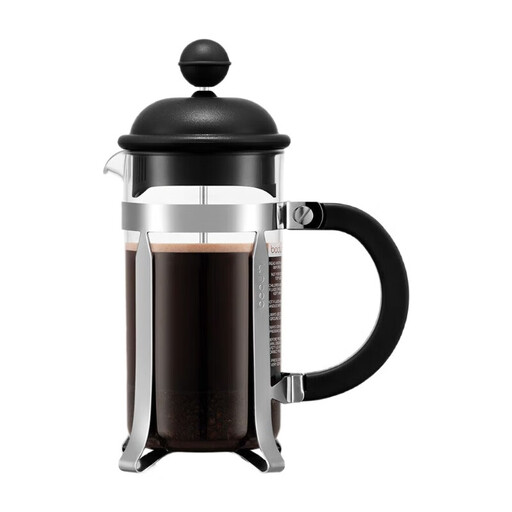
Why we love it: With its 350 ml capacity, it's perfect for a solo morning ritual or coffee for two. Its compact and time-tested design makes it a smart choice for small kitchens or the office.
This model features a borosilicate glass carafe and Bodum's proven filtration system, which is renowned for minimising sediment. Its BPA-free plastic frame is lightweight yet stable.
Compact size and dishwasher-safe parts for effortless cleaning.
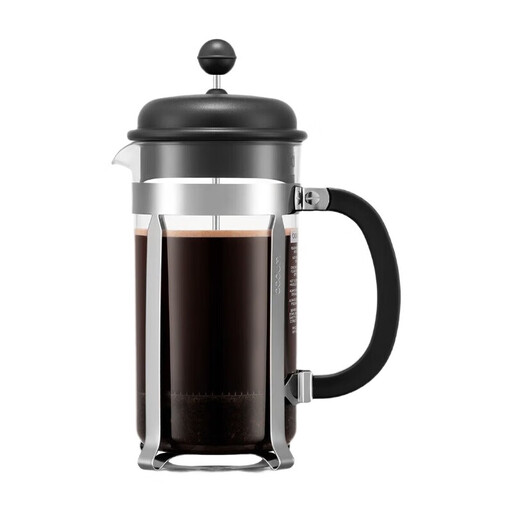
Why we love it: With its generous 1-litre capacity, this coffee maker is designed for family breakfasts or for treating guests after dinner. A reliable and versatile classic.
Its large borosilicate glass carafe is built for heavy use. The Bodum plunger ensures a clean brew even with a large volume, and the frame guarantees good stability when pressing.
Large capacity and a simple, robust design built for daily use.
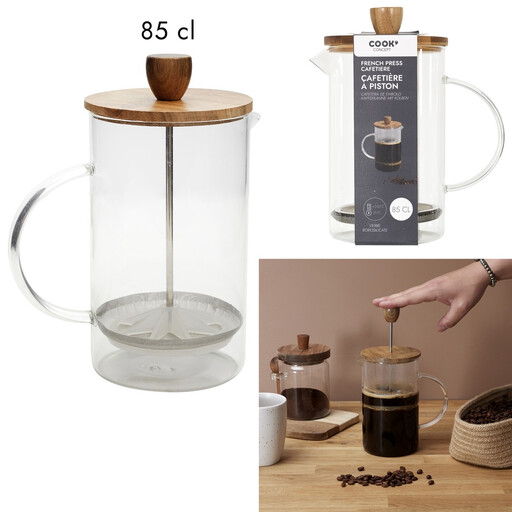
Why we love it: For those who see kitchen tools as design objects, this model is an obvious choice. The combination of acacia wood and glass brings a natural, warm touch to the coffee ritual.
This model relies on quality borosilicate glass, eliminating the risk of breakage. Its stainless steel filter is designed for a clean extraction, and the solid wood elements ensure a sturdy and pleasant grip.
A unique design that blends natural materials with a refined aesthetic, perfect for an elegant slow coffee approach.
Discover our full selection of products that meet our quality criteria and current safety standards.
This is the secret to a successful brew. For a French press, you absolutely need a coarse grind, with a texture reminiscent of coarse salt. A grind that is too fine (like for espresso) will clog the filter, make the plunger difficult to press, and, most importantly, pass through the mesh, leaving unpleasant sediment in your cup. Equipping yourself with a good coffee grinder, like the manual TIMEMORE Chestnut C3S PRO or the electric STARESSO D6E PLUS, will allow you to master this crucial parameter.
Regular maintenance is the key to your coffee maker's longevity and the purity of its taste. After each use, empty the grounds (which are great for compost!) and completely disassemble the plunger. Wash all parts with hot, soapy water. Pay close attention to the filter to remove any coffee oils that can build up and eventually go rancid. Most glass carafes and stainless steel parts are dishwasher-safe, but hand-washing is often more effective for the filter.
Absolutely. It's one of the most sustainable brewing methods available. It is an eco-friendly coffee maker by nature: no electricity, paper filters, or plastic and aluminium capsules required. The only waste produced is the coffee grounds, which are fully biodegradable and compostable. It's a simple and effective choice for reducing your daily environmental footprint.