What should you check before choosing?
Start with how much you want to store and how often you’ll need to find a portion. Then check that your preferred format will fit the space you have in mind.
Chest freezer
Worth considering: for large quantities or bulky packs, if you have enough floor space.
The trade-off: food at the bottom needs to be organised so it’s easy to find.
Upright freezer
Worth considering: if you regularly access meals stored in separate drawers.
The trade-off: check that each drawer is large enough for your bigger dishes and packs.
Fridge-freezer
Worth considering: if you also need to replace your fridge and want both functions in one appliance.
The trade-off: some of the total capacity is reserved for chilled food, so check the freezer capacity separately.
| Consideration | What to check | Your needs |
|---|
| Capacity and access |
Compare the freezer compartment capacity, drawer sizes or open space in a chest freezer. Measure the space and allow enough room to open the door or lid. |
I store a lot of groceries at once, but I also want to find meals for the next few days quickly. |
| Location |
Compare the room’s minimum and maximum temperatures with the range stated in the manual. Also allow for the ventilation clearances required for the model. |
If it’s going in an unheated garage or pantry, I need to choose based on the temperatures it actually reaches, not simply because it’s called a “chest freezer”. |
| Energy, noise and maintenance |
According to the European Commission, the EU energy label shows details including annual consumption in kWh, capacity and noise. Compare appliances of a similar capacity and check the model’s defrosting system. |
If the appliance is near the living areas, noise matters to me. I also want to know whether manual defrosting will be part of its upkeep. |
| Power cuts and freezing capacity |
Check the stated storage time during a power cut, the freezing capacity in kg/24 h and whether there’s an alarm. When comparing test results, make sure the measurements were taken under the same conditions. |
After a big shop or a cooking session, I want to know how much the appliance can freeze in a day and what information is available in the event of a power cut. |
Which branded models offer useful comparisons?
The specifications below apply to the models or ranges mentioned, not to every appliance from each brand.
Liebherr
These two models let you compare different formats: the FNe 4605 Pure upright freezer and the CFe 2080 Pure chest freezer.
- According to Liebherr’s product information, the FNe 4605 Pure has a capacity of 199 l, a noise level of 36 dB and NoFrost. The CFe 2080 Pure has a capacity of 353 l and FrostProtect down to -15 °C.
- Check the manual for the permitted temperature range for the location where you plan to install your chosen model.
Beko
Beko’s French ranges include chest freezers and fridge-freezers, some of which are designed to work in cool rooms.
- Beko specifies Freezer Guard down to -15 °C on some chest freezers and down to -5 °C on some fridge-freezers.
- These limits vary by model, so check its product information. You’ll also need to plan how to organise food in a chest freezer.
Whirlpool
The freestanding WHK22373X6EA fridge-freezer is a useful point of comparison if you’re replacing your fridge too.
- Whirlpool states that this model has a 118 l freezer capacity, uses 203 kWh/year and offers 10 hours of storage time during a power cut.
- Compare its 118 l of freezer capacity with the amount of food and groceries you actually want to store.
Freezers to consider on Joybuy
This selection on Joybuy includes an upright freezer for organising portions and chest freezers in a range of capacities for building up your supplies. Check each model’s capacity and installation requirements against your needs.
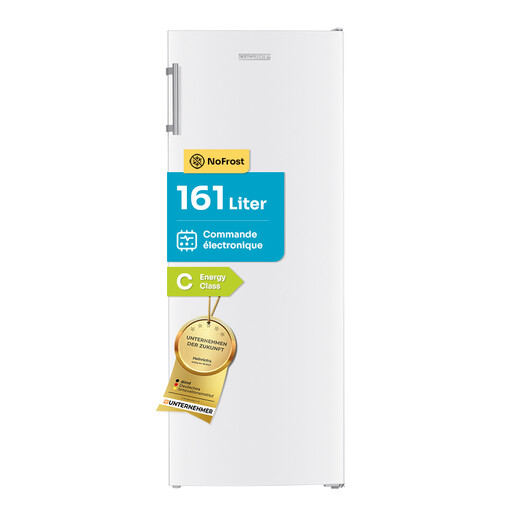 Image unavailable
Heinrich´s, 161 L No Frost upright freezer, white
Designed for separating meals into portions, this upright model has a stated capacity of 161 L, three drawers, No Frost, an alarm and a temperature setting range of -14 °C to -22 °C. Before installing it in an unheated room, check its climate class in the manual. Also check its storage time during a power cut if that matters for your food supplies.
View on Joybuy
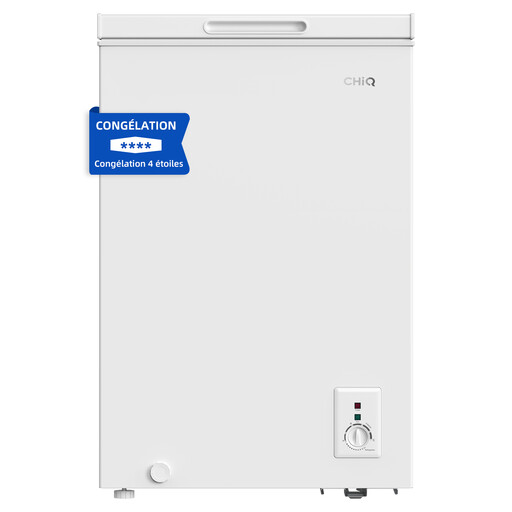 Image unavailable
CHiQ JR99DWE, 99 L chest freezer
This 99 L chest freezer can provide extra storage, and its removable basket keeps some smaller items within easy reach. Plan how to organise the food underneath, and check the permitted ambient temperature range if you’re installing it in a garage or pantry.
View on Joybuy
 Image unavailable
AUCMA, 197 L convertible chest freezer
Its 197 L capacity and removable basket make it a practical option for extra storage, with space to organise. You can choose fridge or freezer mode: make sure it’s set to freezer mode to store meals, and check the permitted ambient temperature range before installing it outside the kitchen.
View on Joybuy
 Image unavailable
AUCMA, 291 L convertible chest freezer
The stated capacity of 291 L makes this model worth considering for larger quantities, provided you have the space and can organise the contents as you would in any chest freezer. It has a removable basket and selectable fridge and freezer modes. Check which mode is selected and the installation requirements in the manual.
View on Joybuy
 Image unavailable
AUCMA, 95 L convertible chest freezer
With a capacity of 95 L, this chest freezer is better suited to providing extra storage than holding very large quantities. Compare its capacity with the portions you plan to keep. It has a removable basket and selectable fridge and freezer modes. Check which mode is in use and the permitted room temperature range.
View on Joybuy
Frequently asked questions
How can I tell if a freezer is suitable for an unheated garage?
Compare the garage’s lowest and highest temperatures with the range permitted in the model’s manual. Que Choisir gives the following climate class ranges: SN, 10 to 32 °C; N, 16 to 32 °C; ST, 16 to 38 °C; T, 16 to 43 °C. Check that any specific low-temperature suitability applies to the exact appliance you’re considering.
Does a chest freezer always stay cold for longer during a power cut?
Don’t assume that a chest freezer will stay cold for longer just because of its format. Compare the stated storage time for the models you’re considering, or look at tests carried out under comparable conditions. Que Choisir’s test protocol, for example, measures how long it takes for the temperature to rise from -17 °C to -9 °C without power.
What should I look for on a freezer’s energy label?
Look at the annual consumption in kWh, capacity and noise together, rather than focusing only on the energy class letter. The European Commission says that the label for household refrigeration appliances uses a scale from A to G. Comparisons are most useful between appliances of a similar type and capacity.
Do I need No Frost to store prepared meals?
No. This system mainly helps with frost build-up and defrosting. If you’re comparing two appliances for storing prepared meals, also check the space for your containers, the freezer capacity and each model’s storage time during a power cut.
What temperature should I set my freezer to?
Electrolux recommends setting a freezer to -18 °C. Also follow your appliance’s manual and the storage instructions on your food.


