
Livraison le jour même ou le lendemain

Qualité garantie

Débloquez vos offres de bienvenue: Livraison GRATUITE | Jusqu'à -80 % | 30 jours d'essai gratuits à JoyPlus
Téléchargez l'application
Between dinner leftovers, packed lunches, and the desire to waste less, storing food properly can quickly become a headache. The key to success? A good food storage container: practical, safe, and perfectly suited to your daily routine. To help you cut through the marketing jargon, here is our complete guide and selection of the best models available now.
Before you fall for a particular model, let's review the few features that truly make a difference in everyday use.
This is often the first dilemma. Glass or plastic, each has its pros and cons.
An airtight food container is the secret weapon for proper food preservation. An effective locking system, with a silicone gasket and sturdy clips, blocks air circulation. The result: oxidation is slowed, flavours are preserved, and you avoid disastrous leaks at the bottom of your lunch box bag. This is also a decisive advantage for freezing, as it limits the formation of frost.
To make the most of every square inch in your cupboards and fridge, opting for a food storage container set is often the best solution. These sets offer various sizes for all uses, from a small portion of sauce to a family-sized meal. Stackable containers are also a significant asset for neat, stable, and well-organised storage.
Whether you're a meal prep pro, the king of leftovers, or simply searching for the perfect lunch box, here are the models that caught our eye.
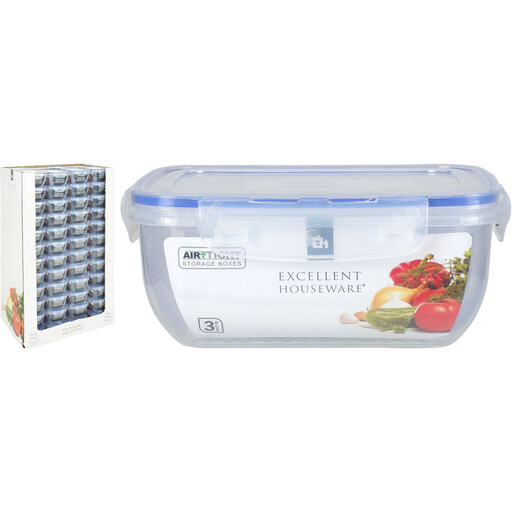
Its strong point: This set stands out with its clever screw-on locking system. Paired with a silicone gasket, this mechanism ensures a foolproof seal, ideal for liquid contents like soups or sauces.
Advantages:
Who is it for? Ideal for those who often transport saucy dishes or soups and want a simple, secure solution to prevent disasters in their bag.
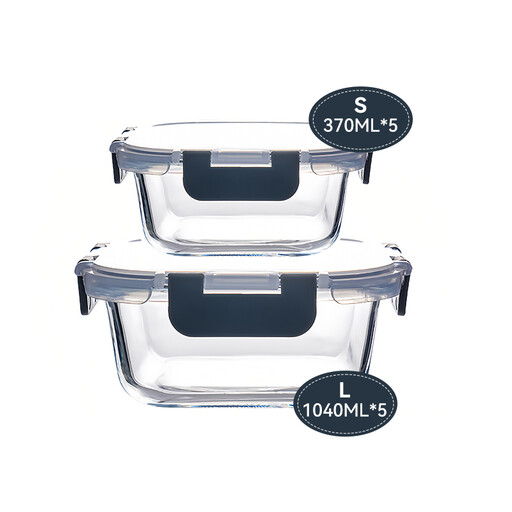
Its strong point: This comprehensive food storage container set focuses on quality and versatility. Borosilicate glass is a premium material, highly resistant to thermal shock, allowing for direct transfer from the freezer to the microwave.
Advantages:
Who is it for? Perfect for families or fans of advance meal preparation (meal prep) who prefer glass for its durability, hygiene, and versatility, as it can safely go in the oven (without the lid) and microwave.
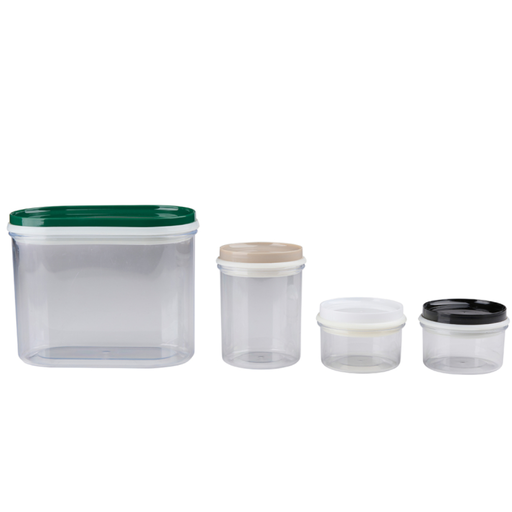
Its strong point: This set of 4 containers is a smart starter kit, designed entirely for space optimisation. The different sizes nest inside one another for ultra-compact storage when empty.
Advantages:
Who is it for? Suitable for those looking for a simple and budget-friendly solution to organise their fridge or pantry, and who prioritise compact and intelligent storage.
If these models don't quite meet your needs, or if you're looking for more specific formats, take a look at our full selection.
Discover our complete range of clear latching storage boxes to find the perfect model for your kitchen.
Glass is the champion of hygiene and durability. It doesn't retain odours or stains and can withstand high temperatures (microwave, oven). On the downside, it's heavier and can break if dropped. Plastic is perfect for life on the go. Lightweight, impact-resistant, and often cheaper, it's ideal for transport. Its weak point: it can stain and absorb odours over time. Always make sure it is labelled as BPA-free.
The secret to a good airtight seal lies in two elements. First, the presence of a silicone or rubber gasket inside the lid. Second, the locking system is crucial: lids with clips on all four sides or screw-on lids are generally the most reliable for a foolproof seal.
It all depends on the material. Borosilicate glass is specially designed to withstand thermal shock and can therefore go from the freezer to the microwave without any issues. For plastic containers, you must check the manufacturer's instructions. Most quality models are compatible, but always remember to slightly open or remove the lid before microwaving to allow steam to escape.