
Livraison le jour même ou le lendemain

Qualité garantie

Débloquez vos offres de bienvenue: Livraison GRATUITE | Jusqu'à -80 % | 30 jours d'essai gratuits à JoyPlus
Téléchargez l'application
A well-organised kitchen and less food waste often start with one simple step?: choosing the right food storage container. Glass, plastic, airtight or not… Faced with a plethora of options, it's easy to feel overwhelmed. This guide is here to provide you with clear guidelines and practical advice to find the perfect containers for your needs, whether you're organising your fridge, freezing homemade meals, or packing your lunch for the office.
Before diving into our selection, let's review the essential criteria for making a smart purchase.
The material of your food storage container directly impacts its durability, maintenance, and the types of food it can hold.
An airtight food container is non-negotiable for slowing down oxidation and saying goodbye to mixed odours in the fridge. Clips, screw-on lids, zips… there are various sealing systems. For transporting liquids like soup or sauce, opt for a silicone gasket combined with sturdy clips for a completely leak-proof seal.
Your daily routine will dictate the ideal format.
We've selected a few products that stand out from the crowd, each designed for a specific need.
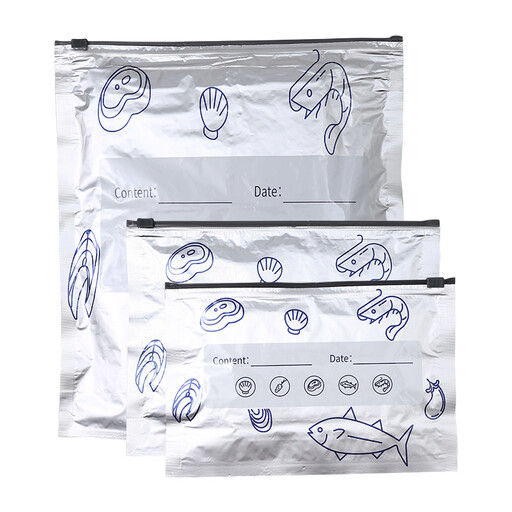
What sets it apart?:
These bags are distinguished by their multi-layer design (PET, aluminium, PE), specifically engineered for freezing. The aluminium foil acts as a powerful shield against light and air, the two sworn enemies of freshness. The zip closure ensures a perfect seal, preserving the texture of meat and fish while blocking odours.
Benefits
Who is it for??
For those who frequently freeze meat, fish, vegetables, or cooked meals and want a more effective and durable solution than a standard plastic reusable freezer bag.
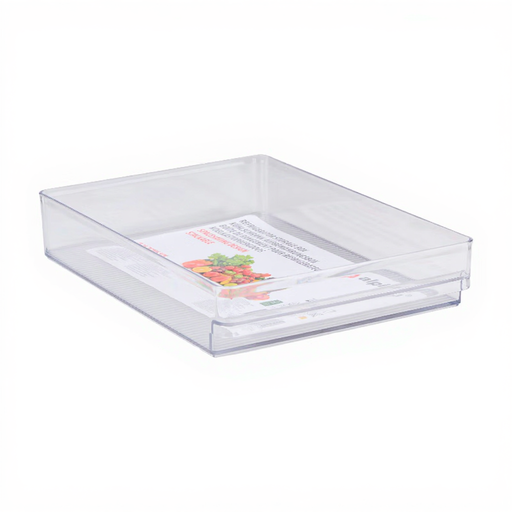
What sets it apart?:
The strength of this box lies in its brilliant simplicity. Designed as a true fridge organiser, its complete transparency allows you to see what's inside at a single glance. Its dimensions (29.7 x 20 x 5.5 cm) are engineered to optimise space on standard refrigerator shelves.
Benefits
Who is it for??
For anyone who wants to put an end to the chaos in their fridge. This is the essential fridge storage bin for organising your groceries and no longer wasting time searching for the mustard jar.
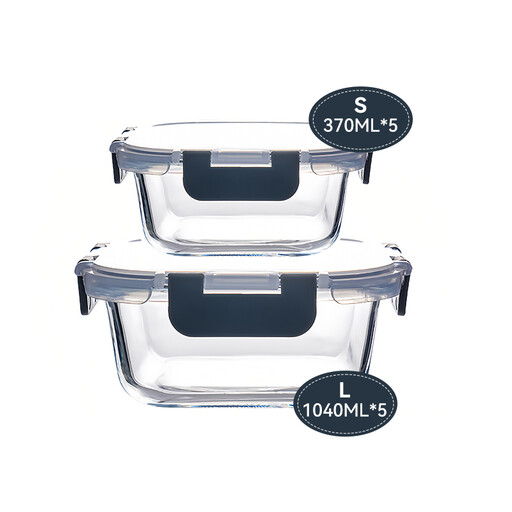
What sets it apart?:
This set combines the robustness of borosilicate glass with a highly reliable clip-lock system. Comprising 10 pieces in two different sizes (5 x 1040 ml and 5 x 370 ml), it offers formidable versatility for meal prep, storing leftovers, or transporting lunch.
Benefits
Who is it for??
For meal prep enthusiasts, employees who pack their lunch, and generally anyone who prefers glass for its durability and impeccable hygiene.
Our selection doesn't cover all your needs, especially for freezing?? Don't worry, other solutions exist. Every kitchen is unique, and finding the perfect item sometimes requires broadening your search.
Explore our full range of flat freezer containers to find the tailor-made solution for your organisational needs.
1. Glass or plastic containers?: which to choose??
It's all a matter of material and properties. Glass is heavier, but it has the advantage of not staining, not retaining odours, and being perfectly safe for your health. Plastic, on the other hand, is lighter and less fragile, but it can discolour and hold onto odours over time. Your choice will depend on your priorities?: durability and hygiene (glass) or lightness and budget (plastic).
2. How can I best organise my fridge with storage containers??
For top-notch organisation, opt for transparent and stackable containers. Use a fridge storage bin to group products by category (dairy, vegetables, cold cuts, etc.). Don't forget to label opaque containers or your homemade dishes with the date, so you can easily apply the "first in, first out" rule.
3. Can you freeze anything in any container??
Absolutely not?! Not all containers can withstand the deep freeze. Standard plastic can become brittle, and ordinary glass may crack from the cold. Always look for the snowflake symbol on the product. Only borosilicate glass, certain plastics (PP, HDPE), and specific freezer bags are designed to withstand sub-zero temperatures.