
Livraison le jour même ou le lendemain

Qualité garantie

Débloquez vos offres de bienvenue: Livraison GRATUITE | Jusqu'à -80 % | 30 jours d'essai gratuits à JoyPlus
Téléchargez l'application
Managing leftovers, prepping meals in advance, or simply keeping your food fresh for longer: a good food storage container is an indispensable kitchen ally. But with a maze of materials, sizes, and locking systems, it's hard to know where to start. Our mission? To give you clear guidelines for choosing the perfect containers for your daily routine, all without the unnecessary marketing jargon.
We'll break down the essential criteria to consider before you buy and present a selection of products that cater to different needs: from meal prep and office lunch breaks to the meticulous organisation of your fridge.
Before settling on a particular model, a few points deserve your attention. A well-thought-out choice is the key to a durable and genuinely practical purchase for everyday use.
This is arguably the number-one criterion. The material of your container will directly impact its durability, potential uses, and ease of maintenance.
plastic food container: Lightweight, often transparent, and usually microwave-safe (always check the manufacturer's instructions), it proves to be very versatile. Modern models are made from BPA-free polypropylene (PP), a robust and perfectly food-safe plastic. It's the most practical option for a lunch box to take to work.stainless steel food container: Stainless steel is renowned for its robustness and impeccable hygiene. It doesn't retain odours or stains and is resistant to impacts. A stainless steel container is a healthy and durable solution, ideal for food storage in the fridge or freezer. The only drawback: it is not microwave-safe.An airtight food container is crucial for two reasons: it preserves the freshness of food by sealing it off from air and moisture, and most importantly, it prevents disastrous leaks in your bag. Therefore, pay close attention to the locking system. Lids with silicone gaskets and four-sided locking clips, or screw-on systems, generally offer the best seal.
Consider all the potential uses you might have. Do you need a freezer-safe container? The model you choose must be designed to withstand very low temperatures without becoming brittle. To optimise space in your cupboards or fridge, opt for stackable containers. Finally, take a look at the care instructions: being dishwasher-safe is a welcome convenience for daily use.
We have selected a few models that stand out for their features and practicality, designed to meet the needs of different user profiles.
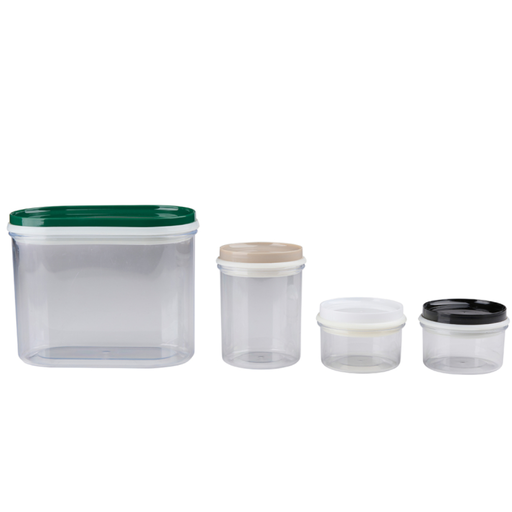
Key Feature
This food storage container set is an excellent entry-level solution—simple and functional. With four different sizes, it is particularly versatile for storing leftovers, sauces, snacks, or full meals. An effective design that gets straight to the point.
Pros
Who is it for?
This set is perfect for students, individuals living alone, or families looking for an affordable and practical first step to organise their kitchen and get started with meal prep.
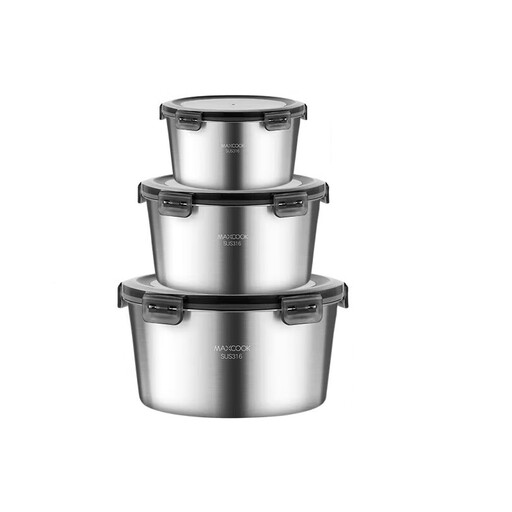
Key Feature
This Maxcook container set focuses on durability and hygiene with its 316 stainless steel construction. This premium-grade stainless steel offers enhanced corrosion resistance, making it ideal for long-term food contact. It's a true investment for those who want a healthy and sturdy alternative to plastic.
Pros
freezer-safe container).Who is it for?
Ideal for those concerned with the durability and hygiene of their containers. It's the perfect choice for anyone wanting a plastic-free solution that is built to last and suitable for storing all types of food, even acidic ones like tomato sauce.
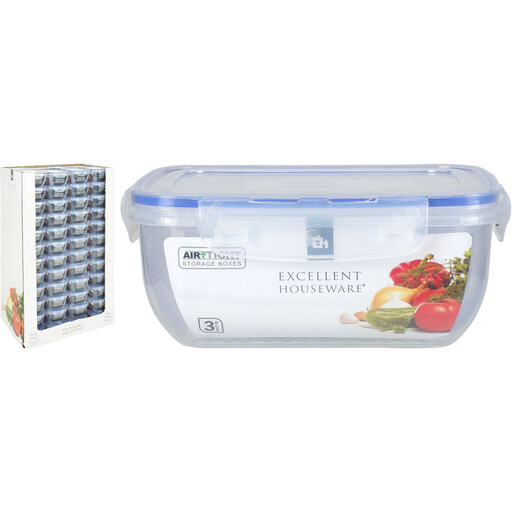
Key Feature
The standout feature of this set is its locking system. Each lid is equipped with a rotating clasp (or "twist-lock") and a silicone gasket, all designed for a completely leak-proof seal. A design conceived for those who carry their lunch box daily and want zero risk of leaks.
Pros
Who is it for?
This set is the top choice for lunch commuters (employees, students, etc.) who need a 100% reliable airtight food container for transport. It is just as relevant for home storage, especially for liquids.
Our selection is just a glimpse of the solutions available to you. If you have different needs—whether you're looking for specific sizes, a bento box style to compartmentalise your meals, or other materials—many other possibilities exist.
? Explore our full range of freezer and storage containers to find the model that's right for you.
Plastic (usually polypropylene) is lightweight, often transparent, and almost always microwave-safe, which makes it ultra-practical for a lunch box that needs reheating. Stainless steel, on the other hand, is more durable, doesn't retain odours or stains, but must never be put in the microwave. The choice therefore depends on your priority: the convenience of reheating or long-term durability and hygiene.
A good airtight food container almost always has a silicone gasket integrated into the lid. The most reliable locking systems are those with clips (ideally on all four sides) or screw-on lids, as they compress the gasket and ensure a maximum seal.
No, be careful, as not all containers are created equal. To serve as a freezer-safe container, it must be made from a material that can withstand very low temperatures without becoming brittle. Stainless steel and certain plastics (like polypropylene) are generally compatible. The rule of thumb: always check the manufacturer's recommendations on the product or its packaging.