
Livraison le jour même ou le lendemain

Qualité garantie

Débloquez vos offres de bienvenue: Livraison GRATUITE | Jusqu'à -80 % | 30 jours d'essai gratuits à JoyPlus
Téléchargez l'application
Food waste, a chaotic fridge, groceries losing their freshness in record time... Sound familiar? A good food storage container can be a real game-changer in the kitchen. But with all the different materials, shapes, and locking systems, navigating the options can be a headache.
As expert editors, our mission is to do the legwork for you. This guide is designed to give you everything you need to choose the perfect containers for your daily routine, whether for meal prep, storing leftovers, or simply bringing order to your cupboards.
Before we dive into our top picks, let's review the essential factors that will make all the difference.
This is the number-one criterion, as it determines the durability, use, and maintenance of your containers.
An airtight container is non-negotiable for maintaining freshness and, most importantly, for preventing disasters in your backpack. A quality silicone gasket is key: it creates a barrier against air and moisture that slows down oxidation. Four-sided locking systems are the most reliable because they distribute pressure evenly across the gasket. This guarantees odour-free fridge storage and leak-proof transport.
In any kitchen, every square inch counts. The secret to successful storage? Stackable food containers. Even better, nesting models (which fit inside one another when empty) are a real bonus for freeing up cupboard space. Also, consider versatility: a container that can go from the freezer to the microwave (for glass), and then into the dishwasher, is the winning trifecta that will truly simplify your life.
Here are the models that caught our eye, each catering to specific needs.
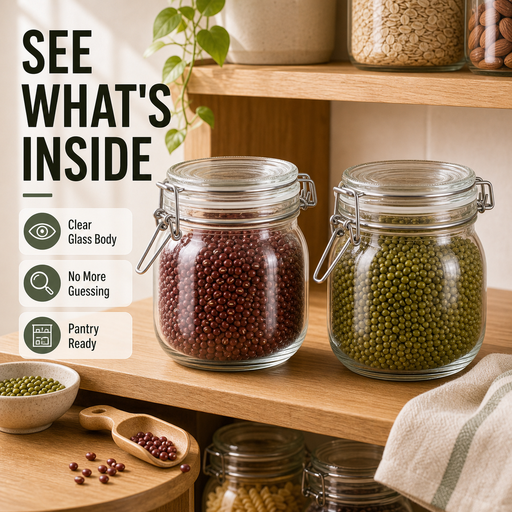
Why It Stands Out
This pair of jars combines the timeless elegance of glass with the efficiency of a robust mechanical closure. The borosilicate glass body is not only stylish but also ultra-durable. The locking system, with its silicone gasket and stainless steel clips, ensures a perfect seal against air and moisture.
Highlights
Who Is It For?
Perfect for stylishly organising the pantry and storing dry goods: pasta, rice, legumes, cereals, biscuits... A solution that is as beautiful as it is durable.
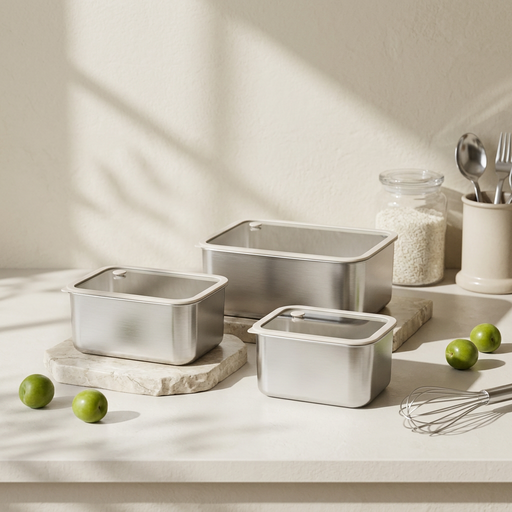
Why It Stands Out
This container set banks on durability with a 304 stainless steel body and practicality with a transparent glass lid. Their deep format offers generous storage capacity, and their stackable design is a major asset for optimising space in the fridge or cupboards.
Highlights
Who Is It For?
For meal prep enthusiasts and families looking for large-format, durable, and versatile containers. It's the ideal solution for anyone wanting to banish plastic from their refrigerator.
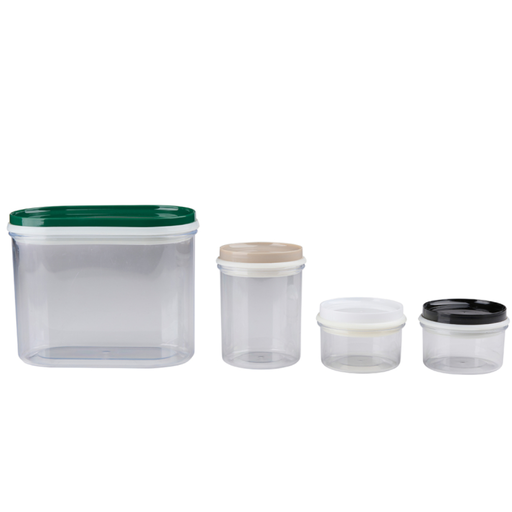
Why It Stands Out
This 4-piece set from Alpina gets straight to the point: a simple, effective, and affordable solution for everyday use. Made from polypropylene (PP) plastic, they are lightweight and practical. With its various sizes (2 x 90 ml, 1 x 230 ml, 1 x 970 ml), the set adapts to all your needs.
Highlights
Who Is It For?
The perfect option for students, for a starter set, or for anyone looking for a no-frills, lightweight, and practical set of containers for leftovers, snacks, and on-the-go lunches.
If our selection doesn't check all your boxes, or if you have more specific needs (like vented containers for keeping vegetables fresh), other solutions are available.
Take a look at our full range of refrigerator storage containers to find the perfect fit for your kitchen.
1. What's the difference between an airtight and a leak-proof container?
An airtight container blocks the passage of air, which is crucial for preserving the crispness of dry foods and slowing oxidation. A leak-proof container, on the other hand, prevents liquids from escaping. The good news: most quality containers with a silicone gasket and locking clips are both.
2. Can all containers go in the microwave?
Absolutely not! It is imperative to always check the manufacturer's recommendations. As a general rule:
3. How do you get rid of stubborn odours in a plastic container?
The foolproof trick: fill the container with a mixture of warm water and baking soda (or white vinegar), let it sit for several hours, then rinse. Letting the container air-dry while open can also work wonders.