
Livraison le jour même ou le lendemain

Qualité garantie

Débloquez vos offres de bienvenue: Livraison GRATUITE | Jusqu'à -80 % | 30 jours d'essai gratuits à JoyPlus
Téléchargez l'application
Keeping food fresh longer, optimising space in the fridge and cupboards, or taking your lunch to the office… A good food storage container is an essential everyday ally. But between glass, plastic, and stainless steel, stackable or vacuum-sealed models, it can be difficult to make the right choice.
This guide is here to help you see things more clearly. We've analysed the essential criteria to consider and selected the products that stand out from the crowd, cutting through the marketing jargon. The goal: to help you find the storage solution that's perfectly suited to your daily life.
Before diving in headfirst, it's worth taking a moment to assess your needs. Good kitchen organisation always starts with choosing the right containers.
The choice of material is crucial: it determines the durability, use, and maintenance of your containers.
An airtight food container is the key to optimal food preservation. A silicone seal paired with a clip-on lid is generally a sign of reliability. This is an essential feature for?:
To put an end to chaos in your cupboards, think modularity! Stackable containers are a must-have for saving space. Opting for a food storage container set from the same range is the best strategy: the containers nest or stack perfectly, creating visual harmony and maximising space. This is a particularly rewarding trick for meal prep enthusiasts who juggle meals for the week.
Here are a few models that caught our attention, perfect for a complete kitchen reorganisation as well as for more specific needs.
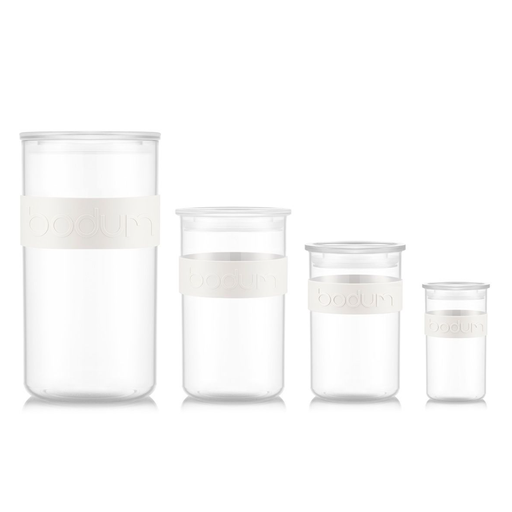
Why we love it?? This complete set from Bodum is the ideal all-in-one solution to standardise your storage system. With 12 pieces in four sizes, it covers most needs, from spices to cereal boxes.
Advantages?:
Who is it for?? Ideal for families, those moving into a new home, or anyone wanting to start fresh with a uniform set of storage equipment. It's the perfect starting point for coherent and efficient kitchen organisation.
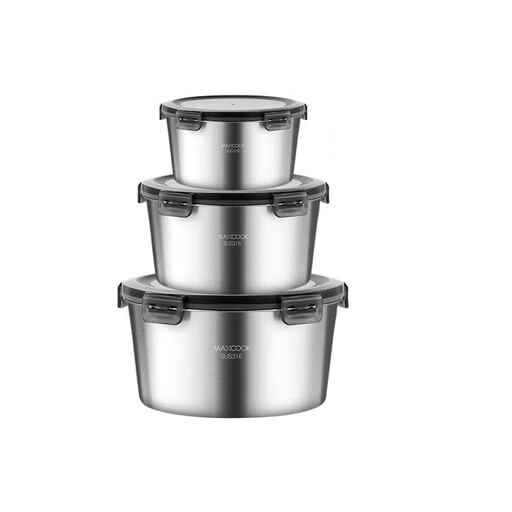
Why we love it?? This Maxcook set focuses on quality and durability with its 316 stainless steel, a food-grade material known for its high resistance to corrosion. A robust and long-lasting choice for those who want a healthy alternative to plastic.
Advantages?:
Who is it for?? For those who prioritise durability and material neutrality. Perfect for intensive use, whether for meal prep or as an ultra-durable lunch box to take anywhere.
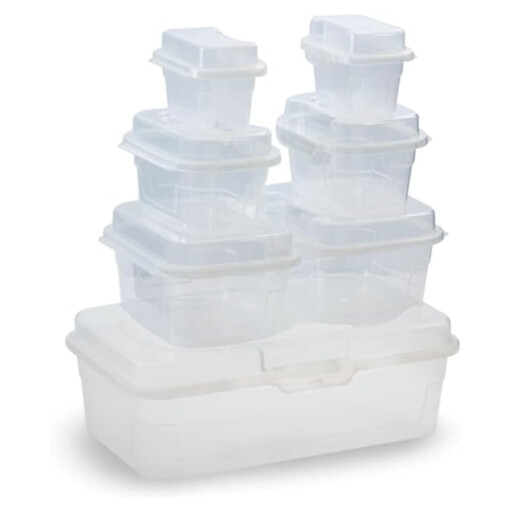
Why we love it?? The Alpina set offers budget-friendly versatility. With 7 containers in a wide variety of sizes (from 420 ml to nearly 4.6 L!), it adapts to a host of uses, from small portions to storing bulky items.
Advantages?:
Who is it for?? For anyone looking for a multi-functional and economical storage solution. A smart choice for organising the pantry (pasta, rice, flour…), as well as the rest of the house.
Our selection highlights products that meet the most common needs, but every kitchen is unique. Are you looking for specific sizes, glass models, or different designs? The choice is vast.
To explore a wider range and find that perfect item, take a look at our complete category dedicated to kitchen storage.
Discover all our kitchen storage containers
1. How can I tell if a storage container is truly airtight?? A proper airtight food container has a flexible silicone seal in its lid and a reliable locking system, such as clips on all four sides. The foolproof trick to test its seal: fill it with water, close it, and turn it upside down. Not a single drop should escape!
2. Why choose BPA-free plastic?? Bisphenol A (BPA) is a chemical compound once used in some plastics. Its potential to migrate into food has raised health concerns. Today, the "BPA-free" label has become the standard for food containers. It's your guarantee that the plastic used is safe for contact with your food.
3. Can I freeze food in all types of containers?? Most plastic and stainless steel containers are freezer-safe, but it's always a good idea to check the manufacturer's instructions. For glass, choose borosilicate, which is much more resistant to thermal shock. In any case, never fill the container to the brim: food expands as it freezes and could crack it.