
Livraison le jour même ou le lendemain

Qualité garantie

Débloquez vos offres de bienvenue: Livraison GRATUITE | Jusqu'à -80 % | 30 jours d'essai gratuits à JoyPlus
Téléchargez l'application
A good food storage container is the key to streamlined organisation, less waste, and food that stays fresh longer. In reality, however, the market is saturated with empty promises. A lid that warps, a supposedly airtight container that leaks in your bag, or plastic that cracks after a few dishwasher cycles: these disappointments are easy to avoid.
To keep from falling into the trap and investing in an unsuitable product, let's review the most common pitfalls.
To choose a food storage container that will deliver on its promises over the long term, three fundamental parameters must be put under the microscope.
The choice of material directly impacts the use, durability, and maintenance of your container.
This is the detail that makes all the difference between a simple box and a veritable fortress for your food. The most reliable systems combine two elements:
Always check the pictograms and the manufacturer's recommendations. Be aware that the container and the lid rarely have the same tolerances.
Rather than a random list, we've selected models that excel in specific situations, strictly applying our criteria for quality and practicality.
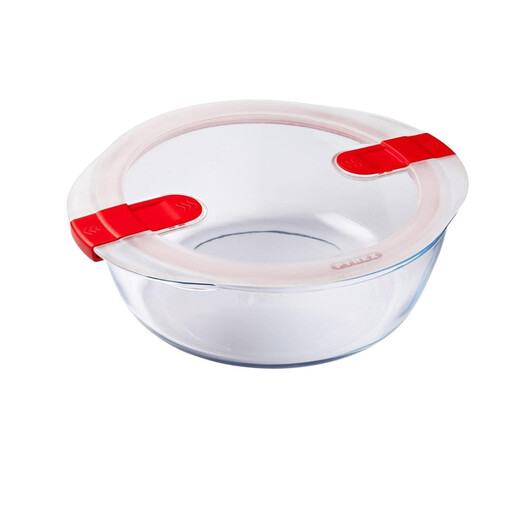
Why we love it: Its generous 2.3 L capacity is perfect for preparing a family-sized dish (lasagne, casserole...) or several meals in advance. Its borosilicate glass allows you to cook directly in the oven, store in the fridge, and reheat in the microwave.
Its lid features a steam valve, specially designed for microwave reheating without warping or splattering. The glass itself handles the high temperatures of the oven (without the lid) with ease.
Absolute versatility: one dish to cook, store, and reheat. Ideal for families or *batch cooking*.
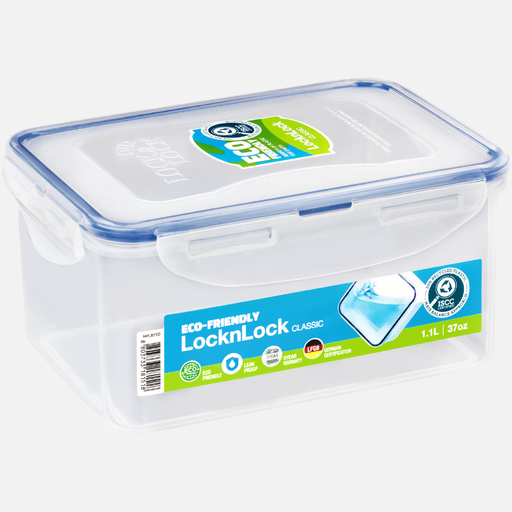
Why we love it: Lightweight yet sturdy, this BPA-free plastic container is the ideal travel companion. Its 1.1 L capacity is perfect for a complete lunch. Its four-clip locking system is the market benchmark for reliability.
Its patented four-clip locking system, coupled with the silicone gasket, guarantees a perfect seal against both air and liquids. No more stress about soup spilling in your bag!
Lightweight and an ultra-reliable seal for 100% worry-free transport. Stackable design optimises storage.
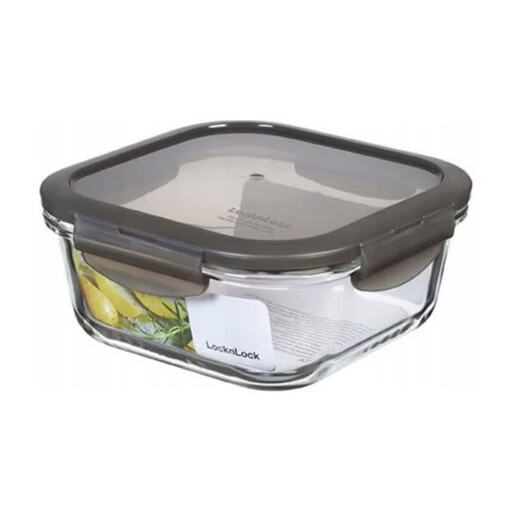
Why we love it: This 750 ml borosilicate glass container is the perfect compromise. Large enough for a generous portion, it remains compact. Its square shape is a real bonus for optimising space in the fridge and cupboards.
Its borosilicate glass withstands extreme thermal shocks (up to 400°C without the lid), which eliminates the risk of cracking when going from cold to hot—a classic flaw of ordinary glass.
Its outstanding thermal resistance offers maximum versatility (oven, microwave, freezer). Leak-proof 4-clip seal.
Explore our full selection of products that meet our strict quality criteria and current safety standards.
An airtight container blocks the passage of air. This is ideal for slowing down oxidation and keeping your biscuits crisp or your coffee aromatic. A leak-proof container goes a step further: it also blocks liquids. To transport soup or a saucy dish without redecorating your bag, you absolutely need a leak-proof model, identifiable by its silicone gasket and robust locking system.
Absolutely not, and this is a crucial point of caution. Only borosilicate glass is designed to withstand the high temperatures of an oven and thermal shock (the abrupt change from cold to hot). Standard (soda-lime) glass, used for regular tableware, would risk cracking or shattering. Always check the pictograms on the product and, when in doubt, consult the manual. And of course, never put a plastic lid in the oven.
To ensure a lasting seal, the gasket requires a little attention. The best practice is to remove it from the lid after each use and wash it separately by hand (warm water and washing-up liquid are sufficient). Before putting it back, make sure the gasket and its groove are completely dry. This simple step prevents mould growth, stops it from warping, and keeps odours from setting in.