
Livraison le jour même ou le lendemain

Qualité garantie

Débloquez vos offres de bienvenue: Livraison GRATUITE | Jusqu'à -80 % | 30 jours d'essai gratuits à JoyPlus
Téléchargez l'application
Finding the right food for your adult cat can sometimes feel like a daunting task. Between kibble for cats, p?té, special formulas for indoor cats, or grain-free options, the selection is overwhelming. As the head of product selection at Joybuy, I'm here to help you make sense of it all. This guide offers our practical advice and our selection of the best products to help you make the right choice, in line with your companion's needs and your budget.
Before you head to the aisles (virtual or otherwise), there are a few criteria to consider to find the perfect product that your pet will love.
The debate rages on among cat owners: should you opt for kibble or p?té? The truth is, there's no one-size-fits-all answer. Each format has its own advantages:
The ideal solution? Often, it's mixed feeding, which combines both for a perfect balance of hydration, enjoyment, and convenience.
The label is a goldmine of information. For a quality adult cat food, the rule is simple: look closely at the first ingredients on the list, as they are the most prominent in the recipe.
A cat's nutritional needs vary enormously depending on its activity level. An indoor cat food will logically be lower in calories to prevent weight gain, while often being enriched with fibre to combat hairballs. Conversely, a cat that roams outdoors will have much higher energy needs.
Here is our selection of products that cater to different needs and budgets, to help you see things more clearly.
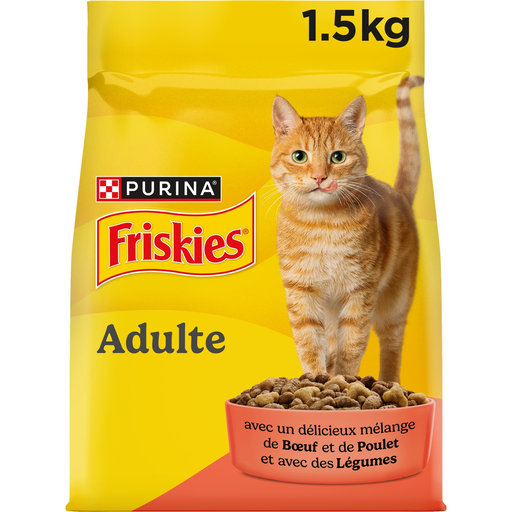
Why we love it: Developed by the nutrition experts at Purina Friskies, this kibble is specially designed for indoor cats. Its recipe is 100% complete and balanced, combining animal and plant proteins to cover all of your feline's daily needs.
Key features:
Who is it for? This is the ideal option for indoor cat owners looking for a complete, balanced, and affordable daily food from a trusted brand.
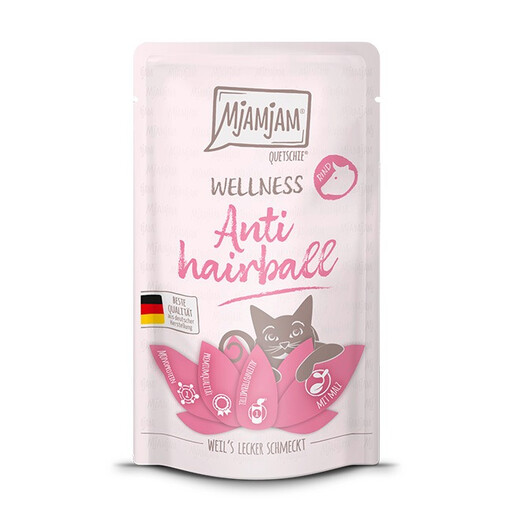
Why we love it: The German brand MjAMJAM stands out with a wet cat food that focuses on all-natural ingredients and an exceptionally high meat content. This recipe also includes malt to help the natural passage of hairballs.
Key features:
Who is it for? For discerning owners who want to offer a natural, meat-rich diet to their cat, especially if it is prone to hairballs.
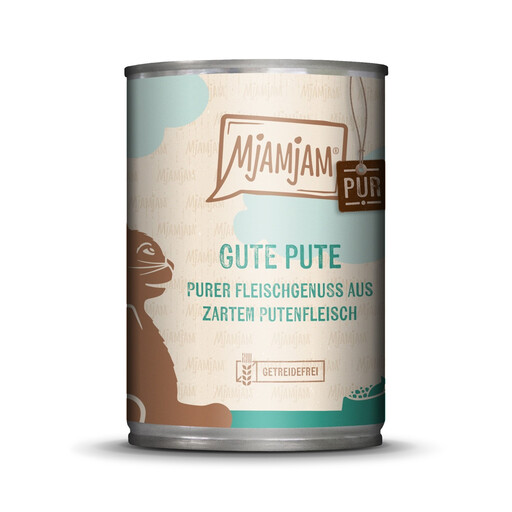
Why we love it: This other reference from MjAMJAM is all about purity with a simple and ultra-transparent recipe. A true "pure meat" experience with 71% fresh turkey, for maximum palatability and digestibility.
Key features:
Who is it for? Perfect for owners looking for a wet food that is as simple and natural as possible, based on a single protein source and a minimalist, top-quality composition.
Every cat has its own tastes. If yours is a fan of vegetables or if you simply want to add some variety, feel free to browse our full range.
? Discover our selection of cat food with carrots
The daily portion depends on many factors: its weight, age, activity level, but also the food itself (more or less caloric). The easiest way is to follow the recommendations on the packaging, then adjust the dose if you notice any weight gain or loss. When in doubt, your veterinarian's advice is your best guide.
Absolutely! It's actually an excellent practice called mixed feeding. It allows you to combine the benefits of both formats: the positive effect of kibble on dental hygiene and the excellent water intake from wet food. Just remember to adjust the quantities of each to respect its daily calorie intake.
The first step: read the ingredient list. A high-quality, clearly identified animal protein source (e.g., "chicken," "beef") should always appear first. A short and understandable ingredient list is also an excellent sign of quality. Be wary of formulas that mention unspecified "animal by-products" or have too many grains (corn, wheat) at the top of the list, except in very specific cases.