
Livraison le jour même ou le lendemain

Qualité garantie

Débloquez vos offres de bienvenue: Livraison GRATUITE | Jusqu'à -80 % | 30 jours d'essai gratuits à JoyPlus
Téléchargez l'application
Hauling heavy or bulky loads can quickly become a chore. From clearing garden waste to lugging beach gear or transporting supplies to your campsite, the right equipment makes all the difference. Practical and versatile, a foldable utility wagon is the perfect solution to make your life easier.
But with so many options on the market, how do you choose the right one? This buying guide breaks down the key criteria and presents our selection of the best models to help you make an informed decision that truly fits your needs.
Before you buy, consider a few key technical features that will make a significant difference in daily use.
The first question to ask is what you plan to carry. The load capacity, measured in kilograms (kg), determines the maximum weight the wagon can support. For light gardening tasks or grocery runs, a capacity of 80 to 100?kg may be sufficient. For heavy camping gear or DIY projects, a heavy-duty wagon that can handle 120?kg or more is essential.
The volume, measured in litres (L), indicates the available storage space. A large volume is perfect for transporting bulky but lightweight items, such as bags of leaves or beach toys.
The terrain where you'll be using your wagon is a crucial factor.
The main advantage of these wagons is, of course, their foldable design. Check how simple the mechanism is: some models can be folded and unfolded in seconds with just one hand. Once folded, it should ideally have a compact footprint, allowing it to slide easily into a car boot, garage, or cupboard. Some models can stand upright when folded, which makes storage much more convenient.
To guide you, we've selected three models that stand out for their versatility and performance.
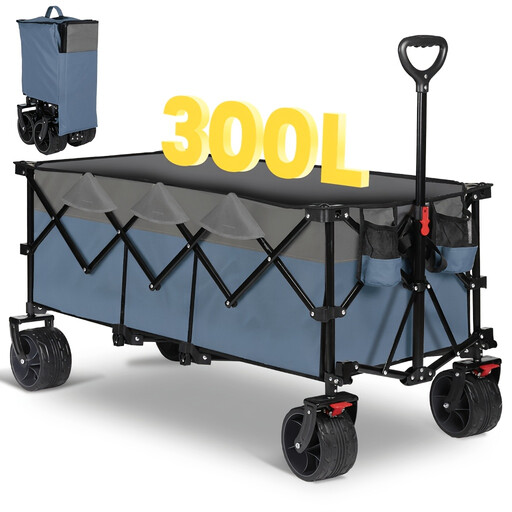
Why it stands out: This model is impressive for its size and durability. With a certified load capacity of 200?kg and a volume of 300?L, it's built for the most demanding hauling tasks. Its length of over 1.2?m allows you to transport long items with ease.
Advantages:
Who is it for?: Ideal for those who need to transport very heavy and bulky loads, such as heavily-equipped camping wagon enthusiasts, organisations planning events, or for major gardening projects.
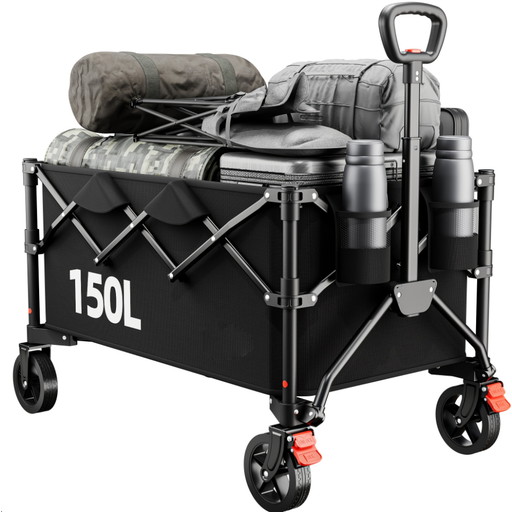
Why it stands out: This wagon focuses on practicality and ease of use. Its 4-sided folding system and one-click handle allow for lightning-fast setup and storage. Its all-terrain wheels with brakes ensure optimal control.
Advantages:
Who is it for?: Perfect for regular users looking for a foldable garden cart or a recreational companion that is easy to handle, clean, and store after each use.
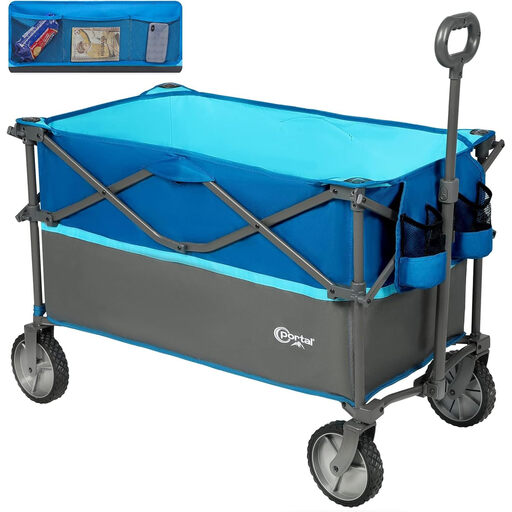
Why it stands out: This model offers an excellent balance of capacity, features, and convenience. With a generous volume of 228?L and a capacity of 120?kg, it stands out with thoughtful details like side pockets and two cup holders.
Advantages:
Who is it for?: An excellent all-around wagon for families, suitable for beach trips, sporting events, gardening, or weekly grocery runs.
If you have more specific transport needs, such as moving furniture, appliances, or heavy boxes during a move, a foldable wagon may not be the most suitable tool.
? Discover our range of furniture dollies and moving carts for more specialised solutions.
Although they both help transport loads, their design and use are quite different. A foldable utility wagon (or simply a wagon) is like a small, four-wheeled cart with a fabric bin, ideal for carrying loose items (bags, tools, beach gear). A foldable hand truck, on the other hand, is an upright, two-wheeled cart with a small platform, designed for moving stacked items like boxes, crates, or appliances.
Maintenance is simple. After use, clean the fabric liner with a damp cloth and a little soapy water if needed. Rinse the wheels with clean water to remove dirt or sand. Make sure the wagon is completely dry before folding and storing it in a dry place to prevent rust on the metal frame and mildew on the fabric.
Yes, but the choice of wheels is crucial. For maximum effectiveness on soft sand, choose a wagon equipped with very wide, smooth wheels that "float" on top of the sand instead of sinking in. Standard all-terrain wheels may work on damp, compact sand, but they will require more effort on deep, dry sand.