
Livraison le jour même ou le lendemain

Qualité garantie

Débloquez vos offres de bienvenue: Livraison GRATUITE | Jusqu'à -80 % | 30 jours d'essai gratuits à JoyPlus
Téléchargez l'application
A screw dropped in the engine bay, a hose clamp just out of reach, an inaccessible corner behind a radiator... We've all been there. The space is too tight, the angle is impossible, and your standard tool just won't fit. This is precisely where a flexible tool becomes your best ally. The problem? The market is flooded with gadgets making tempting promises, but they often disappoint in practice. To prevent a good idea from turning into a headache, here are the pitfalls to avoid.
To avoid these disappointments, it's essential to focus on objective criteria that define a truly functional and reliable flexible tool.
Don't be mistaken: the ability to bend is only part of the equation. Three key factors determine a tool's effectiveness in the field, whether for DIY projects, auto mechanics, or home maintenance.
Not all flexibility is created equal. It must be suited to the tool's function:
Assess the angle and type of movement you actually need. Controlled flexion is often more useful than total, chaotic flexibility.
For tooling designed for difficult access, durability is non-negotiable.
A flexible tool serves a specific need, so choosing one based on the task is a given. A mechanic won't have the same requirements as someone wanting to clean their bathroom. Think about your work environment: is a non-slip handle necessary for handling liquids? Would a locking system to hold a plier in position be useful to you?
To guide you, we have selected products that excel in their category and meet well-defined needs.
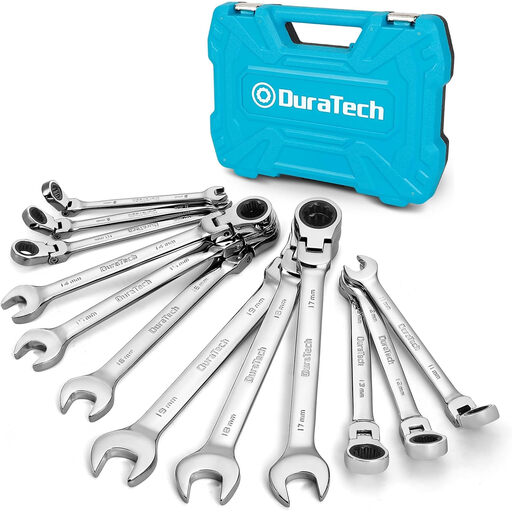
Why it's a great choice: Essential for auto mechanics, this set lets you tackle bolts and nuts in engine bays where a standard wrench is useless.
Its chrome vanadium steel construction protects it from the fragile materials pitfall. The 180° flex-head provides a precise working angle without being loose, avoiding the "false flexibility" trap.
The 72-tooth ratchet requires only a 5° swing arc. The set covers the most common sizes (8-19 mm) and comes in a practical storage case.
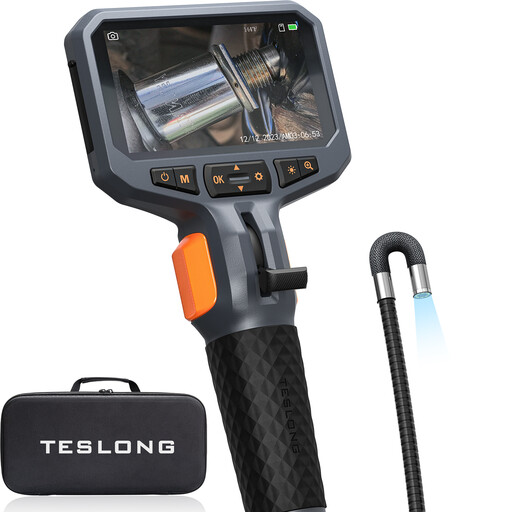
Why it's a great choice: Perfect for inspecting the inside of a wall, pipe, or engine cylinder without any disassembly. It's the ultimate diagnostic tool for seeing the unseen.
The semi-rigid probe holds the shape you give it, while the control wheel lets you steer the camera with high precision, avoiding the lack of control found in low-end endoscopes.
The camera head articulates over 210 degrees via a control on the handle. The 4.5-inch IPS screen provides a clear image and allows you to record photos and videos.
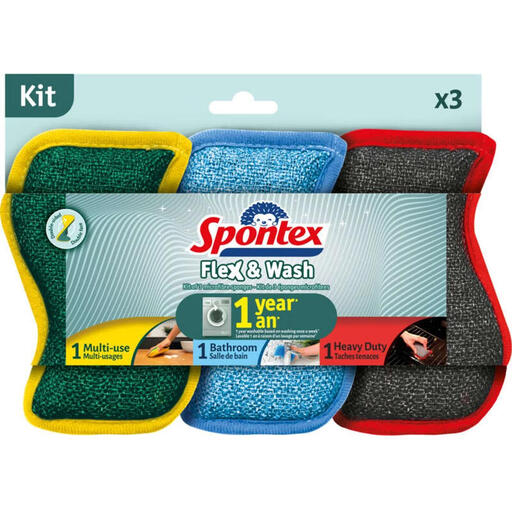
Why it's a great choice: Designed for everyday cleaning, this sponge gets everywhere to clean complex angles and surfaces like taps, bottlenecks, or window sills.
Its "Flex & Wash" technology is specifically designed to bend and reach into corners where a conventional sponge would tear or fail to conform properly.
Dual-sided design: a scrubbing side for tough dirt and a soft side for wiping. Made from plant-based sponge materials.
Discover our full selection of products that meet our quality criteria and current safety standards.
Durability depends on the manufacturing quality. A well-made flexible tool, like a Cr-V steel wrench, is designed to withstand significant torsional stress. However, its purpose is to solve an access problem, not to apply extreme torque, which is the job of a fixed wrench. It should be used for what it is: a solution for reaching the unreachable.
For mechanical tools, clean them after each use to remove grease and dirt. Occasional lubrication of joints and ratchets prevents rust and ensures smooth movement. For inspection cameras, clean the lens and probe with a soft cloth. In all cases, store your tools in a dry place to prevent corrosion.
Although the terms are often used interchangeably, an "articulating head" refers to a head that pivots on one or two axes to a defined angle (e.g., 180°). The term "flexible" can also describe a fully pliable extension, like a metal spring. For wrenches, the term "articulating head" (or flex-head) is therefore more precise: it describes a controlled joint at the head.