
Livraison le jour même ou le lendemain

Qualité garantie

Débloquez vos offres de bienvenue: Livraison GRATUITE | Jusqu'à -80 % | 30 jours d'essai gratuits à JoyPlus
Téléchargez l'application
Whether you're a bullet journal enthusiast, a budding artist, a meticulous student, or an organization pro, choosing a fine-tipped pen is a serious decision. The right tool turns writing into a pleasure; the wrong one ruins a notebook, stains your fingers, and spreads frustration. Faced with an overwhelming selection, marketing traps are numerous. Here's our guide to avoiding them and making the right choice.
Don't be blinded by flashy packaging or an endless color palette. Certain deal-breaking flaws can render a pen unusable in just a few days.
To make the right choice, focus on these three characteristics. They alone determine 90% of the writing experience.
Each ink type has its strengths and weaknesses, suited for specific uses.
The term "fine tip" covers several sizes. Here, precision is king.
A pen is an extension of your hand: it must be comfortable, especially if you write or draw for hours. The pen's body plays an important role: a triangular shape promotes a good grip and prevents the pen from rolling, while a rubber grip reduces fatigue. For on-the-go use, a silent retractable mechanism can also be a major asset.
Rather than a simple list, we've matched the most relevant models to user profiles, based on the performance criteria discussed above.
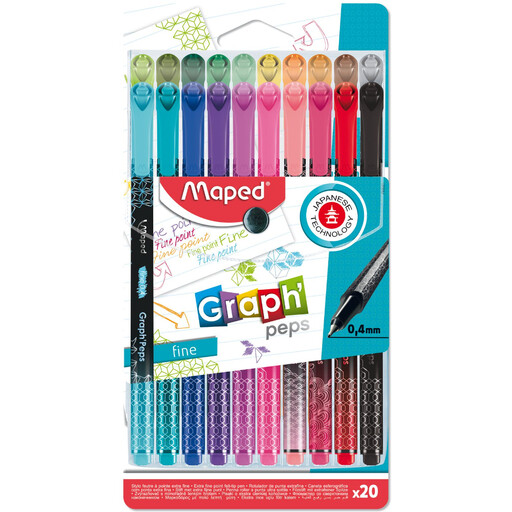
Why we love it: This set is the dream tool for *color-coding* and decorating notebooks. Its wide palette of 20 vibrant colors and its fine 0.4 mm tip allow you to structure your notes and add a creative touch without ever sacrificing readability.
Its water-based ink is formulated to not bleed through most standard-weight papers (like 80 or 90 gsm), thus preventing the next page from being ruined.
Fine 0.4 mm metal-clad tip (for precision and durability). Ergonomic triangular barrel for optimal long-term comfort.
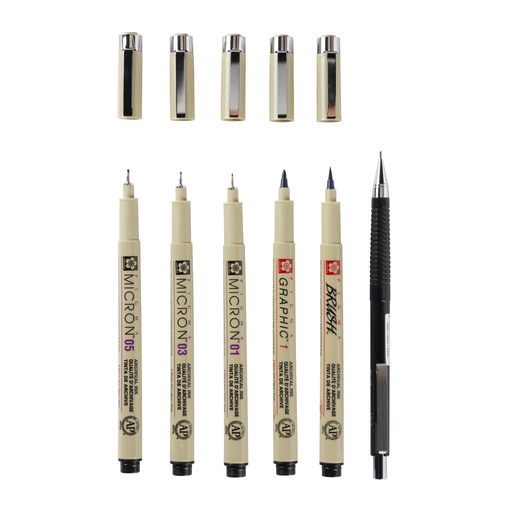
Why we love it: This is THE gold standard for professional illustrators. This set provides a range of tips to vary your lines, from the finest details to bold outlines. Its ink is designed for the demands of the craft.
The Pigma pigment ink is archival quality: permanent, waterproof, and fade-resistant. It won't smear when you apply alcohol markers or watercolour over it.
Professional-grade ink (pH neutral, waterproof, and lightfast). A complete set with 6 tip sizes for absolute versatility.
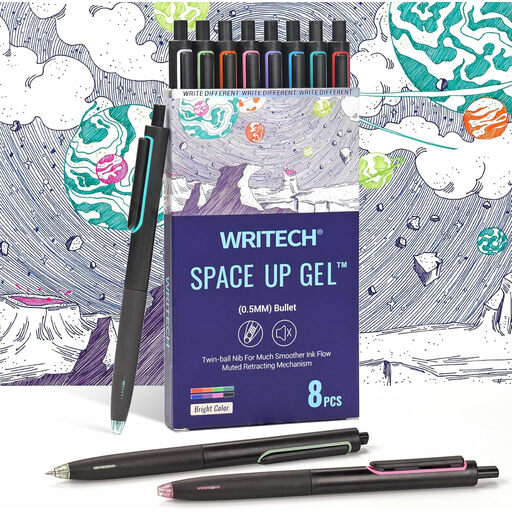
Why we love it: Taking notes in a lecture hall or meeting? You need an ink that won't let you down. This gel ink model is designed for near-instant drying, making it the secret weapon for left-handers.
Its ultra-fast-drying ink prevents smudging, the nightmare of left-handers and those who highlight their notes on the fly.
Quick-drying ink technology. Patented silent click mechanism, perfect for libraries and open-plan offices.
Discover our full selection of products that meet our quality charter and current safety standards.
1. How do I keep a fine-tipped pen from drying out? The golden rule: always recap the pen securely after each use. For gel or felt-tip pens, it's advisable to store them horizontally to ensure a consistent ink flow and prevent the tip from drying out or leaking.
2. What's the difference between a gel pen and a fine felt-tip pen (fineliner)? It's all in the ink. Gel pens use a thicker, more opaque gel-based ink that glides across the paper for incredibly smooth writing. Fine felt-tip pens (or fineliners) use a more liquid water- or dye-based ink that soaks slightly into the paper fibers. The result is often more precise but less fluid than gel.
3. Is pigmented black ink really better for drawing? For artistic or archival use, the answer is a resounding yes. Pigmented black ink is made of solid particles in suspension, which makes it resistant to water, light, and chemicals once dry. In practical terms: your drawings won't smudge when you add color (watercolor, alcohol markers) and won't fade over time. For simple note-taking, a standard ink is perfectly sufficient.