
Livraison le jour même ou le lendemain

Qualité garantie

Débloquez vos offres de bienvenue: Livraison GRATUITE | Jusqu'à -80 % | 30 jours d'essai gratuits à JoyPlus
Téléchargez l'application
Whether you're annotating lecture notes, organising your planner, drawing technical diagrams, or keeping a bullet journal, choosing the right fine-liner pen is crucial. A crisp line and a smooth glide can make all the difference, both in writing comfort and the final readability. But with a jungle of options to navigate—gel pens, rollerball pens, felt-tip fine-liners—it's hard to know where to start.
This guide breaks down the essential criteria and presents a selection of the best models on the market to help you find your perfect match.
Before making a decision, there are three key criteria to consider: tip size, ink type, and pen ergonomics.
The fineness of the line depends directly on the tip's diameter, measured in millimetres (mm).
For extended use, comfort is non-negotiable. A rubber grip can significantly improve handling. The choice between a retractable or capped mechanism is a matter of personal preference. Finally, for heavy use, opting for a pack of pens is often more economical and practical, whether for classes or as office supplies.
Here are our recommendations, featuring models that excel in their respective categories.
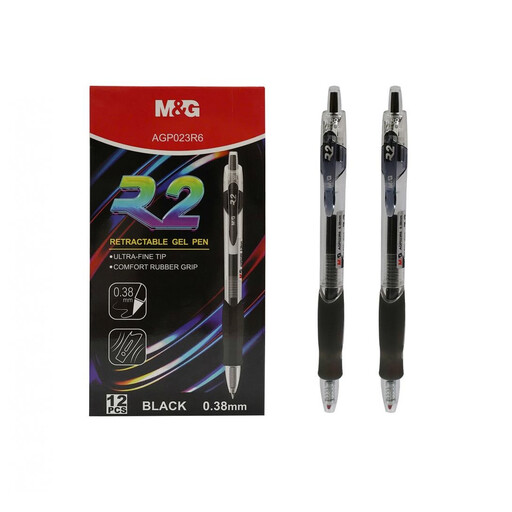
Why it stands out: This pen set combines an ultra-fine 0.38?mm tip with quick-drying gel ink, all in a retractable design that's perfect for heavy use.
Pros:
Who it's for: Those who fill pages with notes and need a reliable, budget-friendly black pen that's always ready to go.
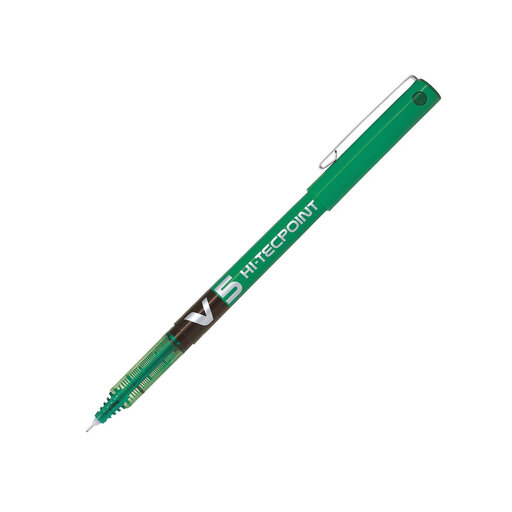
Why it stands out: The Pilot V5 is a true classic. This iconic rollerball pen is renowned for its tungsten carbide needle point, which delivers a consistent 0.5?mm line and exceptional writing fluidity.
Pros:
Who it's for: Fans of the smooth glide of liquid ink who are looking for an elegant writing tool, whether for official documents, technical drawing, or impeccable note-taking.
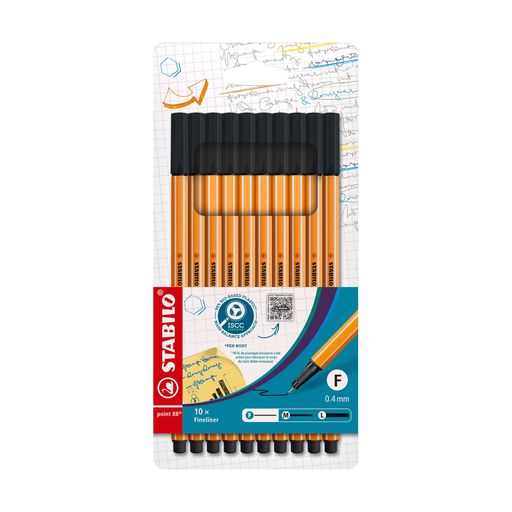
Why it stands out: A true staple, the STABILO point 88 is THE benchmark fine-liner. Its metal-enclosed 0.4?mm tip makes it perfect for ruler-guided tracing, structuring notes, and all creative activities, especially for keeping a bullet journal.
Pros:
Who it's for: Creatives, fans of bullet journaling and lettering, and students who love to colour-code and structure their study notes.
Our selection highlights some tried-and-true favourites, but the world of writing instruments is vast. If you're looking for a different tip size, a specific colour, or another type of pen, feel free to explore our entire collection.
Discover our full range of Pens & Refills to find the perfect tool for your style.
The fundamental difference lies in the ink. A gel pen uses a thick, opaque ink (pigments suspended in a gel), offering a smooth writing experience and intense colours. A rollerball pen, on the other hand, uses a liquid ink (either water- or oil-based) that saturates the paper more and provides a very fluid gliding sensation, similar to a fountain pen.
For a bullet journal, a tip between 0.4?mm and 0.5?mm is often the ideal compromise. It's fine enough to write in the small spaces of planners, yet sturdy enough for drawing lines and boxes. A felt-tip fine-liner like the STABILO point 88 is particularly popular for this use, as its metal-enclosed tip holds up perfectly against a ruler.
To minimise smudging, here are a few tips: