
Livraison le jour même ou le lendemain

Qualité garantie

Débloquez vos offres de bienvenue: Livraison GRATUITE | Jusqu'à -80 % | 30 jours d'essai gratuits à JoyPlus
Téléchargez l'application
The promise of USB-C? A single connector to simplify our daily lives and connect all our devices. In reality, finding the right fast-charging USB-C cable remains a real headache. Between different power ratings, charging standards, and wildly varying build quality, it's easy to end up with a cable that charges at a snail's pace or gives up the ghost after just a few months.
This guide is here to cut through the clutter. We'll review the essential criteria for choosing a high-performance, durable cable that's perfectly suited to your devices, whether it's the future iPhone 16, a Samsung Galaxy S24/S25, or your MacBook. Then, we'll unveil our selection of the best models to help you make the right choice, with no regrets.
To avoid making a mistake, three criteria need to be examined closely: power, durability, and compatibility.
Charging speed doesn't just depend on the cable, but on the trio of "charger + cable + device." For fast charging to be truly... fast, all these components must speak the same language.
A cable lives a rough life—it travels, gets twisted, and is bent in every direction. In short, we put it through the wringer daily. Its durability is therefore not an option.
The USB-C ecosystem can be a chaotic mess. A good cable must be versatile enough to adapt to all your devices.
Here are our recommendations—products we've selected for their performance, design, and relevance for today's and tomorrow's devices.
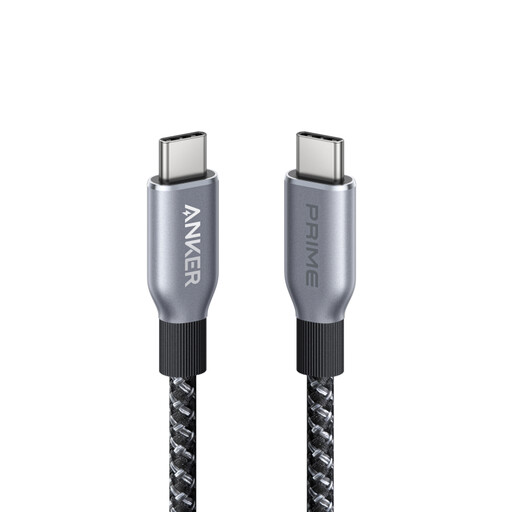
Why it stands out?? With its monstrous 240W capacity, this cable is built for the most power-hungry devices, like gaming laptops or mobile workstations. It's a future-proof investment, ready for the next generation of ultra-powerful devices.
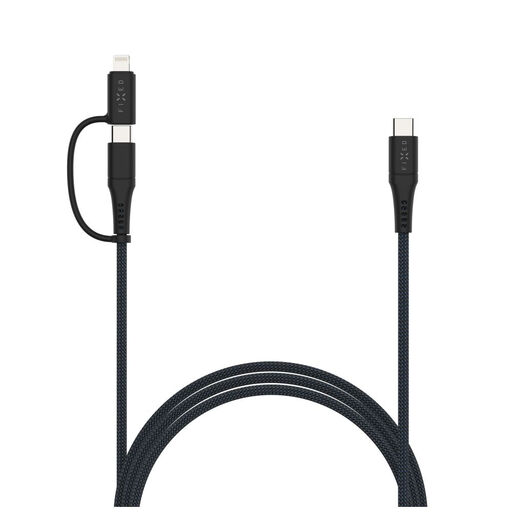
Why it stands out?? This cable delivers on three fronts: a comfortable 3-metre length, a durable braided design, and, most importantly, an integrated MFi-certified Lightning adapter. It's the perfect all-in-one solution for those navigating between older Apple devices and the new USB-C ecosystem.
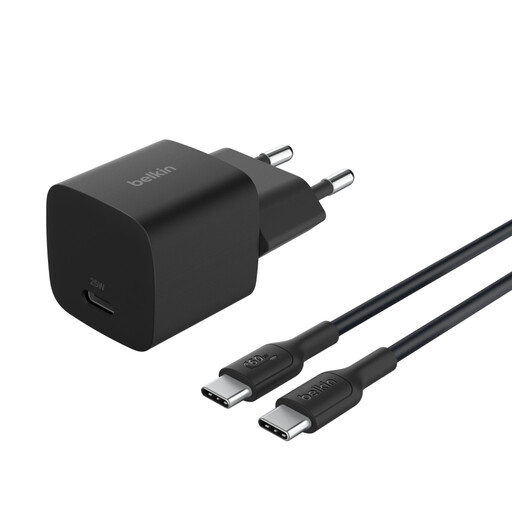
Why it stands out?? More than just a cable, Belkin offers a complete kit here, including a 45W USB-C fast charger and its cable. It's a compact, high-performance, plug-and-play solution, ideal for replacing an original charger or for travelling light.
The world of charging is vast, and every user has specific needs. Whether you're looking for a multi-connector cable (USB-C, Micro-USB, Lightning), different lengths, or specific power ratings, there's no shortage of alternatives.
? Explore our full selection of multi-connector charging cables to find the perfect match.
Absolutely not. Thanks to the Power Delivery (PD) standard, the charger communicates with your device to supply only the power it requests. Using a 100W cable with a smartphone that only needs 25W is therefore completely safe: the charge will automatically adjust to 25W.
USB-C is the new universal standard. It's a reversible connector adopted by nearly all manufacturers, including Apple for its recent devices (iPhone 15 and later, MacBooks, iPads). Lightning is Apple's older proprietary connector. For an iPhone 16, you will need a USB-C cable. For an iPhone 14 or an older model, you will need a Lightning cable or an adapter.
No, and this is a common pitfall. To benefit from fast charging, a cable must be explicitly designed to support high power levels (in watts) and be compatible with standards like Power Delivery (PD). A cheap, low-end USB-C cable will often only provide slow charging and data transfer at a crawl. Always remember to check the technical specifications.