
Livraison le jour même ou le lendemain

Qualité garantie

Débloquez vos offres de bienvenue: Livraison GRATUITE | Jusqu'à -80 % | 30 jours d'essai gratuits à JoyPlus
Téléchargez l'application
USB-C has established itself as the universal connector for everything from smartphones to laptops. However, not all cables are created equal. A poor-quality model can not only throttle charging speeds but also wear out incredibly quickly, forcing you to buy replacements over and over. When you're juggling an iPhone 16, a MacBook Pro, and a tablet, finding a cable that's both reliable and high-performance becomes a mission.
This guide is here to break down the key features of a good fast-charging USB-C cable and present our selection of the best models for 2026.
Before you check out, let's review the few technical points that separate an entry-level cable from a high-performance model.
Charging speed doesn't just depend on your power adapter; the cable plays an equally crucial role. To take advantage of fast charging, especially on power-hungry devices like a MacBook (MacBook USB-C cable) or an iPhone 16 (iPhone 16 fast charger), a Power Delivery (PD) compatible cable is simply essential. This technology establishes a dialogue between the charger, the cable, and the device to deliver optimal power, safely.
Power ratings vary:
A cable gets used, bent, and tossed in the bottom of a bag. Its durability is therefore not an option, but a key purchasing criterion. A braided USB-C cable made of nylon or aramid offers far superior resistance to bending and fraying than a simple plastic cable. Some manufacturers advertise the number of bends the cable can withstand, which is an excellent indicator of its longevity. Opting for a durable cable ensures you won't have to replace it after just six months.
For guaranteed safety and performance, look for certified cables. USB-IF (USB Implementers Forum) certification ensures that the cable strictly adheres to all standards of the USB-C ecosystem. For Apple enthusiasts, MFi (Made for iPhone/iPad/iPod) certification is the key to ensuring perfect compatibility with devices still equipped with a Lightning port (via an adapter).
Here is a selection of models that stand out from the crowd for their performance and design, tailored for different types of users.
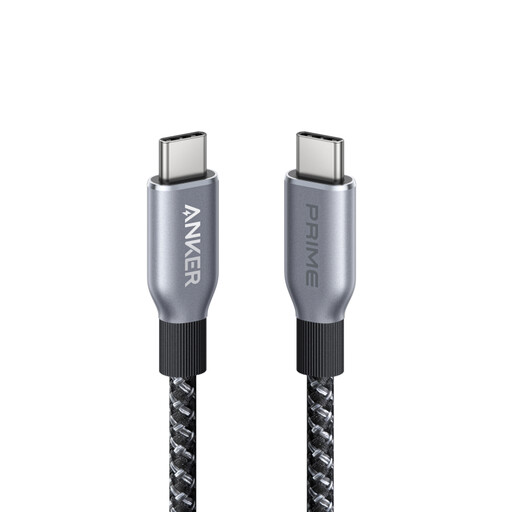
Why it stands out?: This cable is built for performance and endurance. With its 240W power capacity, it's ready to power the most demanding devices, both today and in the future. Anker highlights its ultra-rugged design, featuring a braided sheath made from recycled materials and tested to withstand over 300,000 bends.
Pros?:
Who is it for?? For professionals and creatives who use very power-hungry machines (MacBook Pro, mobile workstations) and want a charging solution that is both long-lasting and indestructible.
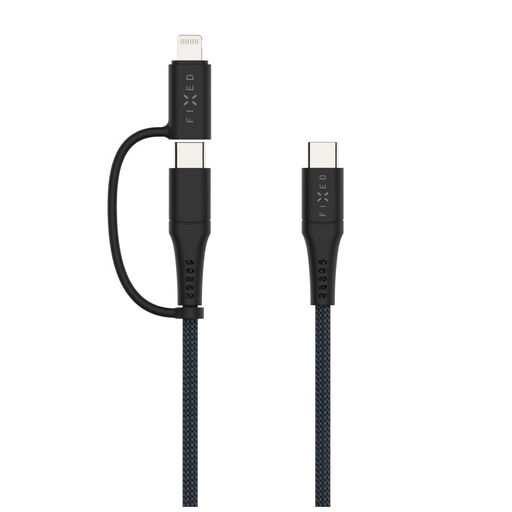
Why it stands out?: Versatility is the name of the game for this cable. It combines a USB-C to USB-C cable with a directly integrated, MFi-certified Lightning adapter. It's the dream all-in-one solution for those who juggle between the Apple ecosystem and USB-C devices.
Pros?:
Who is it for?? For those who own both recent USB-C devices (Galaxy S24, iPad Pro...) and Apple products still using Lightning (certain iPhones, AirPods...). It's ideal for travelling light with a single cable.
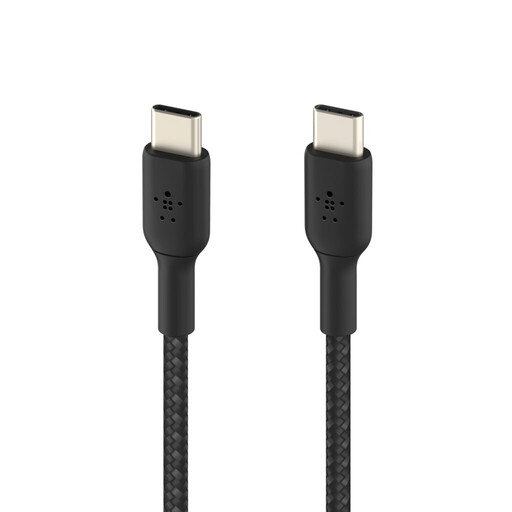
Why it stands out?: Belkin delivers a well-balanced cable that checks all the boxes for performance, durability, and eco-friendliness. Its USB-IF certification is a guarantee of flawless compatibility and safety. With its 60W power, it's perfect for daily use with the majority of mobile devices.
Pros?:
Who is it for?? For the everyday user looking for a reliable, durable, and versatile cable for their smartphone, tablet, or ultraportable laptop, all with the backing of a major brand.
Our selection highlights models suited for specific uses. However, the market is full of alternatives, with a huge variety of lengths, colours, and features. If you haven't found what you're looking for here, feel free to explore the rest of our catalogue.
? Discover Our Full Range of USB-C to C Cables
The fundamental difference lies in their ability to handle high charging power. A fast-charging USB-C cable is equipped with thicker internal conductors and, most importantly, integrates an electronic chip (e-marker). This chip communicates with the charger and the device via the Power Delivery (PD) protocol to negotiate the power. Conversely, a standard, non-PD-compatible cable will act as a bottleneck and throttle the charging speed, even if you're using an ultra-powerful charger.
Absolutely not. The USB Power Delivery technology is specifically designed to prevent any risk. The cable, charger, and your device (smartphone, tablet, etc.) constantly communicate to determine the maximum power the device can safely receive. A 240W cable will therefore only deliver the power requested by your smartphone (e.g., 25W or 45W), without any risk of overcharging.
Look for visible quality indicators: a braided nylon sheath, reinforced connectors at the junction with the cable, and of course, certifications (USB-IF). As we've seen, some manufacturers also advertise the number of bends a cable can withstand. This is an excellent benchmark for judging the longevity of a durable cable.