
Livraison le jour même ou le lendemain

Qualité garantie

Débloquez vos offres de bienvenue: Livraison GRATUITE | Jusqu'à -80 % | 30 jours d'essai gratuits à JoyPlus
Téléchargez l'application
Planning a family holiday is pure joy... until it's time to choose your gear, when things can quickly become a headache. The family camping tent is the heart of your future base camp. It needs to be spacious, comfortable, and above all, not turn setup into a monumental task.
Faced with a jungle of options, sizes, and endless spec sheets, it's easy to get lost. Don't panic: this guide is here to cut through the noise. Our mission is to give you clear, practical advice to find the tent that truly fits your tribe, all without the indigestible marketing jargon.
Before you jump on the first model you see, let's review a few key points that will make all the difference once you're at the campsite.
Watch out for the classic trap: the capacity advertised by manufacturers (e.g., 4-person tent) is often calculated as if you were "packed in like sardines"—that is, the number of sleeping pads you can squeeze side-by-side. For a family of four, a 5-person tent or even a 6-person model will offer far superior comfort. This isn't a luxury; it's the key to having enough room to store bags and move around without elbowing each other.
Also, think about the living area. A tent with a separate living space is a real game-changer. This area becomes a makeshift lounge on rainy days, a dining room sheltered from the wind, or simply an annex to store your family camping gear without turning the sleeping quarters into a chaotic mess.
Who wants to start their holiday battling a finicky tent for an hour, with the kids watching impatiently? Nobody. Fortunately, manufacturers have made huge progress:
A waterproof tent is non-negotiable for a stress-free camping trip, especially in places where the weather can be... unpredictable. Waterproofing is measured in mm. A rating of 2000 to 3000 mm for the rainfly is an excellent baseline for three-season use (spring, summer, autumn). This will keep you dry even during a heavy downpour.
Ventilation is just as crucial to avoid waking up in a sauna-like atmosphere due to condensation. Check for vents (both high and low), doors with mesh panels, and sufficient space between the rainfly and the inner tent.
Let's get practical with a few models that caught our eye, designed for different types of campers.
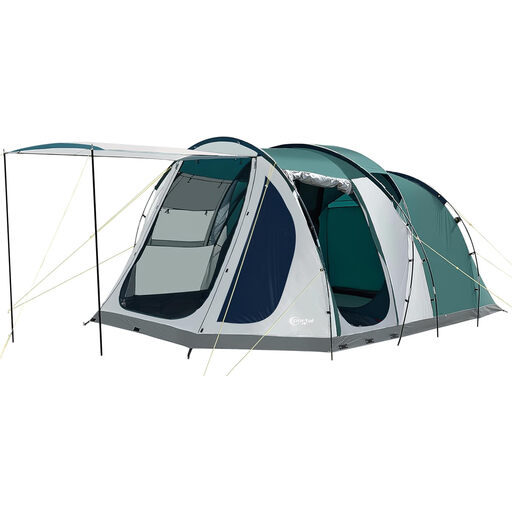
Why it stands out? Its tunnel structure is designed to maximise living space. With a sleeping area of over 7 m? and a separate living room of nearly 6 m?, it offers a true home away from home. Its 2-metre peak height allows you to stand up straight in the living area—a much-appreciated luxury on longer trips.
Key features:
Who is it for? Families of 4 to 5 people who are going on multi-day trips and prioritise comfort and space above all else.
See details for the Portal Tent
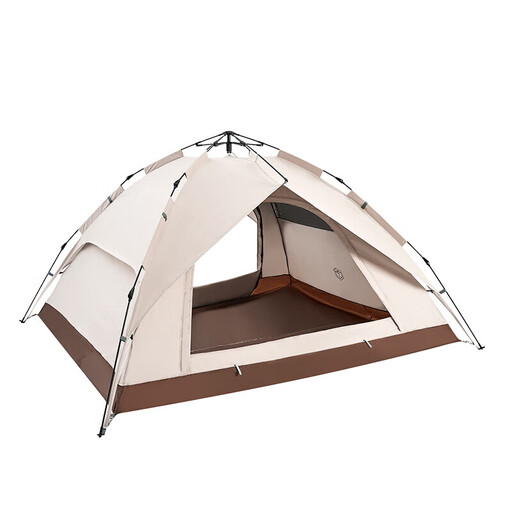
Why it stands out? Its killer feature? The automatic quick-pitch mechanism. Forget the puzzle of poles: a simple pull and the structure deploys, turning a chore into child's play. It's the dream solution for spontaneous weekends or as a stopover tent on a road trip.
Key features:
Who is it for? Families of 3 to 4 people (or single parents with children) looking for maximum simplicity for their short getaways.
Discover the ochama×J.ZAO Tent
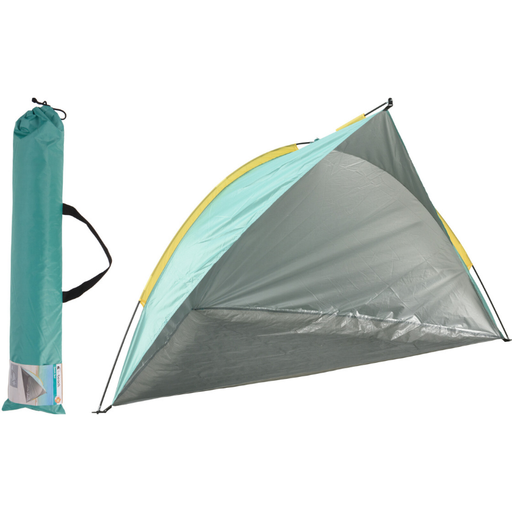
Why it stands out? Note, we're switching gears here: this isn't a tent for sleeping, but a day shelter. Its mission: to protect you from the sun. Thanks to its silver-coated interior, it provides UV50+ protection, essential for creating a safe, shady spot for children at the beach or on a picnic.
Key features:
Who is it for? All families looking for a simple and effective shelter from the sun and wind for day trips, as a complement to their main camping gear.
Having a spacious tent is one thing. Keeping it organised is another! To prevent your family camping gear from scattering and to protect everything from moisture, consider storage solutions. One or two waterproof boxes can be a game-changer: they'll keep your clothes, food, and electronics dry and within easy reach.
Discover Our Outdoor Storage Solutions
For a family of four, our advice is to aim for a tent designed for 5 or 6 people. This extra space is not a luxury: it will allow you to store luggage without feeling cramped and maintain a comfortable living area for everyone.
A waterproof rating (measured in mm) of 2000 mm is the minimum to withstand typical rain showers. For greater peace of mind, especially if you're camping in regions with changeable weather, a rating of 3000 mm or more, like the Portal and ochama×J.ZAO models presented, offers excellent protection.
Condensation is a natural phenomenon caused by the temperature difference and our breathing. To limit it, always make good use of your tent's ventilation systems, even if it's raining. Don't block the vents with your gear and, if possible, leave one of the inner doors (just the mesh layer) slightly unzipped to create a cross-breeze. Double-wall tents are also much more effective at managing this issue.