
Livraison le jour même ou le lendemain

Qualité garantie

Débloquez vos offres de bienvenue: Livraison GRATUITE | Jusqu'à -80 % | 30 jours d'essai gratuits à JoyPlus
Téléchargez l'application
With the rise of remote and hybrid work, our homes have transformed into offices. This welcome flexibility, however, brings a significant challenge?: comfort. Spending hours on a kitchen chair or an old armchair can quickly become a nightmare, leading to back pain, poor posture, and a drop in productivity.
Far from being a luxury, investing in an ergonomic office chair is a necessity to safeguard your health and well-being. Faced with an overwhelming number of options and opaque marketing jargon, it's easy to feel lost. This guide breaks down the essential criteria to help you find the model that's truly right for you.
Before you rush out and buy the first model you see, let's review the features that really make a difference. Here are three key points to consider to guide your choice.
For an office chair to be effective against back pain, excellent lumbar support is simply essential. This area, in the small of your back, suffers the most when sitting. A lumbar support worthy of the name hugs and supports the natural curve of your spine.
There are two main types?:
An ergonomic chair should adapt to you, not the other way around. Beyond lumbar support, check for the following adjustments?:
The upholstery of your chair plays a crucial role in your comfort, especially after several hours of remote work.
Finally, don't overlook certifications like BIFMA or T?V. These are true guarantees of the quality, safety, and durability of the components.
Our editors have analysed the features of several models to offer you a balanced selection that meets different needs and budgets.
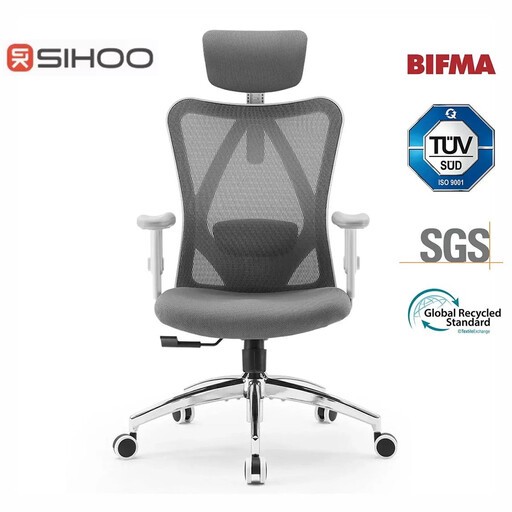
Why it stands out?: The SIHOO M18 is an excellent entry point into the world of ergonomics. It incorporates the five essential ergonomic adjustments (headrest, lumbar support, height, tilt, and armrests) at a very competitive price. Its breathable mesh back and W-shaped seat make it a great ally for long workdays.
Advantages?:
Who is it for?? Ideal for remote professionals or students looking for their first true ergonomic office chair without compromising on essential adjustments.
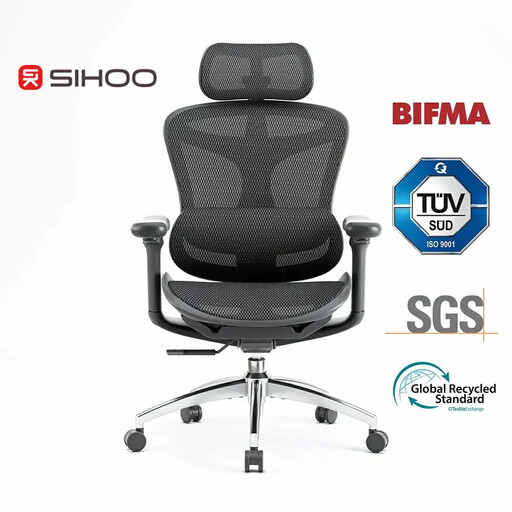
Why it stands out?: The SIHOO Doro C300 marks a significant step up. Its main asset is its self-adapting dynamic lumbar support, which adjusts in real-time to your movements for flawless support. The smart mechanism detects the user's weight to adjust the tilt tension, offering a fluid and intuitive experience. With its sleek design and full-mesh construction, it is as beautiful as it is functional.
Advantages?:
Who is it for?? For demanding users who spend more than 8 hours a day at their desk and are looking for a chair that works with them, adjusting automatically for maximum comfort.
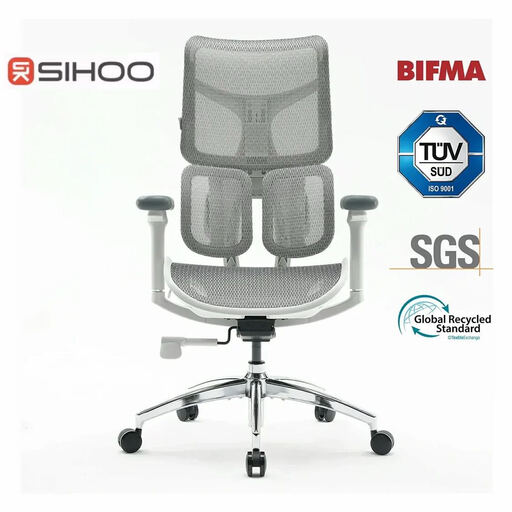
Why it stands out?: The SIHOO Doro S100 is designed for those who refuse to compromise. Its dual dynamic lumbar support system offers an enveloping and precise fit. The real innovation lies in its backrest, which is adjustable to 5 height levels, thus accommodating users from 150 cm to 190 cm. Combined with coordinated 4D armrests and a depth-adjustable seat, this ergonomic office chair achieves a rarely seen level of customisation.
Advantages?:
Who is it for?? For people seeking a tailor-made solution, especially those who can't find comfort in standard chairs due to their height, or for professionals who demand the highest level of adjustment and support.
Our selection highlights three models with distinct profiles. But choosing an ergonomic chair is a very personal decision. If you want to explore other designs, materials, or features, we invite you to browse our full collection.
Discover our full collection of chairs with lumbar support
A classic office chair offers the bare minimum. An ergonomic office chair, on the other hand, is designed to actively support your body, encourage good posture, and reduce strain on the spine, joints, and muscles during prolonged use. Its secret?? A multitude of adjustments (lumbar support, armrests, seat height/depth, etc.) that allow you to tailor it to your body shape.
First, adjust the seat height?: your feet should be flat on the floor, and your knees should form a 90-degree angle. Next, adjust the seat depth to leave a gap of two or three fingers between the edge of the seat and the back of your knees. Position the lumbar support to match the natural curve of your lower back. Finally, adjust the armrests so your shoulders are relaxed and your forearms are parallel to the floor when typing.
The lifespan of an ergonomic chair depends on the quality of its materials, its design, and the intensity of its use. An entry-level model will typically last between 2 and 5 years, while a high-end, BIFMA-certified office chair can last you 7 to 10 years, or even longer. The manufacturer's warranty is often a good indicator?: a warranty of 3 years or more, as is the case for quality models from the SIHOO brand, is a sign of confidence in the product's durability.