
Livraison le jour même ou le lendemain

Qualité garantie

Débloquez vos offres de bienvenue: Livraison GRATUITE | Jusqu'à -80 % | 30 jours d'essai gratuits à JoyPlus
Téléchargez l'application
Whether you're working from home or in the office, long hours spent sitting take a toll on the body. Neck tension, lower back pain, general fatigue… These issues are often symptoms of an inadequate workstation, starting with a chair that neglects to support your body. Investing in an ergonomic office chair is therefore not a luxury, but an essential step to protect your well-being and productivity.
But with an overwhelming number of options on the market, it's hard to know where to start. Our guide is here to provide you with clear benchmarks and practical advice, cutting through the marketing jargon, to help you choose the model that will truly meet your needs.
Before we get to our selection, let's review the fundamental criteria for making an informed decision. A good ergonomic office chair should adapt to you, not the other way around.
A true ergonomic chair stands out for its wealth of adjustments. Look for an adjustable office chair that offers at a minimum:
The choice of materials directly impacts your comfort and the chair's longevity. A mesh office chair is particularly popular for its breathability. It ensures excellent air circulation and prevents heat build-up, a key advantage during long summer days. The seat, meanwhile, should feature high-density foam to guarantee firm support that won't sag over time.
To ensure its quality and safety, check for certifications. Labels like BIFMA or T?V are hallmarks of robustness and durability, as they involve very strict resistance tests. Also, remember to check the maximum weight capacity supported by the chair to ensure it is suitable for your body type.
Our editorial team has analysed dozens of models to bring you a selection that meets different needs and budgets.
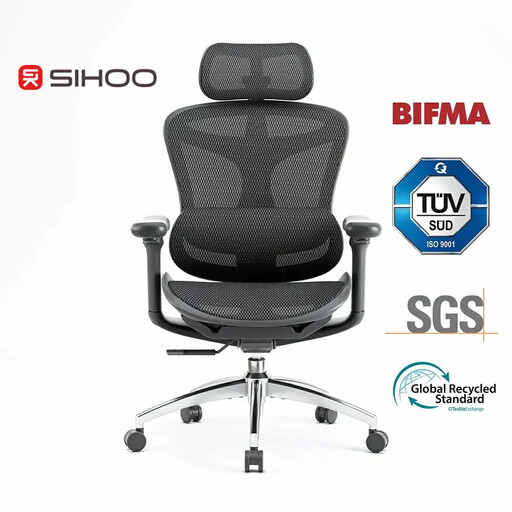
Why does it stand out? The SIHOO Doro C300 is built around a "dynamic flow" concept. Its flexible backrest and self-adapting lumbar support follow your body's slightest movements to provide constant support, regardless of your posture. Its smart mechanism even detects the user's weight to automatically adjust the recline tension. The result is a balanced and almost effortless sitting experience.
Highlights:
Who is it for? For professionals who spend long hours in their home office chair and demanding users looking for a high-end solution that offers responsive, personalised support throughout the day.
See the SIHOO Doro C300 on Joybuy.fr
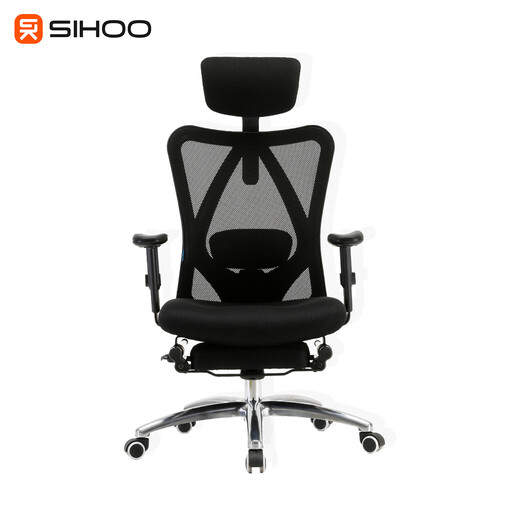
What are its strengths? The SIHOO M18 is an excellent entry point into the world of ergonomics. It combines the five essential adjustments (height, headrest, lumbar support, armrests, and tilt) at an accessible price point. Its W-shaped seat was designed to reduce pressure on the thighs and encourage a well-centred posture.
Highlights:
Who is it for? Ideal for office workers, students, and anyone looking for a reliable and comprehensive office chair for back support without aiming for the very top of the range. An excellent price-to-performance ratio.
Discover the SIHOO M18 on Joybuy.fr
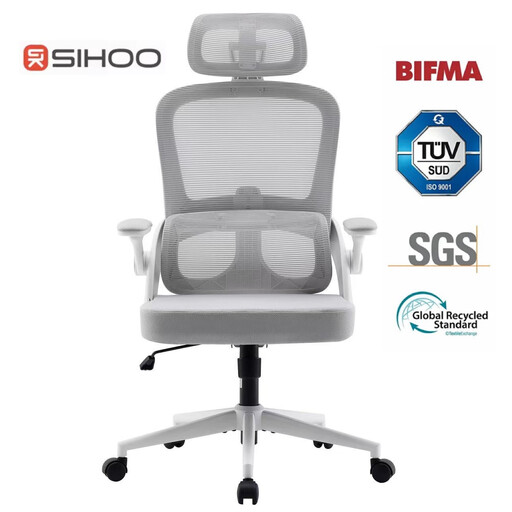
What makes it different? The SIHOO M102C stands out with its flip-up armrests, a very practical feature for sliding the chair under a desk to save space. Its wide seat and soft cushion are designed to comfortably accommodate a wide range of body types, including taller or heavier individuals.
Highlights:
Who is it for? For those looking for a space-saving solution, as well as for taller users or those seeking a more spacious seat. Its clean aesthetic also makes it an excellent choice for a stylish home office.
Explore the SIHOO M102C on Joybuy.fr
Our selection highlights models that meet specific needs, but the world of ergonomic chairs is much broader. If you haven't found what you're looking for yet or wish to explore other styles and features, feel free to browse our complete catalogue.
Explore our complete collection of work office chairs to find the model that's right for you.
A standard chair offers basic support. In contrast, an ergonomic office chair is designed to actively adapt to your body. Thanks to its multiple adjustments (height, backrest, armrests, lumbar support), it helps maintain a healthy posture, reduces pressure points, and prevents pain associated with prolonged sitting.
The adjustment period varies, but it generally takes a few days to a week for your body to get used to this new, healthier posture. At first, this support might even feel strange if you've developed bad habits. The key is to take the time to fine-tune each setting.
For an optimal setup, follow these simple steps: