
Livraison le jour même ou le lendemain

Qualité garantie

Débloquez vos offres de bienvenue: Livraison GRATUITE | Jusqu'à -80 % | 30 jours d'essai gratuits à JoyPlus
Téléchargez l'application
Remote work, intense gaming sessions, study marathons… Spending hours sitting at a desk has become a part of our daily lives. The problem? Your back, neck, and shoulders often pay a heavy price. The market is flooded with chairs promising the world, but how can you tell the difference between a true ally for your health and a purchase you'll regret within the first week?
Before you pull out your credit card, let's break down the most common pitfalls together. Many people are swayed by marketing claims that, in reality, hide subpar comfort and limited durability. Here are the three mistakes to avoid at all costs:
To make an informed choice and invest in an ergonomic office chair that will last you for years, forget the marketing jargon and focus on these three essential technical points.
Forget simple foam pads. A true adjustable lumbar support is non-negotiable for preventing back pain. It must be adjustable in height at a minimum to perfectly match the curve of your lower back. The gold standard? A depth adjustment for a fine-tuned fit. This is what guarantees your spine will maintain its natural curve, even during marathon workdays.
Far from being a gimmick, armrests are your best allies for relieving tension in the neck and shoulders.
The choice of material is crucial for long-term comfort. While leather and faux leather may be easy on the eyes, they quickly turn into a furnace in the summer. A high-quality mesh backrest offers two major advantages:
Because every body type and use case is unique, we've vetted several models, focusing on functionality, durability, and value for money for different profiles.
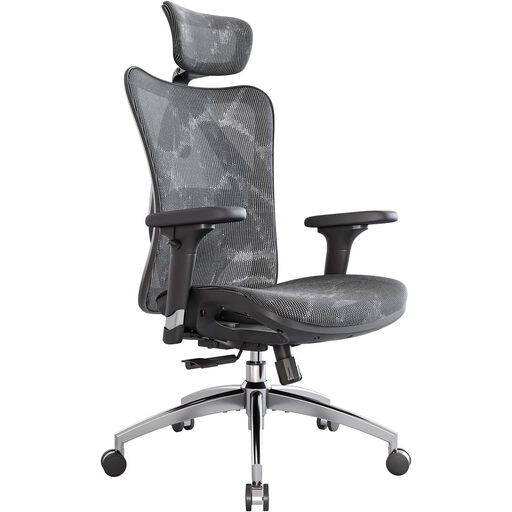
Why it's a great choice: Built for keyboard warriors, this chair provides total support with its high back, adjustable headrest, and numerous adjustments. It's the ideal companion for those who work 8+ hour days and want to protect their back.
Here, function trumps form. The S-shaped backrest follows the spine's curve, and the essential adjustments (lumbar support, 3D armrests, tilt) are precise, robust, and intuitive.
Its advanced adjustments offer tailored support for the back, neck, and arms. Its breathable mesh back ensures optimal comfort, even in the middle of summer.
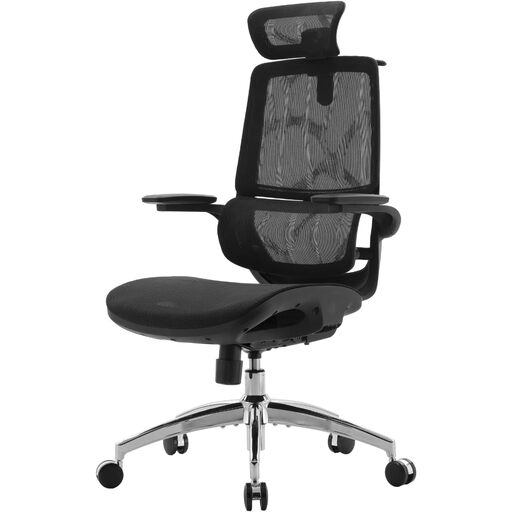
Why it's a great choice: Ideal for small apartments or makeshift home offices. Its armrests flip up 80 degrees, allowing the chair to slide completely under the desk. A real space-saver when you're done for the day.
Far from a gimmick, the flip-up armrest feature is a smart solution. The chair doesn't sacrifice ergonomics, retaining key features like a dual backrest and adaptive lumbar support.
Its flip-up armrests are perfect for optimising space. Its dual backrest dynamically follows the body's movements.
Why it's a great choice: Alloy steel frame, SGS-certified gas lift, BIFMA standard compliance... This **150 kg office chair** is a true heavyweight designed to last. It's the peace-of-mind choice for heavier individuals or anyone who wants a product built to stand the test of time.
This model checks all the boxes for safety and durability by proudly displaying its certifications (BIFMA, SGS) and high weight capacity. No unpleasant surprises on the horizon.
Its 150 kg weight capacity and its certifications make it a safe and durable investment. The 3-year warranty confirms this promise of reliability.
Discover our full selection of chairs that meet our standards for quality, comfort, and safety.
It only takes a few seconds to adopt the right posture. Here is the 4-point checklist:
It all depends on the build quality and the intensity of use. An entry-level model will hardly last more than 1 to 2 years. On the other hand, a quality, BIFMA-certified chair can last you for 5, 7, or even 10 years. The usual weak points are the gas lift, the casters, and the mechanisms. A good sign of confidence? A warranty of 3 years or more.
Yes, provided you don't just pick any mesh! Low-quality mesh will quickly sag and no longer offer any support. Conversely, a high-density technical mesh is an excellent compromise: it is both flexible enough to conform to your back, firm enough to support it well, and ultra-breathable. It's the ideal material for long work sessions, especially in the summer.