
Livraison le jour même ou le lendemain

Qualité garantie

Débloquez vos offres de bienvenue: Livraison GRATUITE | Jusqu'à -80 % | 30 jours d'essai gratuits à JoyPlus
Téléchargez l'application
Is your child starting first or second grade? Learning to write in cursive is a key milestone. You see them gripping their pen too tightly, complaining of hand pain, or coming home from school with inky fingers. These are tell-tale signs: their pen is likely a poor fit. Before you rush out to buy the first school pen you see, it's crucial to avoid the common pitfalls that can turn writing into a real chore.
Here are the 3 most common mistakes when buying a first fountain pen:
To make the right choice, focus on objective features that have a direct impact on the comfort and quality of writing.
This is THE number-one criterion for a good ergonomic fountain pen for kids: its grip section. It shouldn't just be wide, but designed for the anatomy of a small hand. Look for a section with moulded indentations to guide the natural placement of the thumb, index, and middle fingers. The material is just as crucial: a non-slip surface ensures a stable hold, even during long writing sessions, and prevents finger strain.
The nib is the heart of the writing experience. It must be made of quality stainless steel to glide effortlessly across the paper. For a beginner, an adjustable nib is a game-changing advantage. This feature allows the angle of the nib to be adjusted to match the child's natural hand posture. This prevents them from having to "break" their wrist to find the right angle—a very bad habit that is difficult to correct later.
This is the fundamental distinction: a right-handed fountain pen is completely different from a left-handed model. The grip sections are asymmetrical and mirrored to provide proper support and a clear view of the writing line. Finally, the size and weight of the pen must be proportionate to the child's hand to avoid causing premature fatigue.
To help you see these criteria in action, here are a few recommended options, each suited to a specific user profile.
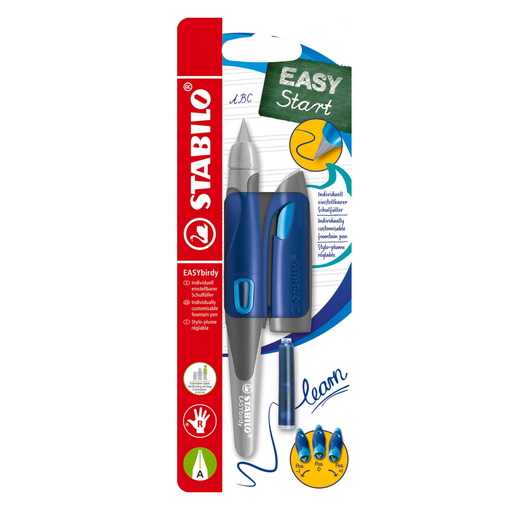
Why we recommend it: Designed specifically for right-handed children who are just starting out, it checks all the boxes for the ideal first fountain pen: comfort, guidance, and cleanliness.
Its non-slip grip section, with its clearly defined indentations, guides the fingers and prevents poor posture. The base of the nib is fully covered to prevent inky fingers, a common issue with entry-level pens.
Its adjustable nib, with three different angles, offers a custom fit for the child's grip. A rare and valuable feature for learning.
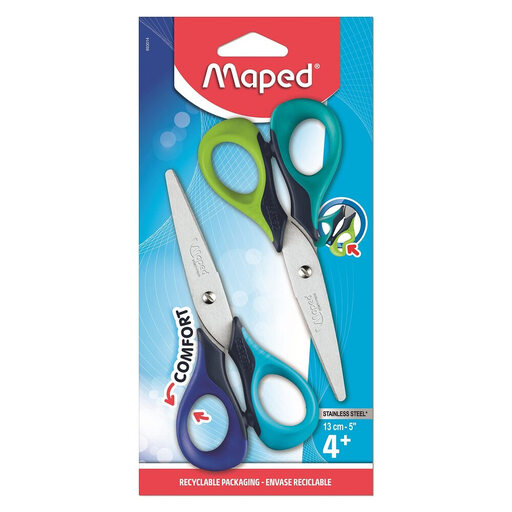
Why we recommend it: School isn't just about writing! For cutting activities, a pair of ergonomic scissors is just as important to prevent fatigue and frustration.
No more hard plastic rings that dig into fingers! This model features ultra-soft rings for optimal comfort, turning arts and crafts into a joy.
Its ergonomic and flexible rings are specifically designed for the comfort of small hands. The symmetrical design is suitable for both right- and left-handers.
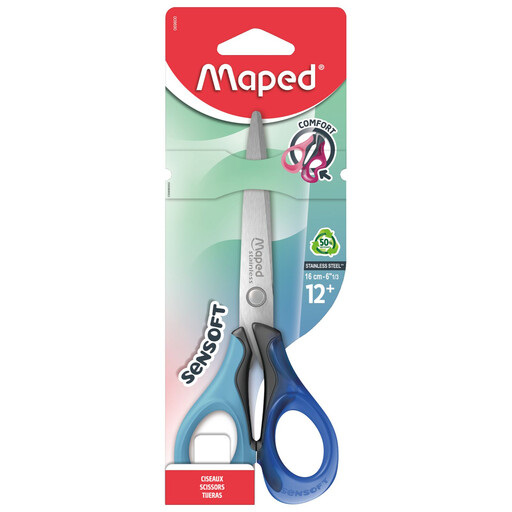
Why we recommend it: As hands grow, tools need to keep up. This model is designed for older students who need comfort for longer, more precise tasks.
It solves the problem of "junior" tools that quickly become too small and uncomfortable. Ergonomics aren't just for little kids; they remain essential for maintaining good habits.
It features the same principle of soft and ergonomic rings, but in a 16 cm size suited for larger hands, with stainless steel blades that ensure a clean, durable cut.
Explore our full selection of products that meet our selection criteria and current safety standards.
The best test is observation. Watch their hand as they write: their fingers should rest naturally in the grip's indentations without being tensed. The pen shouldn't seem too heavy or too large. Most importantly, your child shouldn't complain of wrist or hand pain after writing a few lines.
It's a real asset, and here's why. Every child has a unique way of holding their pen. An adjustable nib allows the tip to be aligned with the paper according to their personal grip angle. The result: the nib glides perfectly, doesn't scratch the paper, and the child maintains good wrist posture, which is fundamental during the learn-to-write phase.
It all depends on usage, but for daily school use, expect to go through one standard cartridge every one to two weeks. The best practice: always keep a few spare cartridges in their pencil case. Opt for washable blue ink cartridges, which are the standard in most primary schools.