
Livraison le jour même ou le lendemain

Qualité garantie

Débloquez vos offres de bienvenue: Livraison GRATUITE | Jusqu'à -80 % | 30 jours d'essai gratuits à JoyPlus
Téléchargez l'application
Watching your dog devour their meal in a matter of seconds is a classic scene for many owners. While this behaviour might seem amusing, the consequences are often less so: vomiting, bloating, and an increased risk of far more serious problems, like the dreaded gastric dilatation-volvulus (GDV), or bloat. In response, the elevated slow-feeder dog bowl has emerged as a game-changing solution. But here's the catch: not all models are created equal, and a poor choice can be useless at best, or counterproductive at worst.
As a product expert at Joybuy, my role is to help you separate fact from fiction to make the right choice. Let's break down the common pitfalls to avoid and the criteria that truly matter for finding THE perfect bowl for your companion's needs.
The market is flooded with products making tempting promises. The problem is that critical design flaws render a large portion of them ineffective or not built to last.
To make the right choice, here are the technical points you absolutely must check to guarantee the product's effectiveness, safety, and durability.
This is the absolute basics: sturdiness. An adjustable dog bowl stand shouldn't budge an inch during mealtime.
This is the whole point of an elevated bowl: to provide a natural eating posture. To achieve this, height adjustment isn't an option—it's a must.
The slow feeder for dogs must effectively slow down eating without becoming a nest for bacteria.
Based on these criteria, here is our selection of models that stand out from the crowd, each meeting a specific need.
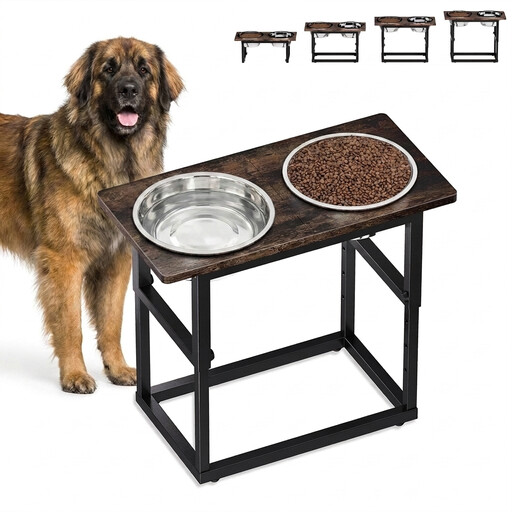
Why it stands out: Specifically designed for the heavyweights, this stand combines an XXL capacity (two 1.6L bowls) with an impressive adjustment range (up to 44 cm). Perfect for a Great Dane, German Shepherd, or adult Labrador.
Its sturdy metal frame and reinforced wooden top ensure rock-solid stability (goodbye, trap #1). Its 5 adjustment levels offer a custom fit, a far cry from single-height models (trap #2, beaten).
Unshakeable stability, even with the most enthusiastic eaters. The hygienic, dishwasher-safe stainless steel bowls are a real plus.
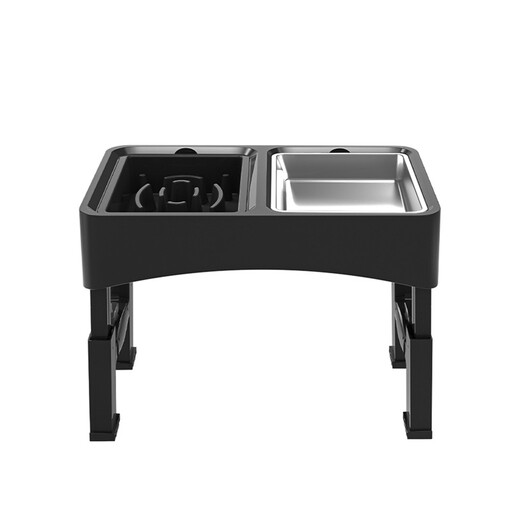
Why it stands out: Perfect for growing puppies or multi-dog households with different-sized pets. It cleverly combines a slow-feeder bowl and a classic stainless steel bowl, all mounted on a foldable, 4-level adjustable stand.
Its 4-level adjustment makes it an excellent future-proof solution (trap #2). The combination of a slow-feeder and a removable stainless steel bowl makes cleaning much easier (goodbye, trap #3).
Its 2-in-1 concept (slow-feeder + water/kibble) and its foldable structure, which is ideal for storage or taking on holiday.
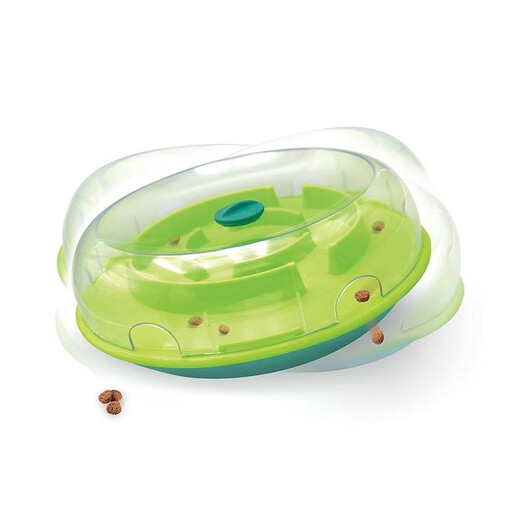
Why it stands out: This one is in a different category. This model turns mealtime into a real play session. The dog has to be clever, pushing and wobbling the bowl to earn its kibble. The result: a significantly slower eating pace and welcome mental stimulation.
Its streamlined design and unscrewable lid make cleaning incredibly simple (trap #3). Note that this model is not elevated: it's an alternative that focuses entirely on enrichment and slowing down eating.
It combines slow feeding with a puzzle. Made from food-grade materials, guaranteed free of BPA, PVC, and phthalates.
Explore our full selection of products that meet our demanding standards for safety and effectiveness.
As a general rule, the top of the bowl should be level with the bottom of their chest (around elbow height). Your dog should be able to eat by lowering their head just slightly, without having to stretch their neck up or bend down excessively. The best judge is your pet: observe their posture and adjust as needed.
For stainless steel, the dishwasher is the easiest option. For manual washing, a brush, hot water, and washing-up liquid are your best friends for dislodging residue from every nook and cranny. Be sure to rinse thoroughly to leave no soap behind. Ideally, cleaning after every meal is the best way to prevent bacteria from growing.
While it's highly recommended for large dogs, seniors with arthritis, or those with megaesophagus, it can improve comfort for many others. However, be aware: for some brachycephalic (flat-faced) breeds or very small dogs, a traditional bowl on the floor may still be more suitable. Ultimately, the most important thing is to observe your dog and choose what works best for them.