
Livraison le jour même ou le lendemain

Qualité garantie

Débloquez vos offres de bienvenue: Livraison GRATUITE | Jusqu'à -80 % | 30 jours d'essai gratuits à JoyPlus
Téléchargez l'application
Switching from a manual to an electric toothbrush is a real game-changer for your oral hygiene. But with sonic and oscillating-rotating technologies, smart models, and widely varying price ranges, it's hard to know where to start.
This guide is here to break down the key criteria and help you find the perfect model for your needs—whether you're looking to perfect your technique, protect sensitive gums, or track your progress with coach-like precision.
Before diving into our selection, let's review the key points that separate a great electric toothbrush from a mere gadget.
This is the core of the device—the choice that will define your brushing experience. While both technologies have proven their effectiveness, they operate and feel radically different.
Ultimately, the choice comes down to your personal preference and the sensation you're looking for.
A smart toothbrush is more than just a motor. It's a true coach that guides you toward a more effective and safer brushing routine.
For daily commuters and frequent flyers alike, battery life and accessories make all the difference. Most models provide about two weeks of use on a single charge. If you travel often, a travel case is a real bonus. Some high-end models take luxury a step further by offering a travel case that doubles as a charger, for unparalleled convenience on the go.
Now, let's move on to our selection of the best models currently available, for all needs and budgets.
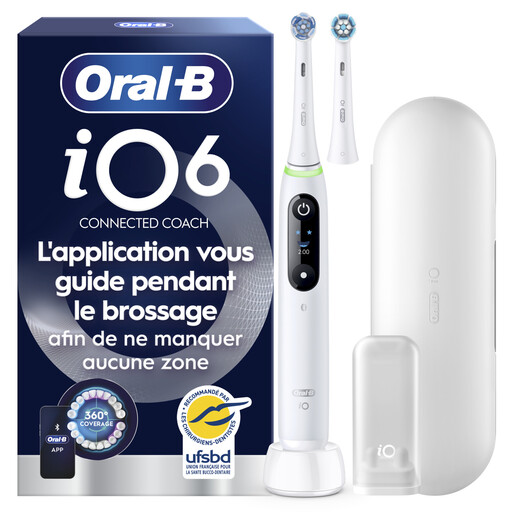
Why it stands out
The Oral-B iO 6N features the iO series' magnetic drive technology, which transfers energy directly to the bristle tips for a powerful yet gentle clean. Its interactive OLED display is a nice touch: it clearly shows the selected mode, remaining battery life, and even reminds you when to change the brush head.
Pros
Who is it for?
This model is an excellent entry point into the world of high-end smart toothbrushes. It's perfect for users who want precise guidance and various modes without necessarily needing the 3D tracking of more advanced models.
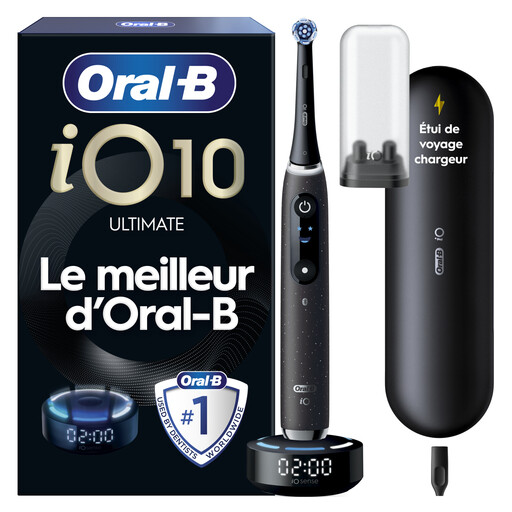
Why it stands out
The Oral-B iO 10 represents the pinnacle of the brand's technology. Its key feature is the iO Sense smart charger, which provides real-time guidance directly on its base. It tracks your brushing in 3D across the 6 zones of your mouth, showing you where, when, and how to brush, without you even needing to glance at your smartphone.
Pros
Who is it for?
For tech enthusiasts and those who refuse to compromise on their oral health. If you dream of having a personal coach for every brushing session and ultra-detailed data, the iO 10 is the obvious choice.
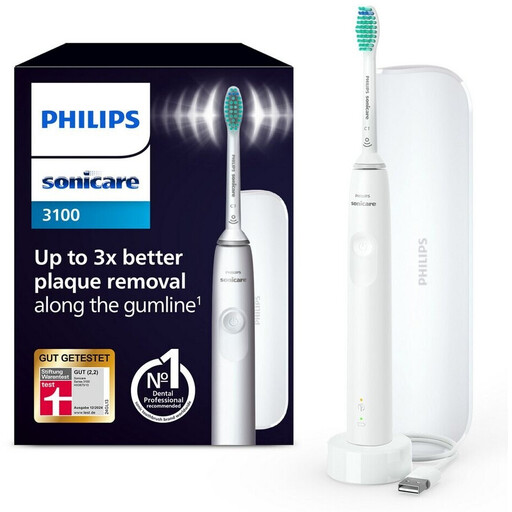
Why it stands out
The Philips Sonicare 3100 gets straight to the point with impressive efficiency. It relies on sonic toothbrush technology and its 31,000 brush movements per minute for a deep clean. It includes key features like a pressure sensor and timers, all in a sleek design and at a competitive price.
Pros
Who is it for?
Ideal for those new to sonic technology or anyone looking for a reliable and effective electric toothbrush without advanced connected features. Its excellent value for money makes it a perfect entry point into the world of sonic brushing.
The models in our selection are already designed with travel in mind, but if portability is your number one criterion, or if you're looking for an all-in-one kit, there are even more suitable solutions.
To discover kits specially designed for globetrotters, check out our selection of travel toothbrush kits.
Oscillating-rotating technology uses a small, round head that rotates and pulsates to polish each tooth individually. A sonic toothbrush, on the other hand, uses a more traditional-shaped head that vibrates at very high speed, creating a cleaning wave that acts on the tooth surface and in between teeth. The choice is primarily a matter of feel and personal preference.
Absolutely. It's one of the most important features. Many of us tend to brush too hard, a bad habit that can eventually lead to gum recession and enamel wear. The pressure sensor gently retrains you to use the correct technique: an effective, but never aggressive, brushing motion.
It is recommended to replace your electric toothbrush head every three months, or as soon as the bristles are visibly frayed. Worn-out bristles are not only less effective at removing plaque, but they also become breeding grounds for bacteria. Some models, equipped with technologies like BrushSync, automatically remind you when it's time for a change.