
Livraison le jour même ou le lendemain

Qualité garantie
Téléchargez l'application
Catégories
By the Joybuy Product Recommendation Officer, 7 June 2026
With so many electric toothbrush models on the market, it can be hard to know where to start. Between brand promises and complex features, making an informed choice can be a challenge. Our role is to provide you with clear, practical guidance to help you identify the product that truly meets your needs, without being swayed by marketing hype.
Before looking at specific models, it's helpful to understand the features that make a real difference in your daily routine. Here are three points to consider to guide your decision.
This is the main technical factor.
The choice depends on your sensitivity and personal preferences. Both technologies have been proven to remove plaque more effectively than manual brushing.
Some options are more than just gimmicks.
A rechargeable toothbrush is the standard today. Battery life is an important convenience factor, ranging from one to several weeks. If you travel often, a long battery life and a travel case are significant advantages. A high-performance travel toothbrush saves you from packing a charger for short or medium-length trips.
Taking these criteria into account, we have identified a few models that stand out for their relevance, performance, and specs.
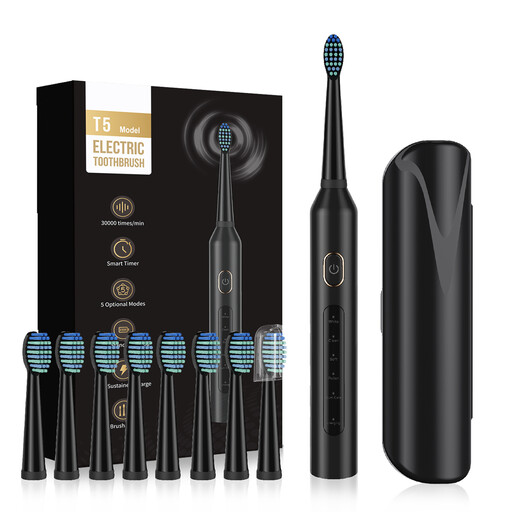
Why we recommend it This model stands out as a very comprehensive solution. It combines sonic toothbrush technology with remarkable battery life and a set of accessories that covers long-term needs. It's a practical choice for anyone looking for a ready-to-use package with no short-term extra costs.
Advantages
Who is this product for? Ideal for frequent travellers, thanks to its long battery life and travel case, as well as for budget-conscious users who want an all-in-one package without needing to buy new brush heads right away.
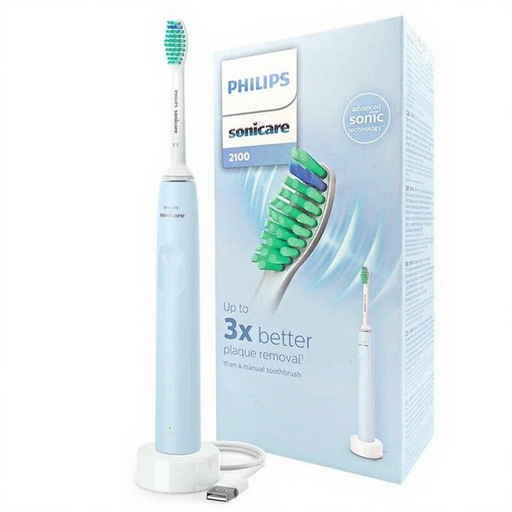
Why we recommend it This model is an excellent entry point into the Philips Sonicare universe. It focuses on the essentials: the effectiveness of the brand's sonic technology, without superfluous features. It's a reliable product that gets straight to the point.
Advantages
Who is this product for? Perfect for those new to the electric toothbrush who prioritise a reputable brand and proven effectiveness, without needing multiple modes or complex accessories.
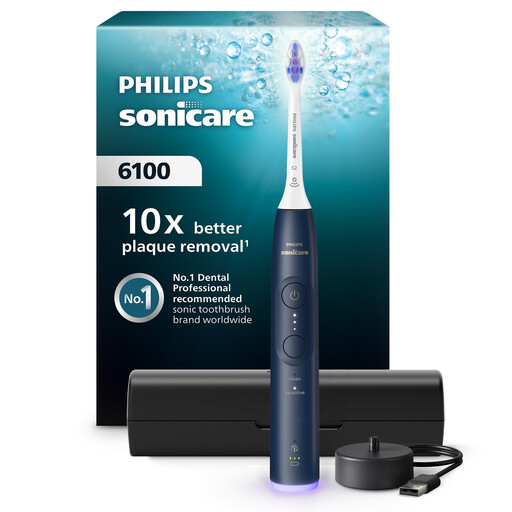
Why we recommend it This model is a step up, incorporating technologies designed for personalised and protective care. The pressure sensor is its key feature, offering added safety for sensitive gums.
Advantages
Who is this product for? Recommended for users with sensitive teeth or gums, or for those looking to improve their brushing technique with guidance from the pressure sensor.
Our selection highlights models that meet specific needs. If you want to explore a wider range, compare other technologies, or find accessories, we invite you to browse our complete dental equipment category.
A sonic toothbrush uses high-frequency vibrations to clean, while an oscillating-rotating brush uses a mechanical motion of rotation and pulsation. The choice is often a matter of personal preference and dental sensitivity. Sonic technology is generally considered gentler.
Most manufacturers, like dentists, recommend replacing the brush head every three months. Worn bristles lose their effectiveness and can harbour bacteria. Some models, like the Philips Sonicare 6100, have a replacement reminder to help you.
Yes, an electric toothbrush is effective at removing surface stains (caused by coffee, tea, tobacco, etc.), which can help restore the natural whiteness of your teeth. Many models offer a "Whitening" or "Polish" mode that focuses on this goal. However, it will not change the intrinsic shade of your teeth.