
Livraison le jour même ou le lendemain

Qualité garantie

Débloquez vos offres de bienvenue: Livraison GRATUITE | Jusqu'à -80 % | 30 jours d'essai gratuits à JoyPlus
Téléchargez l'application
Repairing a smartphone, building a PC, or simply changing the batteries in an electronic toy... Once reserved for specialists, these tasks are now within everyone's reach. Their common thread? Tiny, fragile screws that demand a delicate touch. Using the wrong tool can quickly turn a simple repair into a real headache, resulting in stripped screw threads or damaged components.
This is precisely where the electric precision screwdriver kit comes in. It provides the control, power, and versatility needed to work on delicate devices effortlessly. This guide is here to help you choose the perfect model for your projects, based on clear criteria and features that truly matter.
Before diving into our selection, let's review the key points for finding the mini electric screwdriver that's a perfect fit for your needs.
Torque, measured in newton-metres (N·m), is the rotational force of the tool. In electronics, too much torque is the easiest way to damage threads and circuits. Therefore, you should opt for a model with multiple adjustable torque settings. A low torque (between 0.05 and 0.3 N·m) is sufficient for most devices like smartphones or laptops. The ability to switch to manual mode to finish tightening or to handle a stubborn screw is a huge plus.
A rechargeable cordless screwdriver offers invaluable freedom of movement. Check the battery capacity (measured in mAh) and its estimated runtime. A universal charging port like USB-C is a major advantage: no more juggling cables, as your smartphone's will do the job. Charging time is also a factor to consider if you plan on intensive use.
A good precision screwdriver set is judged first and foremost by the quality and variety of its bits. Make sure the kit includes the bit types you need for your projects (Phillips, Pentalobe for Apple products, Torx, etc.). S2 steel bits are known for their strength and durability. The inclusion of magnetic bits is a game-changer: they hold tiny screws firmly to the tool, preventing you from losing them deep inside a device's casing.
We have selected a few models that stand out for their features and design, catering to different types of DIYers.

Why it stands out: This model distinguishes itself with its digital torque display, a rare feature that allows for surgical control over tightening force. Its rotating storage case is as clever as it is compact, keeping all 60 bits perfectly organised.
Pros:
Who is it for? Ideal for enthusiasts and discerning technicians who work on a wide variety of devices. The visual torque control is a real safety guarantee to avoid damaging anything. A highly versatile electronics repair kit.
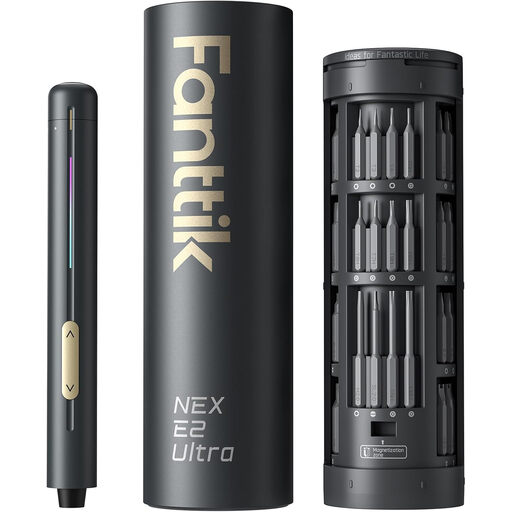
Why it stands out: The Fanttik E2 Ultra is the choice for power and endurance. With a higher maximum torque and a high-capacity battery, it's built for those who perform back-to-back repairs and need a tool that won't let them down.
Pros:
Who is it for? This model is aimed at semi-pros or intensive DIYers looking for more power and long-lasting battery life for their assembly or repair sessions. Perfect for building a PC from scratch.
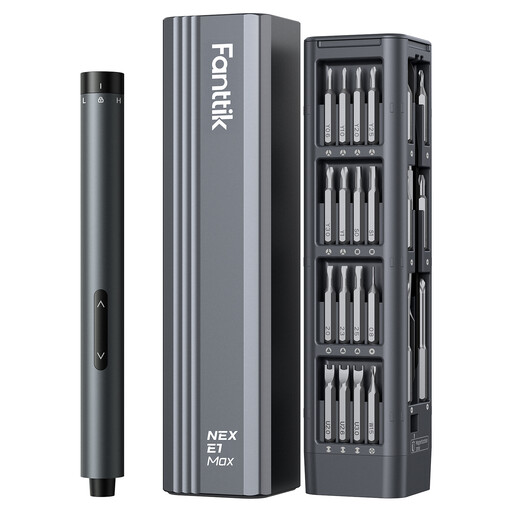
Why it stands out: The Fanttik E1 Max strikes the perfect balance between design, performance, and practicality. A multi-award winner for its design (iF Design Award 2023, Red Dot 2024), it combines sleek aesthetics with features designed for everyday use.
Pros:
Who is it for? Perfect for DIYers, makers, and tech enthusiasts who appreciate beautiful objects without sacrificing performance. Ideal for their watch, camera, or smartphone repair projects.
If these models don't check all your boxes or if you simply want to explore other options, many other solutions are available. To discover a wider range of screwdrivers and accessories for all types of jobs, take a look at our complete category.
? Discover our full range of screwdrivers and tools
For most consumer electronic devices (smartphones, tablets, laptops), an electric torque between 0.05 and 0.3 N·m is both sufficient and safe. A higher torque could damage plastic screw threads or printed circuit boards. In any case, most kits allow you to finish tightening by hand for perfect control.
Yes, and they are even essential! When you're handling screws that are just a few millimetres long, magnetic bits are a decisive advantage. They hold the screw on the bit, allowing you to guide and fasten it with one hand, even in the most hard-to-reach corners. The risk of losing a screw deep inside the device is thus virtually zero.
Yes, an electric precision screwdriver kit is actually ideal for a large part of a PC build. It's perfect for screwing the motherboard onto its standoffs, installing M.2 SSDs, or attaching case fans. However, for the larger screws on the case or power supply, a standard manual screwdriver or a more powerful electric model will be necessary.